13 Jul 2026
 Relativistic Effects and the Chemistry of Heavy Elements
The fundamental tenets of chemical bonding, staples of university curricula for decades, have proven accurate only for light elements. As we descend toward the bottom of the periodic table, physical laws typically reserved for the vastness of deep space and the crushing gravity of black holes begin to take hold. Einstein’s theory of relativity exerts a direct influence on how atoms interact at the quantum level; new research demonstrates that in heavy elements, traditional distinctions between types of chemical bonds dissolve, giving rise to a fundamentally different architecture of matter.
12 Jul 2026
 Survival Scenarios for Planets Orbiting White Dwarfs
The death of a star typically signals a final sentence for its orbiting companions. However, the discovery of exoplanet WD 1856 b, orbiting a white dwarf, challenges conventional wisdom regarding the inevitable demise of planetary systems. Leveraging the James Webb Space Telescope, researchers have peered into the atmosphere of this giant, uncovering unexpected chemical signatures. This finding compels a reevaluation of the mechanisms governing celestial migration under extreme conditions. It represents the first documented instance of a planet surviving the collapse of its parent star.
11 Jul 2026
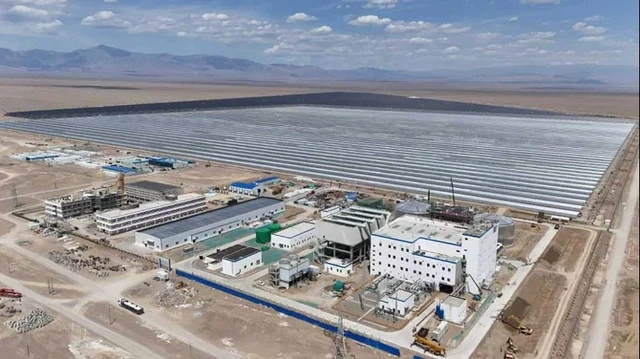 Solar Titan of the Gobi
The global transition toward renewable energy is confronting a fundamental hurdle: the inherent instability of power generation. Solar panels are dormant at night, and sudden cloud cover can trigger critical fluctuations across the grid. The solution lies in the development of hybrid complexes engineered for industrial-scale energy storage. A pioneering project in China now demonstrates how the synergy between photovoltaics and concentrated solar power can transform the sun into a stable, predictable, and reliable energy source.
11 Jul 2026
 Ink Degassing for Precision Electronics
The relentless pursuit of electronic miniaturization inevitably brings engineers face-to-face with the fundamental constraints of physical chemistry. While inkjet printing offers the promise of cost-efficiency and scalability, the notorious "coffee ring effect" consistently undermines the precision of the deposited layers. Conventional strategies to mitigate this phenomenon often come at a cost, compromising the final performance characteristics of the resulting conductors and semiconductors. Now, researchers at Tokyo Metropolitan University have proposed an elegant solution, drawing inspiration from the fluid dynamics of common carbonated beverages.
10 Jul 2026
 Hybrid Drone for Deep-Ocean Exploration
Bridging the divide between air and water has long remained one of the most formidable challenges in modern robotics, driven by the stark disparity in density between these two mediums. Conventional platforms are typically tethered to a single domain; those that attempt to bridge both often suffer from a cumbersome mass that strips them of their agility. The breakthrough lies in a biomimetic approach, drawing inspiration from the evolutionary mechanics of diving birds. The creation of this lightweight hybrid drone heralds a new era in autonomous oceanic monitoring, seamlessly integrating aerial velocity with the capacity for efficient submersion.
10 Jul 2026
 Redefining Global Timekeeping Standards
The fundamental tension between the absolute precision of atomic clocks and the erratic dynamics of our planet has pushed modern chronometry to a breaking point. For decades, the "leap second" acted as a bridge, reconciling idealized time with the Earth's actual rotation; today, however, this mechanism has evolved into a systemic vulnerability. In a global digital infrastructure where milliseconds dictate the success of high-frequency financial transactions and the stability of cloud services, these adjustments have become catalysts for chaos. The world now stands on the precipice of a radical shift: a transition from rigid, pinpoint synchronization toward broader tolerances—a move essential to safeguarding global networks from potential collapse.
8 Jul 2026
 Isotopic Power for Autonomous Systems
The quest for a "perpetual" power source has long since transcended the realm of science fiction, evolving into one of the most ambitious frontiers of modern applied physics. While conventional chemical batteries are constrained by finite charge cycles and inevitable material degradation, betavoltaic cells offer a fundamentally different paradigm for achieving energy autonomy. Recent breakthroughs in isotope battery technology have yielded a quantum leap in power density, pushing the technology toward the threshold of large-scale commercial viability. We are witnessing a transition from laboratory curiosities to practical, mission-critical tools for medicine, aerospace, and deep-sea exploration.
8 Jul 2026
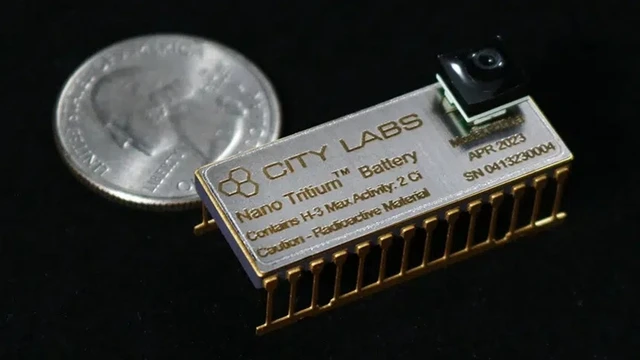 Betavoltaic Cells in Deep Space
For decades, modern space exploration has relied on solar energy—a resource that proves futile in the shadow of planetary bodies or the vast void of deep space. Conventional batteries offer only a temporary reprieve, inevitably degrading under the onslaught of extreme cosmic conditions. The emergence of betavoltaic cells marks a pivotal transition toward true energy autonomy for orbital spacecraft. With the launch of the BOHR mission, a new chapter begins in the commercialization of nuclear power sources, laying the essential groundwork for a sustained human presence beyond Earth's orbit.
8 Jul 2026
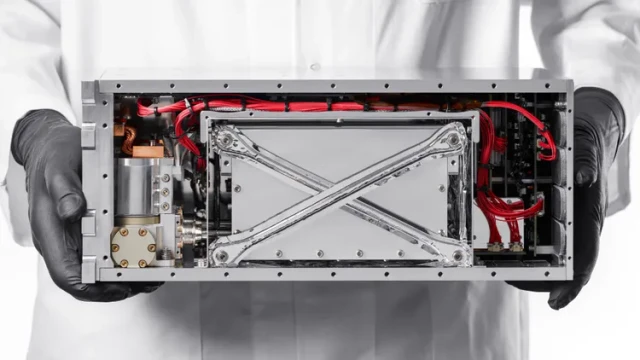 Propellantless Magnetic Pulse
For decades, the pursuit of propellant-less propulsion has stood as one of the most formidable challenges in astronautics. The inherent limitations of onboard propellant have long dictated the rigid boundaries of mission longevity and spacecraft agility. Yet, the emergence of compact superconducting systems is opening a new frontier, allowing Earth's magnetic field to serve as an external lever for satellite navigation. By translating solar energy into direct kinetic impulse, this technology is radically redefining the paradigm of orbital maneuvering.
8 Jul 2026
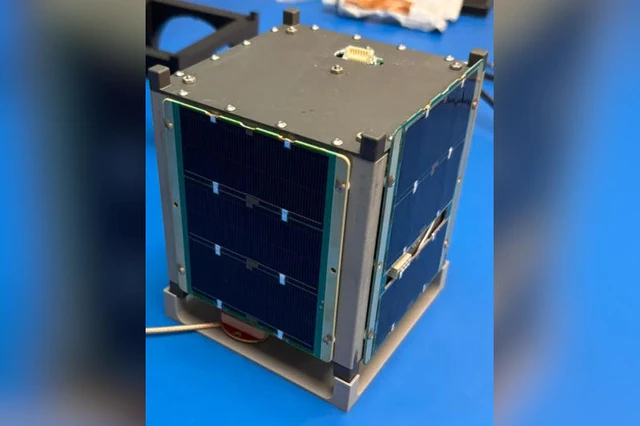 Autonomous Nuclear Power in the Commercial Space Sector
For decades, modern space exploration has been tethered to solar energy—a reliance that created a critical dependency on illumination and stifled expansion into deep space. The shift toward compact nuclear power sources promises to dissolve these constraints, unlocking access to the Moon's permanently shadowed regions and the furthest reaches of orbital space. A recent SpaceX launch marked a pivotal milestone, representing the first commercial deployment of such technology. The BOHR satellite is specifically designed to validate the viability of betavoltaic cells within the unforgiving environment of open space.
7 Jul 2026
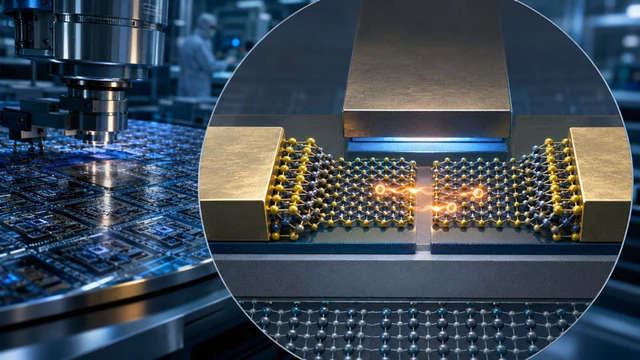 The Physical Limits of Transistor Scaling
The relentless pursuit of semiconductor miniaturization has reached a critical threshold where the laws of classical physics no longer apply. As component dimensions shrink toward the atomic scale, the industry is colliding with fundamental quantum constraints. Today's "nanometer" process nodes are increasingly becoming marketing shorthand, masking the profound physical complexities beneath the surface. However, a novel methodology for calculating the quantum limit is now empowering engineers to design devices with precision, effectively overcoming the persistent barrier of current leakage.
7 Jul 2026
 Streamlining Extreme Ultraviolet (EUV) Optics
The relentless pursuit of smaller process nodes in the semiconductor industry has collided with a formidable barrier: the exponential surge in equipment costs. Modern Extreme Ultraviolet (EUV) lithography, which enables the fabrication of chips with staggering transistor densities, demands optical systems of unprecedented complexity. A groundbreaking study from the Okinawa Institute of Science and Technology proposes a radical reimagining of the fundamental geometry underlying these systems. Shifting toward a linear architecture could do more than just streamline the production of nanometer-scale structures; it could drastically lower the financial barrier to entry for the next generation of high-performance computing.
