The quest for global energy independence through nuclear fusion is constrained not only by the complexities of plasma confinement but also by a critical scarcity of raw materials. Tritium, a fundamental component of the fuel mix, occurs naturally only in negligible quantities, transforming its sustainable production into a strategic imperative. A new initiative to establish dedicated fuel "farms" aims to translate theoretical frameworks into tangible engineering reality. Project Unity-3 is emerging as the bedrock for the transition from experimental testbeds to full-scale commercial reactors.
One of the most formidable barriers to the mass adoption of fusion energy is the fuel availability paradox. While deuterium is easily extracted from ordinary water, its synthesis partner—tritium—possesses an extremely short half-life and limited natural reserves. The solution to this dilemma lies in the concept of the "breeding blanket," a system designed to transform the reactor from a mere consumer of resources into an autonomous generation plant.
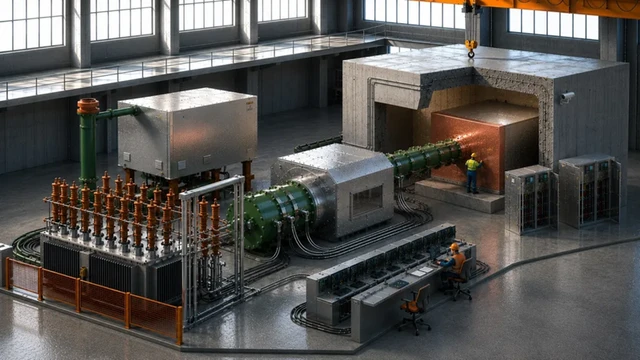
At the heart of this technological pivot is the development of the Unity-3 prototype, engineered by Kyoto Fusioneering in collaboration with Oak Ridge National Laboratory and supported by the U.S. Department of Energy. The essence of the system lies in creating a specialized layer surrounding the reactor's active zone that serves a dual purpose: absorbing excess neutron energy while simultaneously synthesizing new fuel.
The technical execution of this process relies on the interaction between neutron flux and lithium. In the most promising configuration, liquid lithium is utilized as both the coolant and the raw feedstock. When high-energy neutrons, generated during the fusion reaction, bombard lithium atoms, a nuclear reaction occurs, resulting in the production of helium and the elusive tritium. This hydrogen isotope is then extracted from the system and fed back into the combustion chamber, effectively closing the fuel cycle.
However, bridging the gap between mathematical modeling and physical implementation presents significant engineering challenges. Working with liquid lithium requires materials with extreme thermal stability and the development of specialized pumping systems capable of operating under intense radiation exposure. Unity-3 is designed to serve as a testbed for verifying these solutions, allowing researchers to validate not only the properties of lithium but also the efficacy of alternative breeding blanket materials.
The significance of this project extends far beyond a single company. The data harvested from the operation of Unity-3 will provide a shared technological baseline for several industry players, including Realta Fusion, Thea Energy, Type One Energy, and Xcimer Energy. This fosters a collaborative development ecosystem where fundamental engineering data helps optimize the design of various reactor architectures.
Parallel to solving the fuel crisis, Kyoto Fusioneering is developing a comprehensive infrastructure for fusion power plants. This includes the creation of precision heating systems to bring fuel to a plasma state, mechanisms for recirculating unburnt gas from exhaust streams, and the design of high-efficiency heat recovery loops. In doing so, they are building a complete technological stack that transitions nuclear fusion from a physics experiment into a scalable industrial sector.
 Next-Generation Ultra-Lightweight Lens Technology