22 Aug 2026
 Next-Generation Ultra-Lightweight Lens Technology
The quest for truly ergonomic AR and VR wearables has long been stifled by the inherent physical constraints of traditional optics. Cumbersome lens arrays render headsets heavy and unwieldy, imposing a palpable physical barrier between the user and the digital realm. A breakthrough in metalens technology by South Korean researchers promises to disrupt this paradigm, replacing bulky glass elements with nearly weightless nanostructures. By overcoming the hurdles of chromatic aberration and manufacturing scalability, this innovation paves the way for an era of truly seamless, unobtrusive wearable displays.
21 Aug 2026
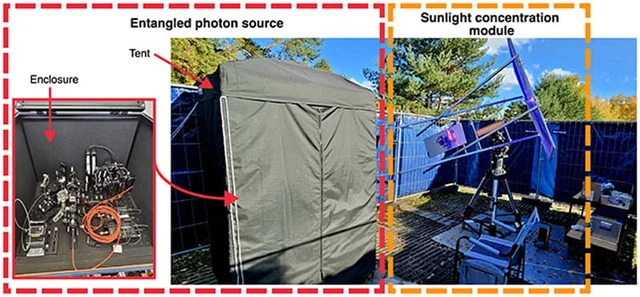 Quantum Entanglement of Solar Radiation
For years, the advancement of quantum communications has been hampered by a reliance on costly, energy-intensive laser systems. The generation of entangled photon states was long believed to be contingent upon the strict coherence of the light source. However, a recent breakthrough by researchers from the University of Ottawa and the Max Planck Institute has upended this paradigm, demonstrating that ordinary solar radiation can be effectively utilized for this purpose. This milestone paves the way for a new generation of accessible, energy-efficient quantum technologies.
20 Aug 2026
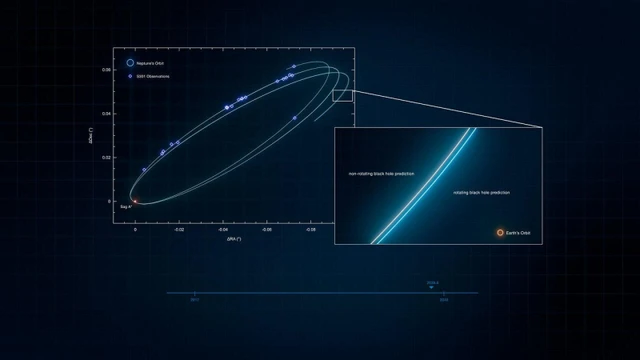 The Gravitational Reach of Sagittarius A*
The center of our galaxy remains one of the most enigmatic realms of the cosmos—a place where the laws of physics are pushed to their absolute limits. Unlocking the secrets of supermassive black holes requires observing the celestial bodies that venture closest to the event horizon. The discovery of star S301 provides an unprecedented window into the inner workings of Sagittarius A*. This star serves as a natural probe, enabling scientists to precisely map the fundamental characteristics of the gravitational behemoth lurking at the heart of the Milky Way.
20 Aug 2026
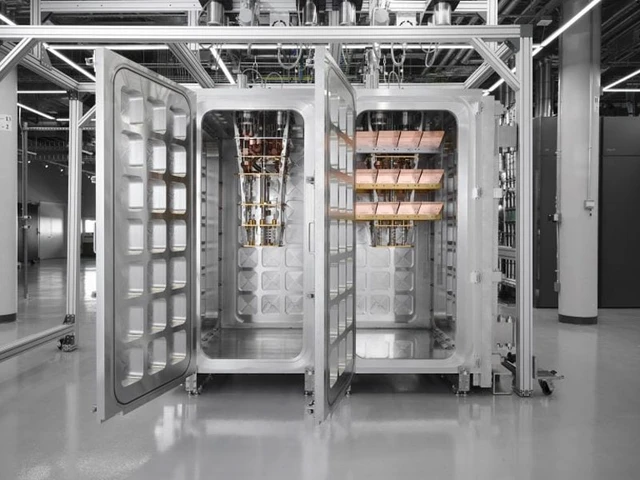 Modular Cooling Standards for Quantum Systems
The transition of quantum computing from sterile laboratories to industrial data centers necessitates a fundamental paradigm shift in cooling engineering. Conventional cryostats—cumbersome, standalone units—have emerged as the primary bottleneck in scaling systems based on superconducting qubits. IBM is addressing this challenge by developing standardized cryogenic modules designed for seamless integration into a unified network. This evolution transforms the quantum computer from a bespoke, singular curiosity into a scalable piece of industrial infrastructure.
18 Aug 2026
 Quantum Entanglement in Urban Communication Networks
The vision of a global quantum internet hinges on the ability to transmit entangled particles across vast distances. However, the inherent fragility of quantum states renders them hypersensitive to external interference, effectively turning conventional fiber-optic networks into hostile environments. Recent breakthroughs in physics suggest that the divide between the sterile confines of the laboratory and the chaos of urban infrastructure is finally closing. A successful demonstration of entanglement transmission over existing communication lines proves that our current network architecture is capable of serving as the foundation for a quantum revolution.
15 Aug 2026
 Ultra-Sensitive Planar Optical Sensors
Optical fibers have long since evolved beyond their role as mere data conduits, transforming into sophisticated instruments for structural health monitoring. However, the conventional cylindrical geometry of silica glass imposes inherent constraints on the sensitivity of such systems. The breakthrough lies in the transition to a planar architecture, which fundamentally alters the physics governing the interaction between light and mechanical strain. This innovation increases measurement precision a thousandfold, effectively engineering an artificial nervous system for industrial infrastructure.
15 Aug 2026
 A New Standard for Fault-Tolerant Quantum Computing
Quantum computing has long been hampered by the inherent fragility of quantum states and pervasive noise. The primary barrier to practical implementation has been the staggering amount of overhead required for error correction. As D-Wave pivots from specialized quantum annealing toward universal quantum computing, the company has introduced a solution designed to drastically reduce these overheads. Their novel approach enables the system to identify faults autonomously and in real-time, paving the way for the development of truly scalable and stable quantum architectures.
15 Aug 2026
 The Phenomenon of Dark Stars in the Early Universe
The early universe continues to defy conventional astrophysical paradigms. The James Webb Space Telescope has identified objects that blur the traditional boundaries between stars and black holes. The discovery of MoM-BH*-1 points toward a new class of celestial bodies—"black stars"—which harbor gravitational behemoths at their core. This phenomenon may provide the key to understanding how supermassive black holes attained such colossal proportions in the immediate aftermath of the Big Bang.
14 Aug 2026
 The Radius of Influence of Active Galactic Nuclei
For decades, the evolution of galactic systems was viewed primarily as a product of internal star-formation mechanisms and gravitational dynamics. Yet, the influence exerted by the supermassive black holes at their cores has proven far more profound than classical models ever predicted. Emerging data suggests that active galactic nuclei possess the capacity to manipulate matter far beyond their immediate boundaries—a revelation that forces a fundamental reassessment of how the energy output of a single celestial entity can dictate the destiny of entire galactic clusters.
14 Aug 2026
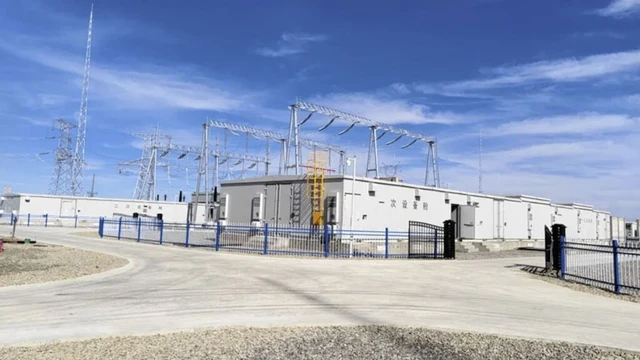 Next-Generation Large-Scale Energy Buffering
The global transition toward renewable energy has introduced a fundamental systemic challenge: the inherent volatility of power generation. Because these sources are tethered to fluctuating weather patterns, legacy grids have become increasingly vulnerable, necessitating a paradigm shift in how load balancing and frequency regulation are managed. China is addressing this instability by deploying energy storage systems on an unprecedented scale. The commissioning of the DongSu complex signals a strategic pivot—moving beyond mere electricity storage toward the active, systemic orchestration of the entire power grid.
14 Aug 2026
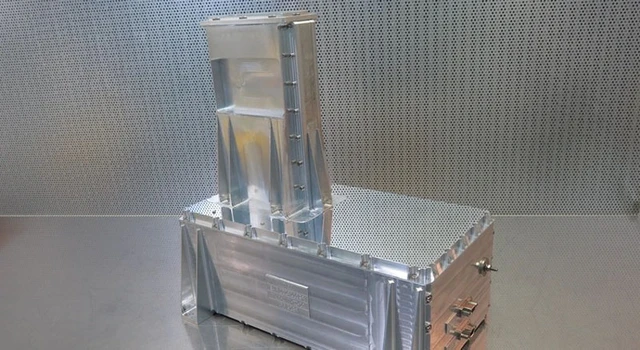 Lunar Horizons: The Ascent of Turkish Astronautics
The contemporary space race is transcending the exclusive domain of a handful of superpowers, evolving into a multipolar competition for access to the Moon's vast resources. Turkey is asserting its ambitions in this arena with the launch of AYAP, its national lunar exploration program. The inaugural mission will serve as a critical litmus test for the nation’s technological sovereignty and engineering prowess—marking the first step in a long-term strategic pivot from orbital reconnaissance toward a sustained presence on the lunar surface.
14 Aug 2026
 Resonant Energy in Microrobotics
For years, the quest for efficient micro-scale locomotion has been stifled by the inherent bulk and weight of conventional actuators. Traditional electric motors and batteries become prohibitively cumbersome when scaled down to devices weighing only a few milligrams. To resolve this impasse, researchers have pivoted toward external power sources capable of delivering kinetic impulse directly. Engineers at EPFL have now proposed leveraging acoustic resonance to generate thrust, effectively transforming sound into the propellant for micro-robotics.
