22 Aug 2026
 Next-Generation Ultra-Lightweight Lens Technology
The quest for truly ergonomic AR and VR wearables has long been stifled by the inherent physical constraints of traditional optics. Cumbersome lens arrays render headsets heavy and unwieldy, imposing a palpable physical barrier between the user and the digital realm. A breakthrough in metalens technology by South Korean researchers promises to disrupt this paradigm, replacing bulky glass elements with nearly weightless nanostructures. By overcoming the hurdles of chromatic aberration and manufacturing scalability, this innovation paves the way for an era of truly seamless, unobtrusive wearable displays.
22 Aug 2026
 Pushing the Limits of the Google Pixel 11 Pro Fold
Foldables remain one of the most ambitious yet problematic frontiers in modern mobile electronics. The pursuit of an ultra-slim chassis inevitably collides with the laws of physics and the uncompromising demands of material durability. While the new Google Pixel 11 Pro Fold demonstrates measurable progress in structural integrity, it retains the critical vulnerabilities of its predecessors. An analysis of its physical resilience exposes systemic flaws in the company's engineering philosophy.
20 Aug 2026
 Initial Strides: LandSpace’s Foray into Reusable Launch Systems
The pursuit of reusability has emerged as the defining paradigm of modern astronautics, drastically slashing the cost of delivering payloads into orbit. China is aggressively aligning itself with this global trajectory, developing proprietary systems for the vertical recovery of rocket stages. The most recent flight of the Zhuque-3 demonstrated the technical maturity of its landing mechanisms, notwithstanding a dramatic conclusion. This incident underscores the critical complexities inherent in managing residual propellant during the mission's terminal phase.
20 Aug 2026
 The Longevity Limits of Zinc-Iodine Batteries
The global energy sector is in pursuit of a sustainable alternative to lithium-ion technologies, which are increasingly constrained by resource scarcity and mounting environmental risks. Contemporary energy storage systems are frequently hampered by premature electrode degradation and inefficient charge recovery rates. A breakthrough by Australian researchers proposes a transition toward aqueous chemistry—a paradigm that marries inherent safety with exceptional durability. This innovation has the potential to fundamentally redefine the stabilization of renewable energy grids on a global scale.
20 Aug 2026
 Initial Breakthroughs in 3D Matrix Memory
The semiconductor industry has long been grappling with the physical limits of scaling traditional random-access memory. The quest to increase data density without compromising performance has evolved into the defining technological race of the decade. For years, SanDisk has been quietly developing 3D Matrix Memory, aiming to transpose the principles of vertical stacking—pioneered in NAND flash—into the realm of high-performance computing. Recent test results confirm that this conceptual framework is finally manifesting into a tangible physical reality.
19 Aug 2026
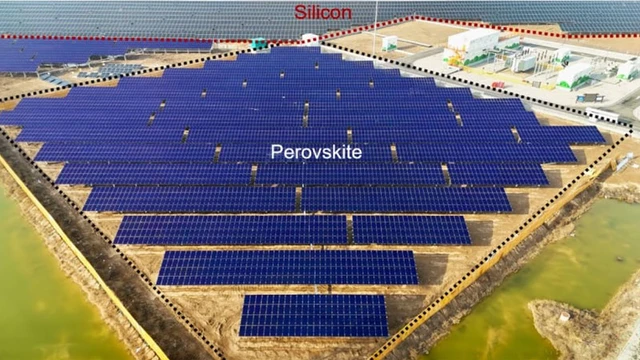 The Perovskite Advantage: Surpassing Silicon Solar Cells
The global energy transition demands a new class of materials—those capable of transcending the physical and economic constraints inherent to traditional silicon. For decades, the industry has been tethered to rigid panels whose manufacturing is notoriously energy-intensive. Now, however, perovskites—organic-inorganic halides boasting exceptional optical properties—have emerged as a disruptive alternative. Recent large-scale trials in China have confirmed that these materials are finally ready to migrate from the laboratory to commercial application. These results signal the dawn of a new era in solar power generation, where peak efficiency is paired with a radical reduction in production costs.
19 Aug 2026
 Solar Energy Generation in Panoramic Glazing
The shift toward electromobility presents the industry with a fundamental challenge: optimizing energy efficiency without the perpetual increase of battery mass. Within this framework, the integration of photovoltaic cells directly into the vehicle's bodywork emerges as a logical evolutionary step. Transforming the panoramic roof from a mere aesthetic luxury into an active power source redefines the vehicle's relationship with its environment. Today, this technology is migrating from the realm of laboratory experimentation toward large-scale industrial deployment.
19 Aug 2026
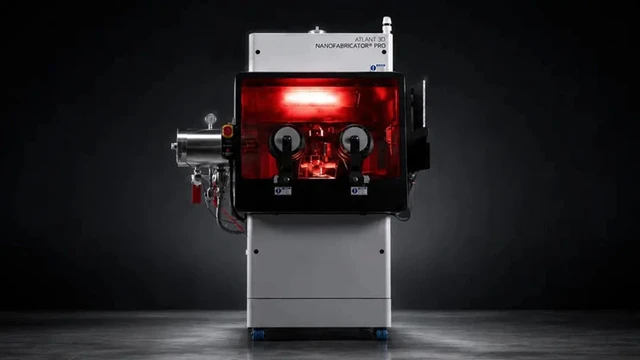 Automated Atomic-Scale Materials Synthesis
The quest for novel materials has long been the primary bottleneck of technological advancement—a domain where theoretical predictions were frequently stifled by the sluggish pace of physical synthesis. While modern artificial intelligence can now architect structures with extraordinary properties, translating these digital blueprints into physical reality once demanded months of painstaking, manual labor. The emergence of specialized atomic printing platforms is shifting this paradigm, condensing the transition from hypothesis to tangible prototype into a matter of hours. The materials development cycle is now entering an era of total automation, positioning AI not merely as a tool, but as a fully autonomous chemical engineer.
19 Aug 2026
 Next-Generation Maskless OLED Printing
For years, the OLED display industry has been constrained by the inherent physical limitations of traditional manufacturing processes. While a decade of reliance on Fine Metal Masks (FMM) enabled mass-market adoption, it simultaneously created significant bottlenecks for scalability and power efficiency. The introduction of LG Display’s FLiPP technology marks a fundamental paradigm shift, moving away from mechanical stencils toward high-precision photolithography. This transition promises to radically reshape production economics and redefine the performance benchmarks for next-generation displays.
18 Aug 2026
 The Engineering Purism of Noctua Cooling Systems
The contemporary PC hardware market has long since devolved into a competition of visual spectacle, where RGB lighting and integrated OLED displays frequently take precedence over raw technical specifications. In this pursuit of aesthetic flair, it is easy to lose sight of the fundamental purpose of cooling systems: efficient thermal dissipation and acoustic refinement. Noctua has maintained a steadfast position, deliberately distancing itself from the industry's prevailing trends. Their strategy is rooted in a commitment to pure performance over superficial ornamentation.
16 Aug 2026
 The Chemical Degradation of Legacy Optical Media
The era of physical media is fading into obsolescence, but for collectors, the battle for data preservation is only just beginning. A troubling phenomenon has recently emerged: legacy CDs and DVDs are beginning to spontaneously crack and disintegrate, even in the absence of any mechanical stress. This is not a matter of routine oxidation of the reflective layer, but rather a profound structural degradation of the polymer substrate itself. This process reveals a latent vulnerability in polycarbonate when exposed to specific chemical catalysts. Understanding the nature of this decay has become critical for the long-term archiving of our digital history.
15 Aug 2026
 Ultra-Sensitive Planar Optical Sensors
Optical fibers have long since evolved beyond their role as mere data conduits, transforming into sophisticated instruments for structural health monitoring. However, the conventional cylindrical geometry of silica glass imposes inherent constraints on the sensitivity of such systems. The breakthrough lies in the transition to a planar architecture, which fundamentally alters the physics governing the interaction between light and mechanical strain. This innovation increases measurement precision a thousandfold, effectively engineering an artificial nervous system for industrial infrastructure.
