7 Jul 2026
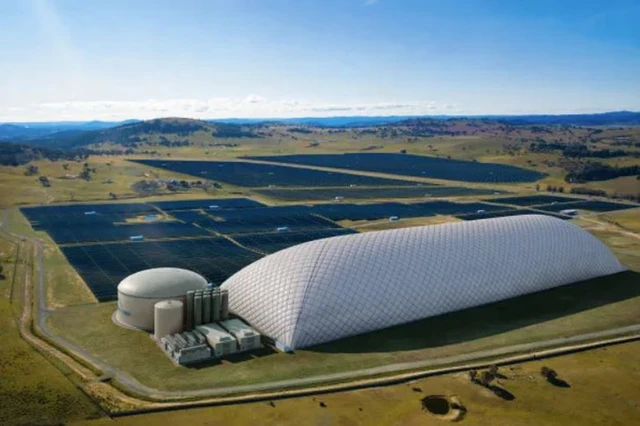 Energy Breakthrough: Harnessing Compressed Carbon Dioxide
The global transition to renewable energy is confronting a fundamental barrier: the inherent instability of power generation. Conventional lithium-ion solutions are constrained by prohibitive material costs and limited storage lifecycles, rendering them insufficient for regional-scale deployment. In response, a new paradigm of thermomechanical energy storage is emerging, utilizing carbon dioxide as the working fluid. A joint venture between Energy Dome and Google in Ireland seeks to prove that industrial scalability and ecological sustainability can coexist within a single, integrated engineering system.
7 Jul 2026
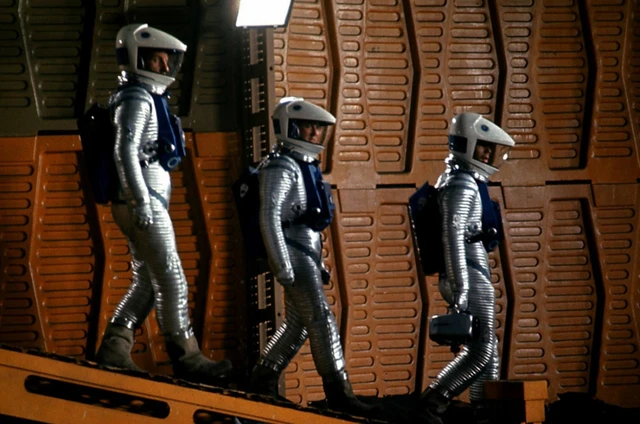 The Physics of Chaos vs. Hollywood Gloss
For decades, the footage from the Apollo moon missions has been a lightning rod for controversy, primarily due to the strange, almost unnatural kinetics of the astronauts' movements. For conspiracy theorists, this "bounding chaos" became a cornerstone argument for a staged event, with the meticulous Stanley Kubrick cast as the mastermind. However, a deep dive into the biomechanics reveals a compelling truth: the visual awkwardness of the record is, in fact, its strongest proof of authenticity. The genuine physics of an extraterrestrial environment proved too "unrefined" for the cinematic lens to have been a fabrication.
7 Jul 2026
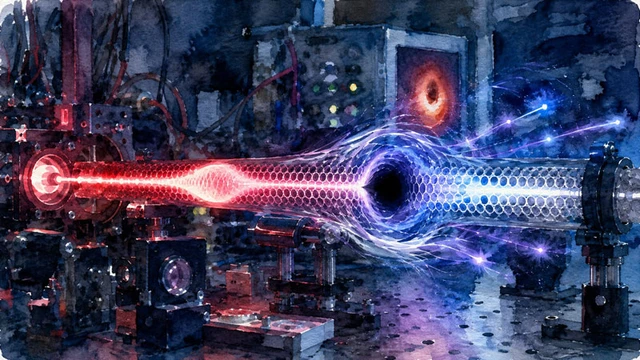 The Mechanics of Artificial Black Hole Evaporation
Black holes persist as some of the most enigmatic entities in the cosmos, fundamentally challenging our understanding of the laws of physics. The theoretical framework of Hawking radiation posits that these gravitational behemoths can slowly evaporate over time; however, detecting this phenomenon in the depths of space remains an almost insurmountable task, obscured by overwhelming electromagnetic noise. To test this hypothesis, researchers are engineering terrestrial analogues of these extreme environments, leveraging cutting-edge techniques in quantum optics. Their latest experiment has gone beyond merely simulating an event horizon, enabling a granular analysis of the system's energy dissipation dynamics.
7 Jul 2026
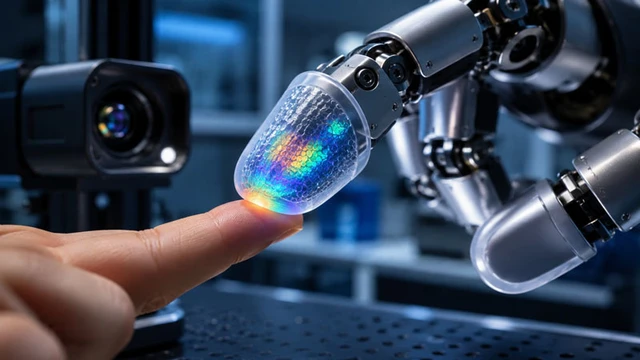 Visualizing Touch in Modern Robotics
Tactile perception remains one of the most formidable challenges in modern robotics, highlighting a profound disparity between biological precision and mechanical execution. Conventional approaches to simulating touch typically fall into two traps: they either demand prohibitive computational overhead or suffer from inadequate resolution. Researchers at Queen Mary University of London have devised an elegant solution by bridging the gap between optics and materials science. This innovation allows robots to literally "see" touch, translating physical pressure into a dynamic color map. Such an approach paves the way for the development of robotic manipulators with a level of sensitivity that rivals the human touch.
7 Jul 2026
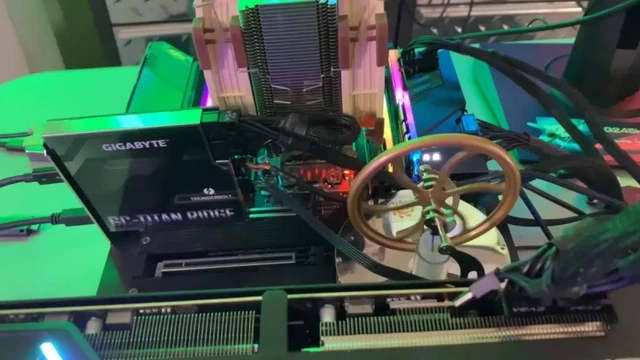 Computational Energy in Mechanical Motion
Modern computing is, at its core, a relentless battle against thermal waste. As transistor density climbs and clock speeds soar, the heat output of flagship processors has evolved from a mere byproduct into a formidable engineering hurdle. Yet, the very energy that designers typically scramble to dissipate as rapidly as possible can, in fact, be harnessed as a source of mechanical work. A recent experiment involving a high-performance workstation vividly illustrates the latent physical potential inherent in the thermal dissipation of modern systems.
7 Jul 2026
 Revelations from the Depths of Centaurus A
The universe veils its most profound mechanisms behind dense shrouds of cosmic dust. For decades, astronomers have struggled to peer through these opaque barriers to decode the mechanics driving the evolution of stellar systems. The deployment of the James Webb Space Telescope has fundamentally shifted the paradigm, granting humanity unprecedented resolution across the infrared spectrum. Now, the latest imagery of the Centaurus A galaxy is proving pivotal, offering a window into the intricate symbiosis between supermassive black holes and their host galaxies.
5 Jul 2026
 Temporal Flow Inversion in the Quantum Realm
Understanding the nature of time remains one of the most formidable frontiers of modern fundamental science. While the macroscopic world is governed by the relentless progression of entropy, quantum systems exhibit a striking symmetry relative to the flow of time. Novel control methodologies are now making it possible to effectively recalibrate the "arrow of time," inducing a reversal effect at the microscopic level. This breakthrough paves the way for fundamentally new approaches to energy extraction and the synthesis of complex quantum states.
30 Jun 2026
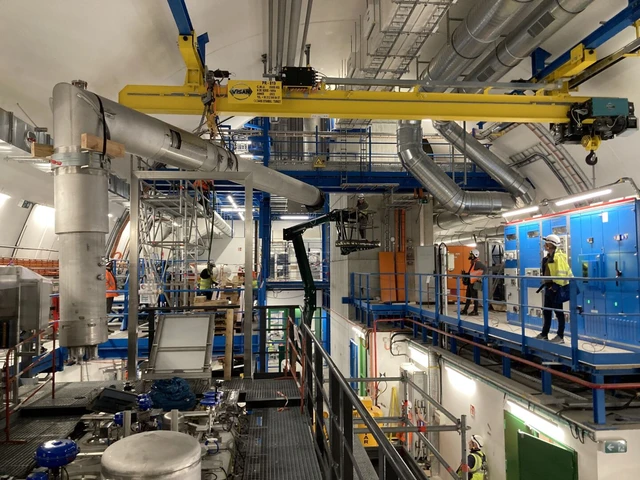 The Evolution of Earth's Premier Particle Accelerator
The quest to uncover the fundamental laws of the universe has reached a critical inflection point of technological transformation. The Large Hadron Collider—humanity’s premier instrument for probing the subatomic realm—is entering a strategic hiatus for an extensive architectural overhaul. The transition to High-Luminosity mode is engineered to illuminate the mysteries of dark matter and push the frontiers of modern physics. This modernization signals a paradigm shift in the methodologies governing the acquisition and analysis of elementary particle collision data.
30 Jun 2026
 Salt Clouds of the Pink World, GJ 504 b
The quest for habitable worlds inevitably begins with an exploration of the most extreme reaches of deep space. For a decade, the so-called "Pink Planet" has remained one of modern astronomy's most enduring enigmas, obscured by its extreme faintness and an anomalous spectral signature. Now, leveraging the unprecedented capabilities of the James Webb Space Telescope, researchers have finally managed to pierce the dense haze enveloping this frigid giant. The discovery of salt clouds not only validates bold theoretical predictions made years ago but also pushes the frontiers of our understanding regarding exoplanetary evolution.
29 Jun 2026
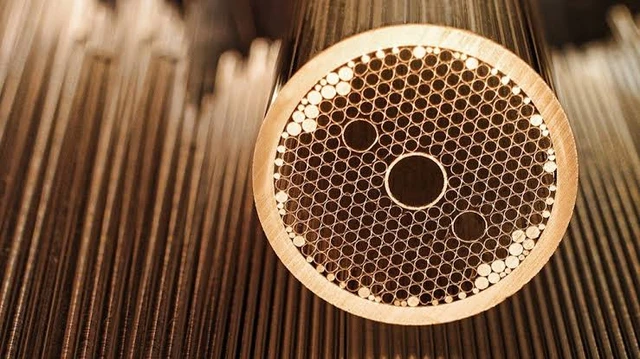 Hollow-Core Fiber Pushes the Boundaries of Connectivity
Contemporary data transmission networks are rapidly approaching the physical capacity limits of traditional silica-core fiber. Amidst an exponential surge in traffic and increasingly stringent demands for ultra-low latency, the search for alternative signal propagation media has become a critical imperative for global infrastructure. Cutting-edge experiments with hollow-core fibers (HCF) are paving the way for a fundamental paradigm shift in the architecture of backbone channels. Recently, Chinese engineers demonstrated a technology capable of significantly expanding network capacity while minimizing transmission losses over long distances.
