7 Jul 2026
 The Anomalous Gas Giants of the TOI-791 System
The universe possesses a recurring tendency to defy the established laws of astrophysics, unveiling objects that, by all conventional standards, simply should not exist. The discovery of exoplanets with exceptionally low densities is forcing a critical reassessment of contemporary models regarding the formation of planetary systems. Within the constellation Volans, astronomers have identified a singular duo of worlds—spheres whose composition is more akin to cotton candy than the familiar architecture of gas giants. This discovery marks the beginning of a new chapter in our understanding of stellar system evolution and the absolute thresholds of matter density in the cosmos.
7 Jul 2026
 Optical Display-Sensor Hybrid
The divide between light capture and emission has long been an insurmountable physical barrier in electronics. Current hardware relies on discrete pixel arrays for imaging and display—a structural redundancy that complicates design and constrains device form factors. A breakthrough from researchers at ETH Zurich proposes a radical departure: merging the functions of the sensor and the emitter into a single, unified element. The emergence of the "Fourier pixel" transforms the display from a passive output interface into an active sensory organ.
7 Jul 2026
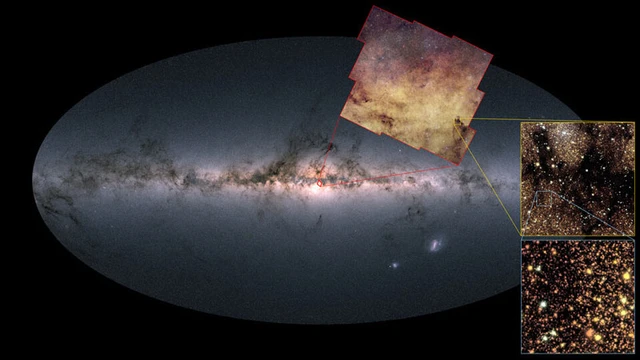 A Digital Twin of the Milky Way's Galactic Center
Deep space exploration frequently yields its most surprising rewards when instruments venture beyond their primary mandates. The Euclid Observatory, originally engineered to unravel the enigmas of dark energy, has unexpectedly evolved into a formidable instrument for probing the depths of our own galaxy. Leveraging extreme instrument sensitivity, the mission has produced a map of the Milky Way's stellar core with unprecedented resolution. This technological leap does more than merely expand humanity's visual archive; it establishes the critical foundation for the discovery of thousands of new exoplanets.
7 Jul 2026
 The Physical Manifestation of the Point of No Return
For decades, the event horizon has stood as science's ultimate frontier—the precise point where physical reality converges with pure mathematics. This invisible threshold, beyond which spacetime curves toward infinity, was long regarded as a theoretical construct, accessible only through the lens of indirect computation. Yet, the advent of gravitational-wave astronomy has enabled humanity to transcend these abstractions. The latest data suggest that we have, for the first time, captured tangible evidence from the very precipice of the abyss.
7 Jul 2026
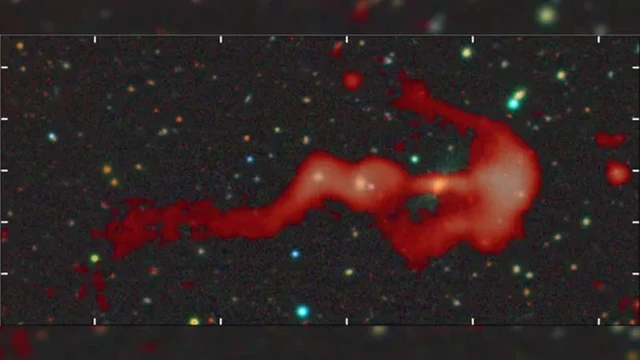 A Cosmic Indicator for Intergalactic Shock Waves
The universe frequently shrouds its most colossal and violent processes behind a veil of invisibility. Yet, certain rare astronomical phenomena act as natural probes, exposing the hidden dynamics of galaxy clusters. The discovery of the radio galaxy RAD-BAARG provides a singular window into the interaction between a supermassive black hole and the intergalactic medium, effectively transforming the cosmic vacuum into a canvas that visualizes the shockwaves of a supersonic collision.
7 Jul 2026
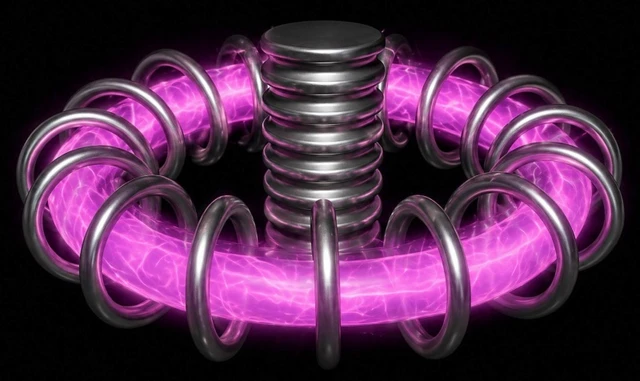 Testing the Texatron Aneutronic Reactor
For decades, humanity has sought to harness the power of the stars in a quest to permanently resolve the global energy crisis. While nuclear fusion promises a virtually inexhaustible source of clean energy, the road to commercial viability remains one of the most formidable challenges in modern science. Against this backdrop, American Fusion’s Texatron project has announced its transition into a critical phase of independent verification. The success of these trials could redefine our understanding of compact power plants and accelerate the dawn of the aneutronic energy era.
7 Jul 2026
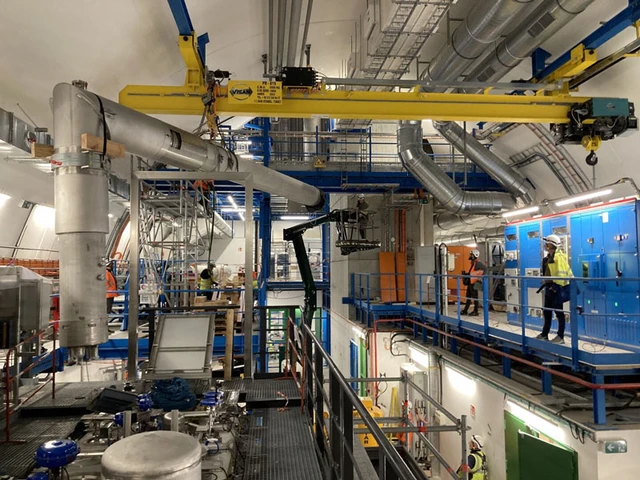 The Global Upgrade of the Large Hadron Collider
The quest to uncover the fundamental laws of the universe demands instruments of unparalleled precision and power. The Large Hadron Collider, the crowning achievement of modern engineering, is now entering its most ambitious phase of transformation. A four-year technical hiatus will herald the transition to the High-Luminosity era, an evolution designed to push the boundaries of particle physics to their absolute limits. This is far more than routine maintenance; it is a comprehensive overhaul of the most powerful accelerator in human history.
7 Jul 2026
 A New Speed Standard for Hollow-Core Fiber
Modern digital infrastructure is rapidly approaching the physical limits of traditional fiber-optic bandwidth. Amidst an explosion of traffic driven by the proliferation of neural networks and cloud computing, the search for alternative transmission media has become a critical imperative. The answer may lie in shifting from solid silica cores to hollow-core fibers, allowing light to travel at near-vacuum speeds. Recent trials in China demonstrate that this technology can sustain colossal throughput over distances previously considered unattainable without signal regeneration.
7 Jul 2026
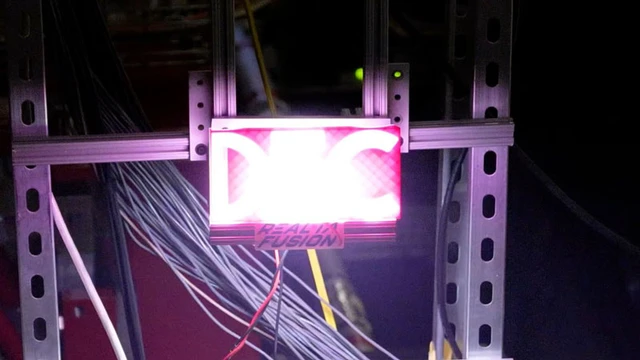 Direct Electricity Generation via Plasma Fusion
For decades, nuclear fusion has been pursued as the "holy grail" of global energy. Yet, the primary bottleneck hindering its commercialization remains the inherent inefficiency of converting heat into electricity. Conventional steam-turbine architectures are both unwieldy and inefficient, severely undermining the economic viability of such reactors. US-based startup Realta Fusion has introduced a disruptive approach to bypass this limitation, demonstrating a technology capable of extracting current directly from plasma. This breakthrough signals a pivotal shift from theoretical modeling to the practical realization of direct energy conversion.
7 Jul 2026
 A New Benchmark in Affordable Water Desalination
The scarcity of freshwater is emerging as one of the defining challenges of the modern era, compelling humanity to explore more efficient ways to harness the resources of the ocean. For decades, conventional desalination methods have been hampered by prohibitive energy costs or a lack of long-term technical stability. However, a recent breakthrough in photothermal materials promises to fundamentally reshape the economics of the process—introducing a technology with the potential to make seawater purification more cost-effective than the production of bottled water.
7 Jul 2026
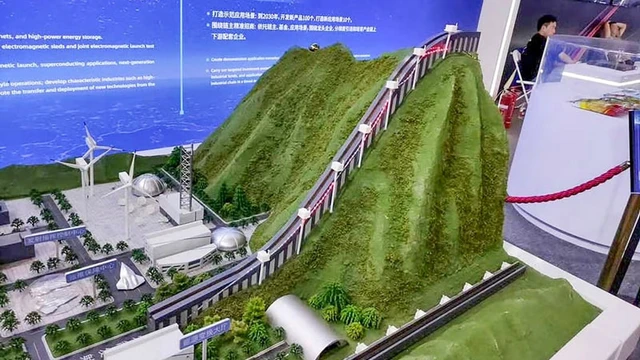 A Cosmic Ascent from the Tibetan Highlands
For decades, the prohibitive cost of accessing near-Earth space has remained the primary bottleneck hindering humanity's full-scale expansion into the cosmos. Conventional chemical propulsion systems demand an astronomical amount of propellant simply to fight gravity and punch through the dense layers of the atmosphere. Chinese engineers are proposing a radical alternative: leveraging electromagnetic acceleration technology in synergy with the unique geography of the Tibetan Plateau. This approach aims to replace the most capital-intensive phase of launch with a high-tech "slingshot," potentially slashing launch costs by an order of magnitude.
7 Jul 2026
 Supercritical Fluids: A Catalyst for the Next Generation of Orbital Launches
The race for affordable space access is increasingly pivoting toward the radical optimization of ground infrastructure. Traditional "hot" launches necessitate staggering investments to protect launch pads from extreme thermal loads and acoustic shock. A novel concept proposed by Chinese engineers seeks to replace the initial ignition plume with a powerful pneumatic impulse. By leveraging the unique properties of supercritical carbon dioxide, this approach could transform cumbersome, static spaceports into agile, mobile launch systems.
