For years, the pursuit of scalable quantum computing has been bottlenecked by the necessity of extreme cryogenic cooling and ultra-high vacuum environments. While industry titans continue to rely on cumbersome cryogenic infrastructure, German startup Saxon Q is charting a radically different course. By leveraging synthetic diamonds, they are achieving quantum coherence at room temperature—a breakthrough that effectively transforms the quantum supercomputer into a standard server rack. This transition from experimental laboratory setups to viable commercial products promises to fundamentally democratize access to quantum processing power for both enterprise and academia.
The quantum computing industry has long faced a formidable hurdle: the requirement for temperatures approaching absolute zero, rendering operation prohibitively expensive and technically cumbersome. Against this backdrop, the introduction of the SXQ128 and SXQ512 models from Saxon Q represents a significant technological pivot. Featuring 128 and 512 physical qubits respectively, these systems are the first commercial solutions based on diamond nitrogen-vacancy (NV) centers to successfully breach the critical ten-qubit threshold.
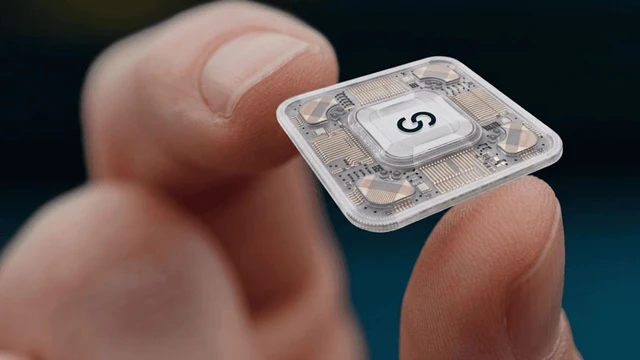
At the heart of this approach is the use of synthetic diamonds, where specific lattice defects serve as qubits. In these NV centers, a nitrogen atom sits adjacent to a vacant site, creating a negatively charged structure. Quantum information is encoded within the spin states of electrons and neighboring atomic nuclei. The system is orchestrated using laser pulses for state initialization, microwave and radio-frequency signals for gate operations, and fluorescence for readout. The inherent rigidity of the diamond lattice effectively shields these spins from environmental thermal noise, allowing the processor to maintain coherence without the need for cryostats.
However, scaling the production of stable qubits has historically been plagued by low yields; traditional nitrogen implantation methods typically achieved efficiencies of only 1–10%. Saxon Q’s engineers overcame this bottleneck through the co-implantation of nitrogen and sulfur ions. The addition of sulfur boosted the yield of functional qubits to 85%, as it facilitates vacancy formation adjacent to the nitrogen and stabilizes the essential negative charge of the NV centers.
From a technical standpoint, quantum gate fidelity in these systems reaches 99.92%. This implies an error rate of less than one per thousand operations—a remarkable feat for hardware operating at room temperature. It is important to note, however, that the stated capacities of 128 and 512 qubits do not imply a single monolithic register.
The systems utilize a modular architecture: in the SXQ128 model, eight qubits are fully entangled within each core, while the SXQ512 features sixteen per core. Total computational power is achieved by aggregating several such NV modules under the orchestration of a specialized quantum operating system. This decentralized structure streamlines both scalability and hardware maintenance.
The software stack is fully compatible with industry standards such as Qiskit and OpenQASM, ensuring accessibility for quantum software developers. Primary use cases for these systems include variational algorithms, quantum chemistry, materials science simulation, optimization problems, and the deployment of quantum convolutional neural networks.
The commercial rollout is phased: deliveries for the entry-level SXQ128 are expected within three months of ordering, while the more powerful SXQ512 will become available in the second quarter of 2027. This transition effectively transforms the quantum computer from an exotic scientific instrument into a standard component of IT infrastructure, capable of integration into conventional data centers without the need for specialized facilities.
 Energy Autonomy: The Extreme Edition