Jupiter’s moon Io has long been established as the most volcanically active object in the Solar System, yet the precise nature of its internal heat has remained a subject of theoretical contention for decades. Recent data transmitted by the Juno probe have provided an unprecedented glimpse beneath the surface of this infernal world, capturing empirical thermal profiles of its crust. The resulting thermal gradient reveals the fundamental mechanisms governing energy transfer from the moon's interior to its surface. These discoveries do more than just reshape our understanding of planetary body dynamics; they provide an unexpected new lens through which to analyze volcanism on Earth itself.
The Microwave Radiometer (MWR) proved pivotal in unlocking the secrets of Io’s internal dynamics. Originally designed to probe the dense cloud layers of Jupiter's atmosphere, the instrument's capabilities extended far beyond its initial mandate. Utilizing a system of six antennas, the MWR captures thermal radio emissions across wavelengths ranging from 1.3 to 51 cm. The underlying physics is as elegant as it is simple: longer wavelengths penetrate deeper into the planetary crust, allowing researchers to effectively "X-ray" subsurface layers from a few centimeters to several meters deep.
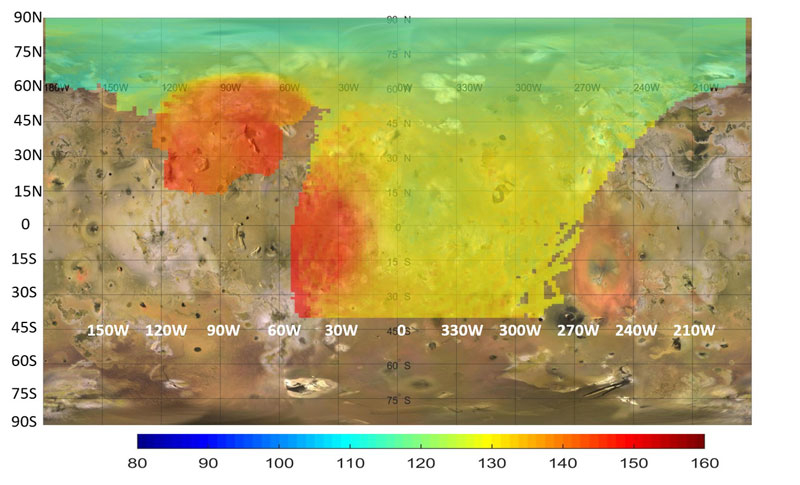
The resulting data was nothing short of revelatory. Across nearly every surveyed region, sensors detected a sharp spike in temperature; within just a few meters of the surface, temperatures climb by more than 22°C. Such a pronounced gradient cannot be attributed to solar radiation, which only heats the outermost microscopic layer. It is evident that the energy source originates from within the moon itself.
Modern science posits two primary hypotheses to explain this phenomenon. The first suggests a constant internal heat flux ranging from 1 to 3 Watts per square meter. While these figures may seem modest, on the scale of Io's entire surface, the specific energy output is 30 times higher than Earth's average. The second scenario proposes the existence of vast, cooling lava fields concealed beneath a solidified crust 9 to 11 meters thick. It is hypothesized that such "fresh" flows could occupy up to 10% of the moon's surface at any given time.
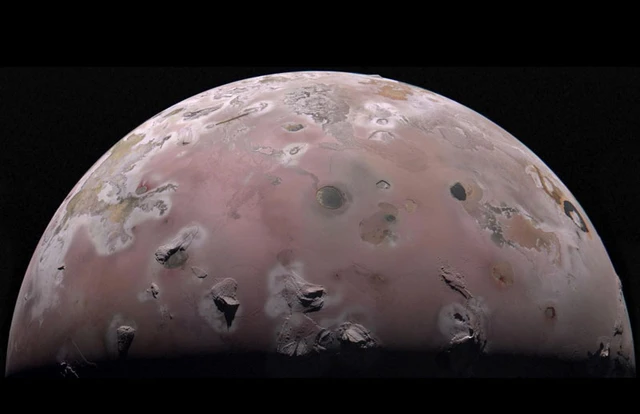
Radiometric analysis has also forced a paradigm shift in our understanding of Io's topography. Despite the presence of colossal mountains reaching several kilometers in height, much of the surface consists of exceptionally smooth plains spanning over 100 km. Microwave reflectivity data indicates an extremely low density of surface material; its properties align more closely with loose volcanic ash or pumice than with monolithic bedrock.
In a broader cosmic context, Io serves as a unique natural laboratory. Jupiter's immense gravity effectively "kneads" the moon, generating colossal friction and tidal heating within its core. This process demonstrates how small planetary bodies can maintain high internal temperatures even far from their host stars, where solar energy is insufficient to sustain geological activity.
Understanding how tidal heat migrates from the depths to the surface provides scientists with a universal model for studying exoplanets in other stellar systems. Furthermore, the microwave sounding techniques refined on Io can be adapted for monitoring terrestrial volcanoes, opening new horizons in predicting volcanic activity and identifying potentially habitable worlds beyond our own solar system.
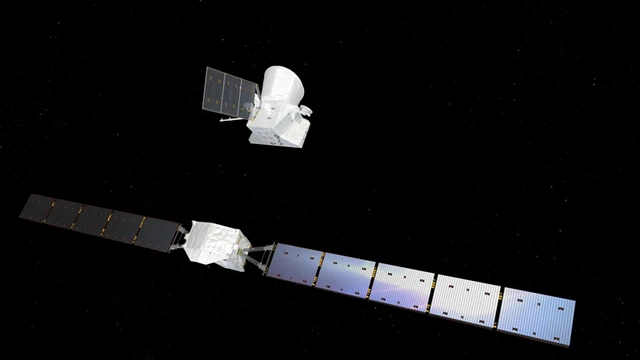 BepiColombo’s Odyssey: At the Threshold of the Sun