The modern data storage industry is rapidly approaching its physical ceiling, where traditional recording methodologies are becoming prohibitively energy-intensive and cumbersome. In an era defined by the explosive growth of neural networks, the requirement for ultra-dense memory—positioned in immediate proximity to compute cores—has become critical. Researchers at Fudan University have proposed a paradigm shift, moving data storage down to the level of fundamental particles. By utilizing a single electron to represent a bit of data, this innovation opens the door to devices characterized by unprecedented density and extreme energy efficiency.
At the heart of this technological breakthrough lies the concept of Guiyi, a Buddhist philosophy denoting "Unity"—the ability to condense an immense multitude into something infinitesimally small. This metaphor perfectly encapsulates the essence of the research recently published in Science: scientists have successfully developed non-volatile memory where a single bit of information is encoded by a solitary electron. By comparison, contemporary commercial flash memory requires hundreds of thousands of electrons to store one bit, rendering current technologies profoundly inefficient from a physical resource perspective.
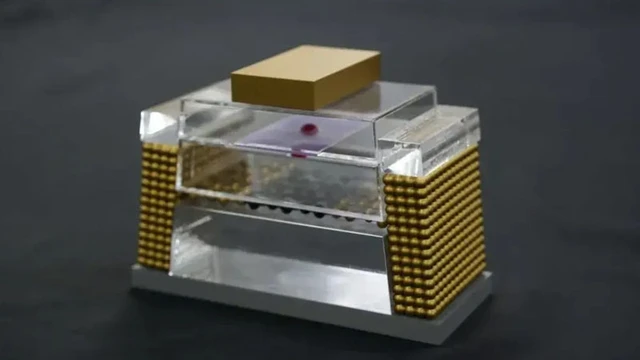
For years, the primary obstacle to realizing single-electron memory has been parasitic edge capacitance. In traditional semiconductor architectures, the electromagnetic field between electrodes is never ideal, leading to the accumulation of stochastic charges. Within this "noise," the signal from a single electron is simply drowned out, making data retrieval impossible. To overcome this barrier, researchers employed atomically thin two-dimensional materials and implemented a self-aligned planar topology. In this configuration, the drain, channel, and source are aligned on a single plane, effectively suppressing edge capacitance effects. A graphene layer serves as a robust gate, acting as an impenetrable barrier that confines the electron within the storage region.
The technical specifications of the new cell are remarkably stable. The addition or removal of a single electron triggers a threshold voltage shift of 0.5 V—a significant margin that allows for the unambiguous differentiation between "0" and "1" using standard electronic components. When contrasted with a 1997 experiment, where the signal was a mere 55 mV and decayed in under five seconds, the qualitative leap is evident: the new cell retains its state without power even at room temperature. Furthermore, the discovery of discrete dependencies on programming voltage opens the door to multi-level recording, where a single electron could potentially encode more than one bit of information.
The practical implications of such recording density extend far beyond merely increasing storage capacity. This represents a fundamental solution to the "von Neumann bottleneck"—the energy-intensive transfer of data between the processor and memory. In future computing systems, particularly within the infrastructure used to train massive AI models, this technology would enable colossal datasets to be housed directly within or in extreme proximity to the processing units. Such an architecture would radically slash system power consumption while exponentially increasing data throughput.
Currently, the project exists as a laboratory prototype. Transitioning from a single device to a full-scale memory array will require solving several engineering hurdles: validating rewrite endurance, optimizing access latency, and ensuring high yield rates during mass production. Nevertheless, the commercial potential is viewed as immense. To bring the product to market, plans are underway to establish a specialized company aimed at transforming this physical experiment into a commercial reality within the next three to five years.
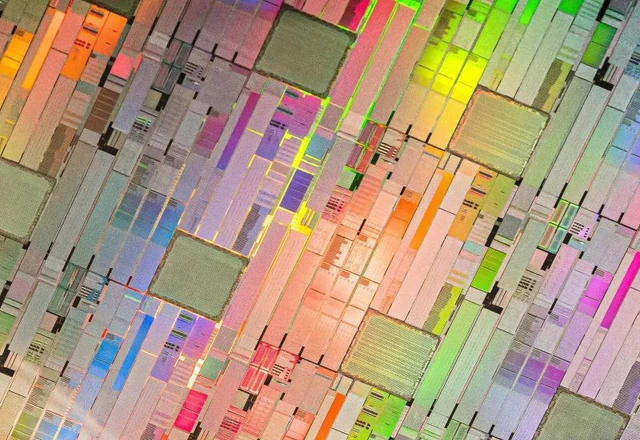 The Triumph of 3nm Chip Manufacturing