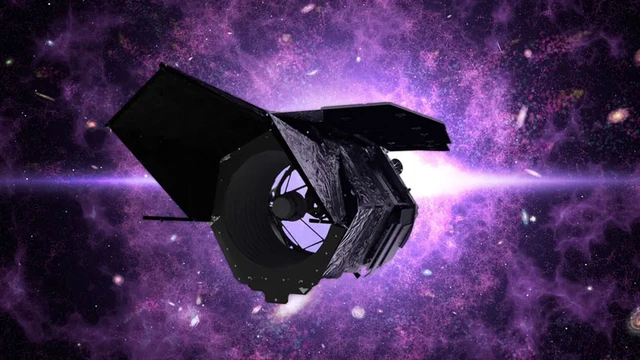
Humanity stands on the precipice of a new epoch in deep space exploration. With final fueling complete, the Nancy Grace Roman Space Telescope is transitioning to its launch phase, poised to radically expand our horizons and redefine our understanding of the universe. Engineered to complement the legacies of Hubble and James Webb, this observatory offers an unprecedented scale of survey across the celestial sphere. As the countdown begins, the spacecraft's technical readiness serves as the final crescendo before its ascent into orbit.
The final phase of ground preparations for the Nancy Grace Roman Space Telescope has reached its critical juncture. The completion of fueling operations—loading approximately one thousand liters of hydrazine—marks the mission's transition into a stage where further modifications are virtually impossible. This was among the most high-risk operations of the preparation process, requiring specialists to operate in Self-Contained Atmospheric Protective Ensemble (SCAPE) suits to eliminate any contact with the fuel's toxic components. The spacecraft is now ready for integration with the SpaceX Falcon Heavy launch vehicle and encapsulation within its protective fairing ahead of a launch scheduled for late August 2026. Notably, mission scheduling has been optimized, allowing the launch to occur nine months ahead of the original timeline.
Upon separation from the launch vehicle, the telescope will begin its journey toward Lagrange point L2—a gravitational equilibrium between the Earth and the Sun. This is the same orbital position currently occupied by the James Webb Space Telescope, providing ideal conditions for infrared observations due to its inherent stability and shielding from solar radiation. The hydrazine reserve will be a critical resource, powering the low-thrust propulsion systems necessary for trajectory corrections and station-keeping at L2. Furthermore, the attitude control system must continuously keep six solar panels oriented toward the Sun, as they serve as the sole power source for all onboard systems. While the primary mission is slated for five years, the current fuel reserves could potentially extend the observatory's active operational phase to a decade.
The technical specifications of the Roman telescope represent an evolutionary leap in astrophysics. Its 2.4-meter primary mirror is comparable in size to that of the legendary Hubble Space Telescope, yet it is constructed from lighter materials to optimize the spacecraft's overall mass. The true breakthrough, however, lies in its primary instrument: a 300-megapixel infrared camera. Its field of view is at least one hundred times larger than Hubble's, effectively transforming the telescope from a "narrow beam" into a wide-angle lens. This capability will enable massive panoramic surveys of the sky, capturing transient cosmic events and generating high-resolution maps of stellar fields.
Beyond its wide-field survey capabilities, the observatory is equipped with a sophisticated coronagraph. This instrument is designed to suppress the blinding glare of stars, enabling the direct imaging of exoplanets whose luminosity is billions of times fainter than that of their host stars. Such precision paves the way for the discovery of Earth-like planets and the detailed analysis of their atmospheres.
On a global scale, the Roman mission is engineered to solve fundamental cosmological mysteries. By scanning vast swaths of space, the telescope will help refine our understanding of dark matter distribution and investigate the nature of dark energy, which drives the accelerated expansion of the universe. Analyzing galactic evolution and discovering thousands of new planetary systems within our own galaxy will allow scientists to revise current models of the cosmos, establishing the observatory as one of the most powerful instruments for deciphering reality in the 21st century.
 The Hidden Dynamics of Mercury's Contraction


