The shift toward electromobility presents the industry with a fundamental challenge: optimizing energy efficiency without the perpetual increase of battery mass. Within this framework, the integration of photovoltaic cells directly into the vehicle's bodywork emerges as a logical evolutionary step. Transforming the panoramic roof from a mere aesthetic luxury into an active power source redefines the vehicle's relationship with its environment. Today, this technology is migrating from the realm of laboratory experimentation toward large-scale industrial deployment.
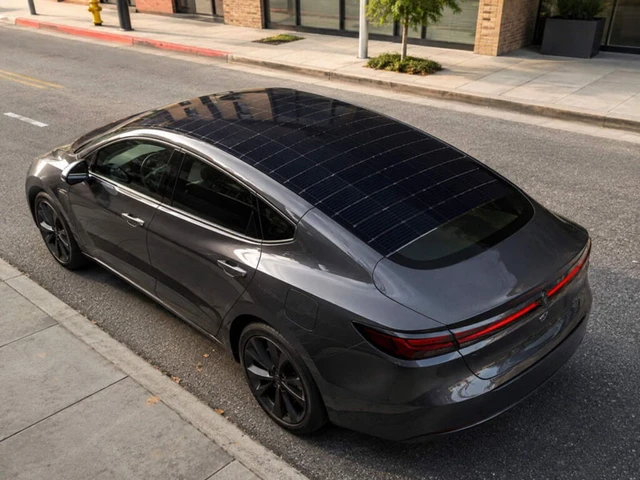
The contemporary automotive industry is gravitating toward the concept of "active surfaces," where every square centimeter of the chassis is engineered for utility. Fuyao Group, a global leader in automotive glass, is translating this vision into mass production, confirming its readiness to scale panoramic roofs with integrated photovoltaic cells. This is not a matter of surface-level panels, but rather the seamless integration of semiconductors directly into the structure of multi-layered laminated glass.
The technical implementation relies on p-n junctions that convert photons into electrical current, feeding directly into the vehicle's onboard network. Of particular interest is the application of Heterojunction Technology (HJT) silicon cells. By combining the advantages of crystalline and amorphous silicon, this technology significantly boosts energy conversion efficiency. Current data suggests these elements can reach an efficiency of 23.18%, with peak system output reaching up to 720W.
It is crucial to understand the pragmatic reality of this solution: a solar roof is not intended to replace a dedicated charging station or extend range by hundreds of kilometers. The available surface area of any passenger vehicle is simply too limited for such ambitions. Instead, its true value lies in supporting auxiliary systems. Solar energy can power climate control, cabin ventilation, and onboard electronics—particularly during extended periods of outdoor parking. This substantially reduces the load on the primary traction battery and prevents deep discharge while auxiliary functions are active.
The commercial viability of this technology is already evident through strategic partnerships with major industry players. Such solutions are expected to become optional features for popular models like BYD's Han and Tang, with implementation costs estimated at approximately $1,190. While the specifics of these commercial agreements remain confidential, the transition from prototypes to serial delivery signals that the technology has reached maturity.
The drive toward "solar autonomy" is a global phenomenon. European conglomerates and independent engineering firms are pursuing similar developments, seeking to maximize chassis surface area for power generation. In the near future, we may see the emergence of modular solar sunroofs as an accessible upgrade for a wide array of existing EVs. This shift transforms the vehicle from a mere energy consumer into a semi-autonomous system capable of harvesting resources from its environment.
 Driver Attention Monitoring in Tesla Electric Vehicles