The contemporary PC hardware market has long since devolved into a competition of visual spectacle, where RGB lighting and integrated OLED displays frequently take precedence over raw technical specifications. In this pursuit of aesthetic flair, it is easy to lose sight of the fundamental purpose of cooling systems: efficient thermal dissipation and acoustic refinement. Noctua has maintained a steadfast position, deliberately distancing itself from the industry's prevailing trends. Their strategy is rooted in a commitment to pure performance over superficial ornamentation.
In an era where gaming aesthetics mandate internal "light shows" within the chassis, Noctua’s philosophy appears almost conservative. The company has been vocal about its refusal to integrate RGB lighting or embedded displays into its product line. For Noctua, developing a device that is visually striking yet functionally secondary represents an unjustifiable expenditure of resources. Instead, their engineering prowess is dedicated exclusively to solving fundamental challenges: maximizing thermal efficiency and achieving an absolute minimum noise floor.
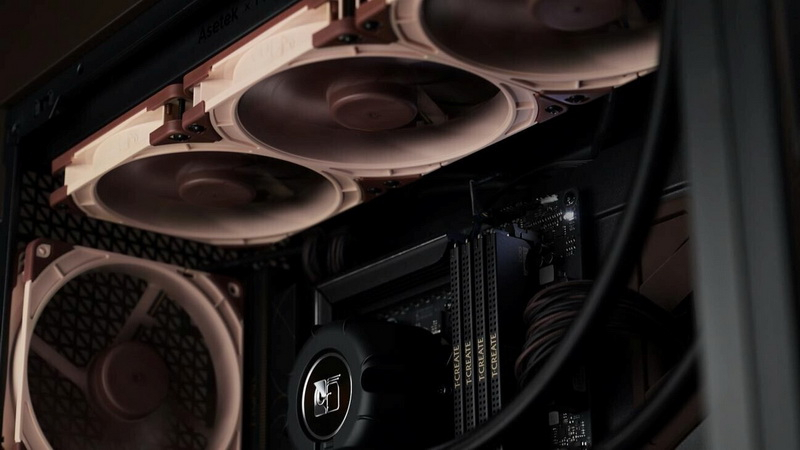
This uncompromising approach to development is rooted in deep technical necessity. It is not merely a matter of taste, but of material physics and manufacturing precision. Noctua utilizes Sterrox, a liquid crystal polymer (LCP), renowned for its exceptional rigidity and stability. The production of these components relies on injection molding, where molten plastic fills a steel mold with micron-level precision.
The challenge of introducing new colors—such as white—lies in the fact that altering the material's pigmentation can impact the very structure of the polymer. Even a marginal deviation in the plastic's properties can compromise the critical clearance between the fan blades and the frame. In the world of high-precision cooling, these fractions of a millimeter define the boundary between absolute silence and an irritating hum, while directly impacting airflow dynamics.
This explains why the release of the chromax.black series took significantly longer than users might have expected. Every modification to the material composition requires rigorous recalibration and testing to ensure that aesthetic adjustments do not degrade operational performance.
For Noctua, investing in the certification of new production equipment or the development of a more efficient blade profile holds incomparably more value than creating another color variant or installing a decorative display. This elevates their products from mere "hardware" to instruments of precision engineering, where form strictly follows function.
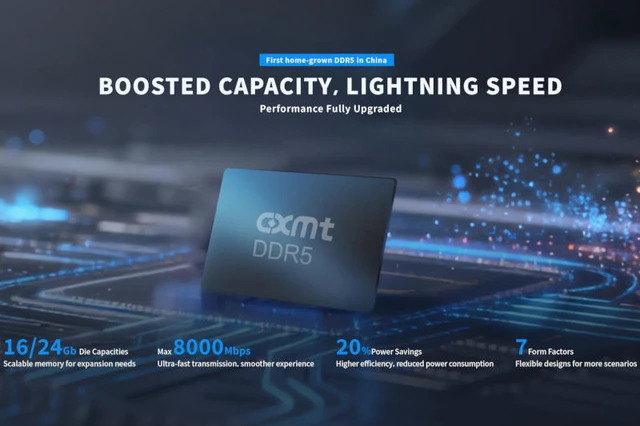 The Price of Acceleration: CXMT’s Rapid Push into Memory