For years, the OLED display industry has been constrained by the inherent physical limitations of traditional manufacturing processes. While a decade of reliance on Fine Metal Masks (FMM) enabled mass-market adoption, it simultaneously created significant bottlenecks for scalability and power efficiency. The introduction of LG Display’s FLiPP technology marks a fundamental paradigm shift, moving away from mechanical stencils toward high-precision photolithography. This transition promises to radically reshape production economics and redefine the performance benchmarks for next-generation displays.
For the past decade, the Fine Metal Mask (FMM) process has remained the dominant method for manufacturing OLED panels. In essence, this is a high-tech form of stencil printing, where organic materials are deposited through ultra-thin metal masks. However, this architectural approach harbors critical flaws. Due to their own weight, the metal plates are prone to sagging in the center, which inevitably leads to pixel misalignment and color reproduction defects. Furthermore, the rigid dependence on the physical dimensions of the mask makes any change in resolution or panel size a prohibitively expensive endeavor, requiring the fabrication of entirely new matrices.
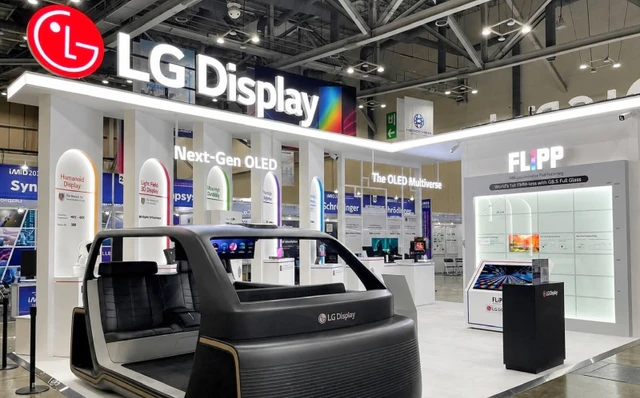
The FLiPP (FMM-Less innovative Pixel Patterning) technology, unveiled at IMID 2026, fundamentally shifts this paradigm. Rather than relying on mechanical layering, LG Display is pivoting toward photolithography. This scheme employs precision ultraviolet etching, allowing for the surgical removal of unnecessary areas during the formation of OLED pixels. This transforms the manufacturing process from a "manual" stencil-based method into a purely chemo-optical process.
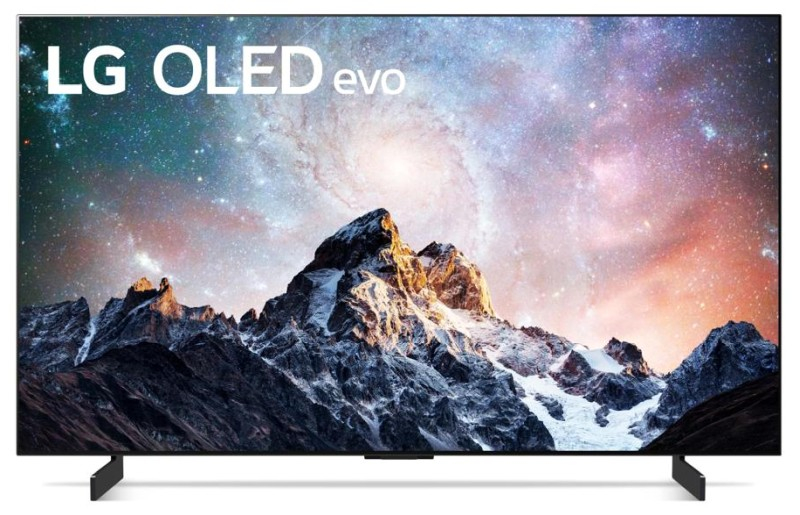
The transition to photolithography yields a massive leap in optical efficiency. The key metric here is the aperture ratio—the proportion of the display area actually occupied by emitting RGB pixels. With FLiPP, this ratio increases by approximately 55%. The results of this improvement are reflected in concrete metrics: panel brightness increases by 1.6x, while operational lifespan extends by 2.4x. Simultaneously, power consumption is reduced by 13%, as the system no longer needs to compensate for light losses caused by mask imperfections.
From the perspective of industrial scaling, FLiPP eliminates virtually all existing constraints. The technology's theoretical application range spans from 1 to 100 inches, rendering it a universal tool—applicable to everything from microdisplays for augmented and virtual reality (AR/VR) to massive television panels.
The economic impact is equally significant. In the production of laptop panels, the FLiPP method improves substrate glass utilization by 64% compared to traditional FMM. This translates to a drastic reduction in the waste of expensive raw materials and a substantial boost in overall production line throughput.
Leveraging its extensive experience with Tandem WOLED infrastructure, LG Display has effectively become the first market player to implement a full-scale industrial OLED production cycle devoid of metal masks. This is not merely a technical update, but a strategic leap that makes display manufacturing more flexible, cost-effective, and higher in quality.
 The Evolution of Apple's Augmented Reality Ecosystem