7 Jul 2026
 Supercritical Fluids: A Catalyst for the Next Generation of Orbital Launches
The race for affordable space access is increasingly pivoting toward the radical optimization of ground infrastructure. Traditional "hot" launches necessitate staggering investments to protect launch pads from extreme thermal loads and acoustic shock. A novel concept proposed by Chinese engineers seeks to replace the initial ignition plume with a powerful pneumatic impulse. By leveraging the unique properties of supercritical carbon dioxide, this approach could transform cumbersome, static spaceports into agile, mobile launch systems.
7 Jul 2026
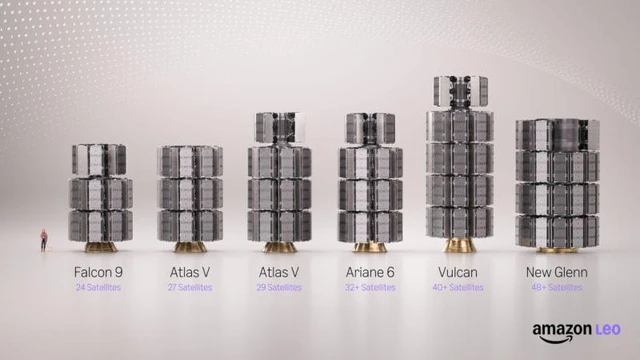 Orbital Expansion: Amazon vs. SpaceX
The global satellite internet market is no longer the exclusive domain of a single corporation. Amazon is taking a decisive stride toward launching its own low-Earth orbit (LEO) network, deploying the first critical nodes of its infrastructure. This expansion marks the onset of a new phase of orbital competition, centered on the goal of universal connectivity. The overarching question remains: can the e-commerce giant bridge the technological chasm that currently separates it from SpaceX?
7 Jul 2026
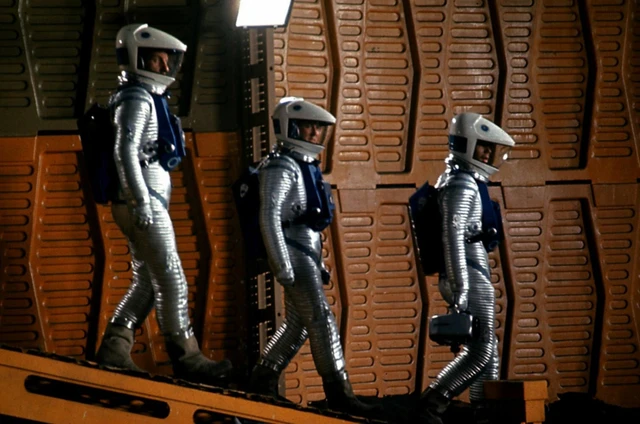 The Physics of Chaos vs. Hollywood Gloss
For decades, the footage from the Apollo moon missions has been a lightning rod for controversy, primarily due to the strange, almost unnatural kinetics of the astronauts' movements. For conspiracy theorists, this "bounding chaos" became a cornerstone argument for a staged event, with the meticulous Stanley Kubrick cast as the mastermind. However, a deep dive into the biomechanics reveals a compelling truth: the visual awkwardness of the record is, in fact, its strongest proof of authenticity. The genuine physics of an extraterrestrial environment proved too "unrefined" for the cinematic lens to have been a fabrication.
7 Jul 2026
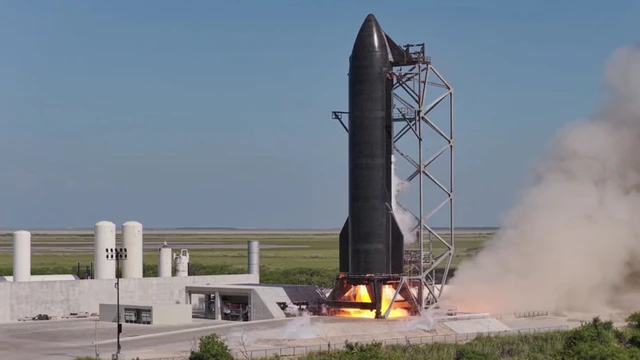 Preparing Starship for Flight 13
The current race to the Moon and Mars hinges entirely on the reliability of the most powerful launch vehicle in human history. SpaceX continues to push the boundaries of aerospace engineering as it refines the new Starship V3 configuration. Recent static fire tests of the Ship 40 upper stage represent a critical milestone in validating the overall stability of the system. This step is far more than a mere technical exercise; it is a fundamental prerequisite for achieving the ambitious objectives of the Artemis program.
7 Jul 2026
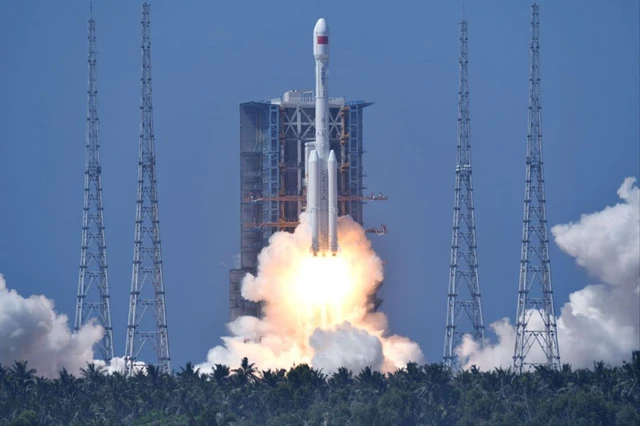 Unprecedented Endurance: China’s Orbital Engines Set New Longevity Records
The deployment of heavy-lift satellites to geostationary and interplanetary orbits has long been contingent upon the efficiency of upper-stage propulsion systems. China has now achieved a significant technological breakthrough with the unveiling of a liquid-propellant engine boasting unprecedented operational longevity. This innovation does more than merely accelerate the deployment of satellite constellations; it fundamentally redefines the parameters for transporting ultra-heavy payloads. We are witnessing a new benchmark in endurance—one that challenges the long-standing dominance of Western technology in the apogee kick motor segment.
7 Jul 2026
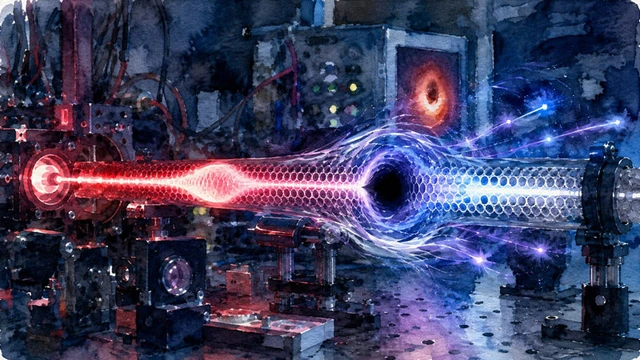 The Mechanics of Artificial Black Hole Evaporation
Black holes persist as some of the most enigmatic entities in the cosmos, fundamentally challenging our understanding of the laws of physics. The theoretical framework of Hawking radiation posits that these gravitational behemoths can slowly evaporate over time; however, detecting this phenomenon in the depths of space remains an almost insurmountable task, obscured by overwhelming electromagnetic noise. To test this hypothesis, researchers are engineering terrestrial analogues of these extreme environments, leveraging cutting-edge techniques in quantum optics. Their latest experiment has gone beyond merely simulating an event horizon, enabling a granular analysis of the system's energy dissipation dynamics.
7 Jul 2026
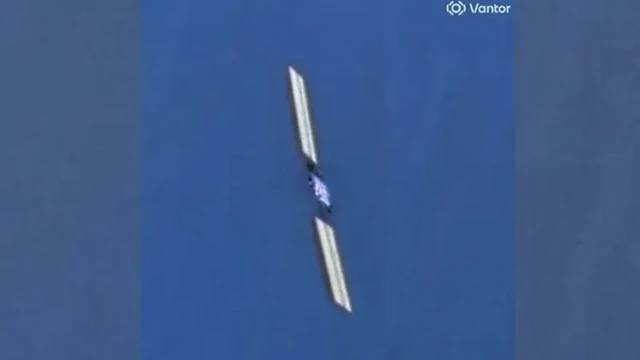 The Lifecycle of the Starlink Orbital Constellation
The vision of ubiquitous high-speed internet is triggering an industrial renewal cycle in space on an unprecedented scale. SpaceX is deploying the most expansive satellite constellation in human history—a system where the launch of next-generation hardware is inextricably linked to the systematic decommissioning of the old. Recent regulatory data reveal the true magnitude of this orbital "planned obsolescence." The incineration of thousands of tons of high-tech hardware within the dense layers of the atmosphere shifts the conversation from a matter of engineering logistics to one of global environmental security.
7 Jul 2026
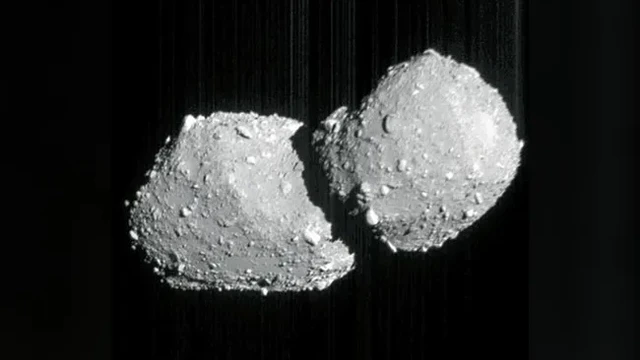 Hayabusa2's Rendezvous with Torifune
Deep space exploration is frequently a test of a mission's capacity for adaptation in the face of the unforeseen. The legendary Hayabusa2 probe, renowned for its surgical precision, has once again pushed the boundaries of possibility in the cosmic void. A daring, opportunistic flyby of the asteroid Torifune provided scientists with invaluable data on high-velocity encounters with poorly understood celestial bodies. This maneuver represents more than just a technical triumph for JAXA; it is a pivotal step forward in our understanding of the nature of near-Earth objects.
7 Jul 2026
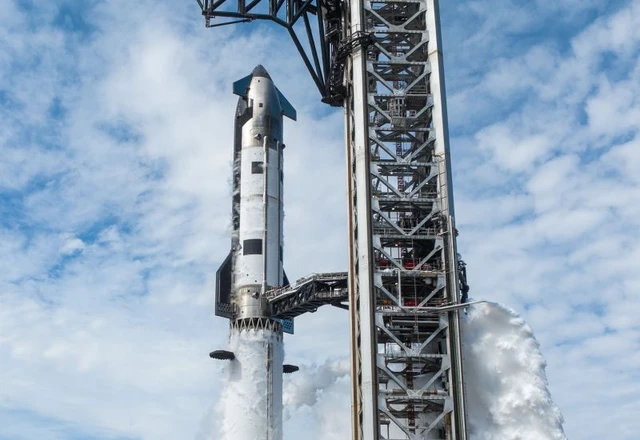 SpaceX’s Expansion into the Public Markets
SpaceX's inclusion in the Nasdaq 100 is more than a mere financial milestone; it is a validation of the singular status of Elon Musk’s empire. Despite remaining a loss-making venture, the company is rewriting the traditional market playbook, unlocking access to the deep pockets of the world's largest institutional investors. This transition elevates the private titan into a full-fledged public market contender, poised for exponential growth. The central question now is whether the company can successfully translate its technological momentum into sustainable, long-term market value.
7 Jul 2026
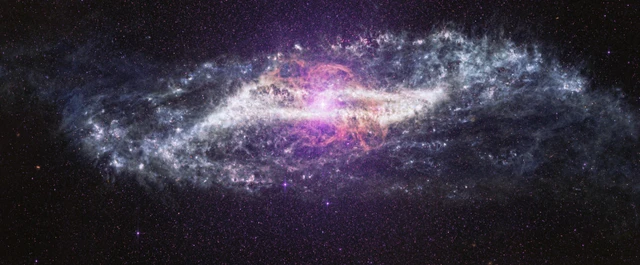 Revelations from the Depths of Centaurus A
The universe veils its most profound mechanisms behind dense shrouds of cosmic dust. For decades, astronomers have struggled to peer through these opaque barriers to decode the mechanics driving the evolution of stellar systems. The deployment of the James Webb Space Telescope has fundamentally shifted the paradigm, granting humanity unprecedented resolution across the infrared spectrum. Now, the latest imagery of the Centaurus A galaxy is proving pivotal, offering a window into the intricate symbiosis between supermassive black holes and their host galaxies.
7 Jul 2026
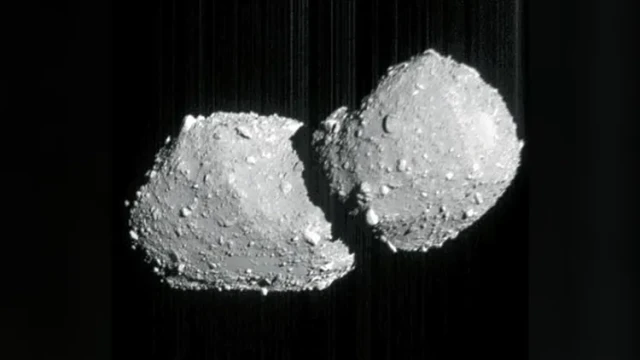 Hayabusa2's Encounter with Asteroid Torifune
Modern astronautics is entering an era defined by high-precision maneuvering and opportunistic discovery in deep space. The Hayabusa2 mission, already legendary for its successful return of extraterrestrial samples, continues to push the boundaries of what is possible in the exploration of the Solar System's small bodies. A recent ultra-close flyby of the asteroid Torifune—conducted some 100 million kilometers from Earth—stands as one of the most daring and technically demanding phases of the program. By leveraging cutting-edge infrared analysis, this maneuver yielded unprecedented data on the physical composition of near-Earth objects.
3 Jul 2026
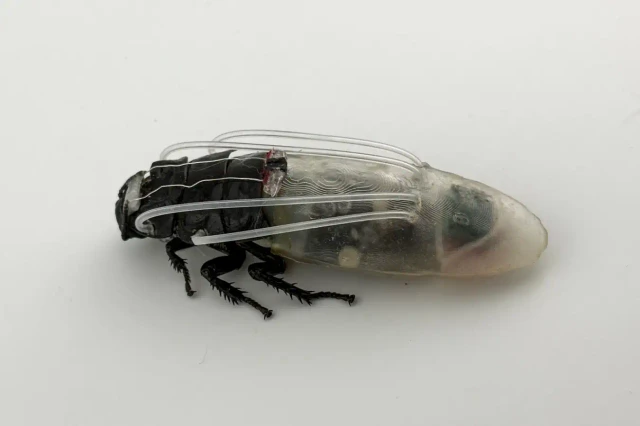 The Evolution of Biorobotics in Extreme Environments
The convergence of biological organisms and microelectronics is ushering in a new era of autonomous agents engineered for extreme environments. Where traditional robotics often hits a wall regarding miniaturization and energy efficiency, nature provided the solutions millions of years ago. Today's advancements in insect cyborgs are transforming living organisms into precision-guided reconnaissance tools. Coupled with specialized life-support systems, these bio-hybrid agents can operate where conventional drones are powerless—from submerged ruins to the desolate surfaces of other planets.
