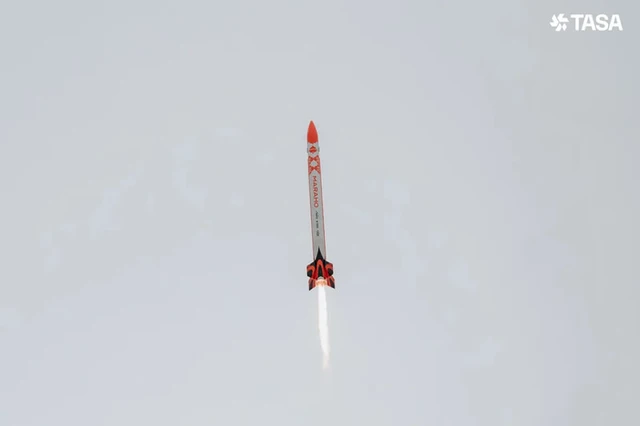
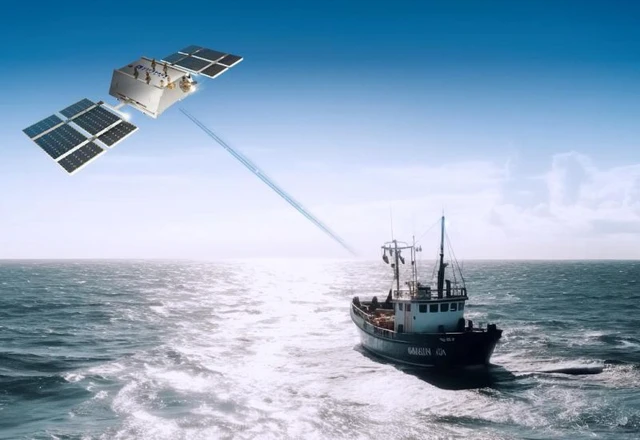
The global satellite internet market is no longer the exclusive domain of a single corporation. Amazon is taking a decisive stride toward launching its own low-Earth orbit (LEO) network, deploying the first critical nodes of its infrastructure. This expansion marks the onset of a new phase of orbital competition, centered on the goal of universal connectivity. The overarching question remains: can the e-commerce giant bridge the technological chasm that currently separates it from SpaceX?
The struggle for dominance in Low Earth Orbit (LEO) has entered a decisive phase. Amazon has officially confirmed that its orbital fleet has reached the critical mass required to sustain the basic operations of its LEO satellite provider. The constellation currently comprises 396 satellites—a figure company leadership claims is sufficient to maintain continuous connectivity across initial latitudes.
This milestone serves as the bedrock for an ambitious roadmap aiming for a full commercial rollout by mid-2026. Yet, the evolution of such systems demonstrates that sheer volume does not immediately translate into high-fidelity connectivity. The trajectory of SpaceX, which launched Starlink in 2020, offers a cautionary tale. In its infancy, despite having roughly 900 satellites in orbit, the company grappled with significant instability; early North American adopters reported erratic signals and high sensitivity to physical obstructions. During this period, data speeds fluctuated between 50 and 150 Mbps, with latency ranging from 20 to 40 ms.
A similar period of "teething problems" is inevitable for Amazon’s LEO venture. Early subscribers will likely encounter comparable disruptions, with network throughput scaling proportionally to the expansion of the satellite constellation.
Today, Starlink has evolved into a mature ecosystem of over 10,000 active satellites, spanning 160 countries and providing connectivity to the most remote reaches of the oceans and continents. SpaceX’s current network performance is formidable: average download speeds reach 200 Mbps, upload speeds range from 10 to 40 Mbps, and latency has stabilized at approximately 25 ms.
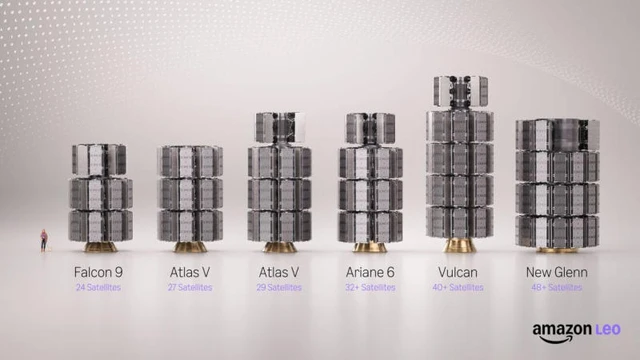
Matching these benchmarks will be a formidable challenge for Amazon. The planned constellation of 3,232 satellites is significantly smaller in scale than Elon Musk’s network, which could constrain overall capacity and coverage density. Furthermore, the project has already been hampered by delays. Logistics have proven to be the primary bottleneck, as Blue Origin struggles to finalize the New Glenn reusable launch vehicle, intended to be the primary transport for the network's deployment.
Consequently, Amazon is entering the fray at a time when the market leader has already established the global standard. The project's success will hinge not merely on the volume of deployed hardware, but on the company's ability to optimize traffic management within a less dense satellite constellation.
 The Phenomenal Battery Life of the Nokia 300 Charge