Deep space exploration is frequently a test of a mission's capacity for adaptation in the face of the unforeseen. The legendary Hayabusa2 probe, renowned for its surgical precision, has once again pushed the boundaries of possibility in the cosmic void. A daring, opportunistic flyby of the asteroid Torifune provided scientists with invaluable data on high-velocity encounters with poorly understood celestial bodies. This maneuver represents more than just a technical triumph for JAXA; it is a pivotal step forward in our understanding of the nature of near-Earth objects.
The Hayabusa-2 mission has long since transcended the boundaries of a conventional research flight, evolving into a true odyssey of survival and discovery within the void. Over nearly twelve years of wandering, the spacecraft has proven that its operational limits are far broader than anyone anticipated at launch. The latest testament to this resilience was the successful rendezvous with the asteroid Torifune—a body approximately 450 meters in diameter, located hundreds of millions of kilometers from Earth.
This maneuver has etched itself into history as one of the most perilous close-approach flybys of an asteroid at high relative velocity. In an environment where decision-making windows are measured in seconds and a marginal calculation error could result in the total loss of the probe, Hayabusa-2 demonstrated the flawless precision of its navigation systems.
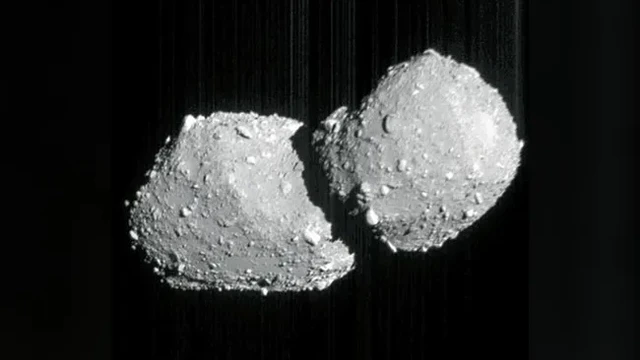
The primary objective of the encounter was to gather baseline data on a celestial body that, until now, had remained an enigma to astronomers. While the onboard camera captured detailed imagery of the surface, the true scientific value of the mission lay in the performance of the TIR (Thermal Infrared) instrument.
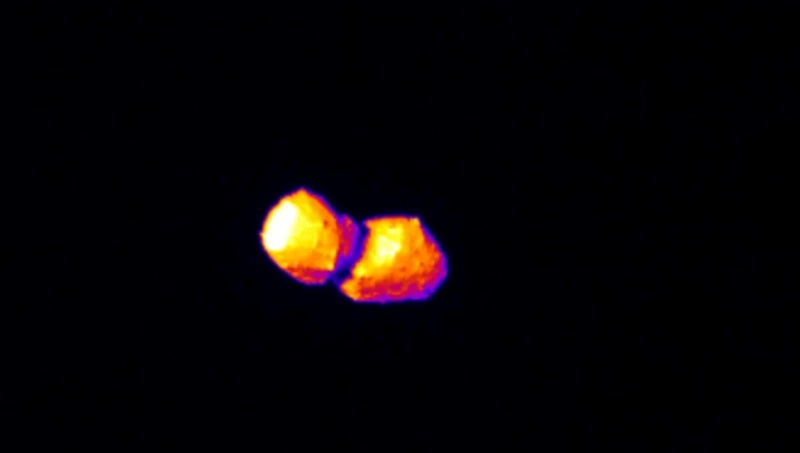
Infrared imaging allowed scientists to peer deeper than the visible spectrum permits. By analyzing thermal radiation, researchers can calculate the object's thermal inertia and assess its surface roughness. Essentially, this reveals the composition of the asteroid's "skin"—whether it is a dense monolith or a loose accumulation of debris. The resulting images clearly captured a sharp thermal contrast: regions in shadow were significantly colder than those exposed to direct solar radiation.
Torifune itself is a textbook example of an Apollo-group object. This category of near-Earth asteroids possesses orbits that intersect with Earth's, making them critical targets for planetary defense initiatives. The dynamics of this body are quite specific: it completes a full revolution around the Sun every 383 days, while rotating on its own axis at a staggering speed, completing a full cycle in just five hours.
It is particularly noteworthy that the visit to Torifune was not part of the mission's original flight plan. JAXA openly acknowledged that such an operation carried immense risks due to a catastrophic lack of prior data on the object. Nevertheless, the decision to embrace this risk was vindicated. The successful flyby not only enriched the scientific archive with rare data but also reaffirmed Hayabusa-2's status as one of the most reliable and flexible instruments in the modern cosmonautics arsenal.
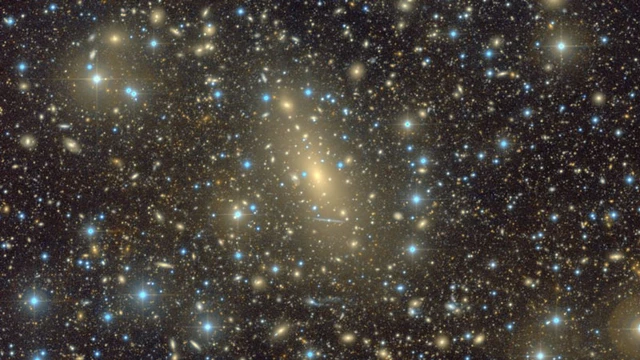 The Phenomenon of the Supermassive Galaxy IC 1101