The current race to the Moon and Mars hinges entirely on the reliability of the most powerful launch vehicle in human history. SpaceX continues to push the boundaries of aerospace engineering as it refines the new Starship V3 configuration. Recent static fire tests of the Ship 40 upper stage represent a critical milestone in validating the overall stability of the system. This step is far more than a mere technical exercise; it is a fundamental prerequisite for achieving the ambitious objectives of the Artemis program.
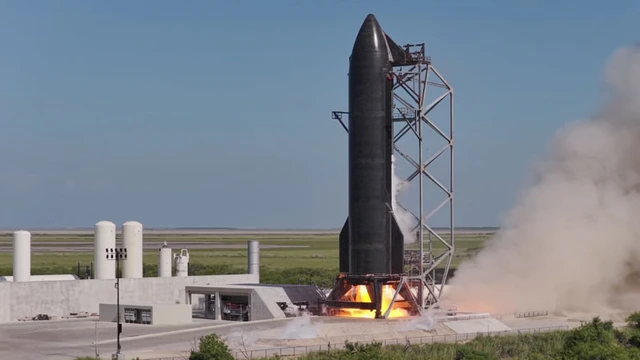
At the Starbase facility in Texas, a pivotal milestone in the preparations for the thirteenth test flight of the Starship super-heavy system has been reached. The spotlight was on the static fire tests of the upper stage—Ship 40. Moving beyond previous brief trials, this engine ignition was a full-scale operation: the propulsion systems fired for 60 seconds, allowing engineers to assess system behavior under conditions that closely mirror an actual launch.
To appreciate the technical complexity of the process, it is worth noting that just a week ago, Ship 40 underwent a preliminary check involving only a single engine for a short duration. This current test, however, marked the first time all six engines were engaged simultaneously. The upper stage configuration employs a functional split: three engines are optimized for the dense layers of the atmosphere, while the other three are designed for maximum efficiency in the vacuum of space. The synchronization of these systems is critical—not only for delivering payloads to orbit but also for ensuring the ship's controlled descent and soft landing upon its return to Earth.
The upcoming thirteenth flight will be the second orbital venture for the updated Starship V3. This iteration represents a substantial leap in scale: the combined height of the Starship and the Super Heavy booster now reaches approximately 124 meters, with a hull diameter of 9 meters. The engineering core of the system is the Raptor V3 engine. While the Super Heavy booster relies on the raw power of 33 such units, the upper stage utilizes six, providing the necessary maneuverability and thrust in the vacuum of space.
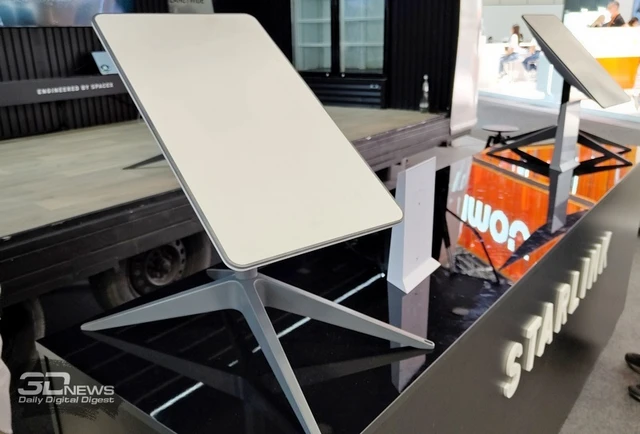
SpaceX's strategic vision remains steadfast: the creation of a fully reusable transport system. Such a breakthrough would drastically slash the cost of delivering heavy payloads to low Earth orbit (LEO), accelerate the deployment of the Starlink satellite constellation, and ultimately provide the critical logistics for NASA's lunar missions under the Artemis program.
Yet, the road to success is rarely linear. The previous twelfth flight, conducted on May 22, 2026, served as the debut for the V3 version. Although the performance of the new upper stage was validated, the Super Heavy booster failed to execute a nominal soft splashdown. This incident drew the attention of the Federal Aviation Administration (FAA), which has mandated a detailed investigation.
Consequently, the date of the next launch is now contingent upon both the technical readiness of Ship 40—including a successful burn of all 33 booster engines—and the final verdict from the regulator. Should the regulatory hurdles be cleared swiftly and technical performance remain within nominal parameters, testing could resume as early as August.
 Driver Attention Monitoring in Tesla Electric Vehicles