For decades, the footage from the Apollo moon missions has been a lightning rod for controversy, primarily due to the strange, almost unnatural kinetics of the astronauts' movements. For conspiracy theorists, this "bounding chaos" became a cornerstone argument for a staged event, with the meticulous Stanley Kubrick cast as the mastermind. However, a deep dive into the biomechanics reveals a compelling truth: the visual awkwardness of the record is, in fact, its strongest proof of authenticity. The genuine physics of an extraterrestrial environment proved too "unrefined" for the cinematic lens to have been a fabrication.
Anyone who scrutinizes the archival footage of the Moon landings inevitably encounters a sense of cognitive dissonance. Instead of the solemn, measured procession of pioneers, the viewer sees a series of awkward hops, constant losses of balance, and clumsy attempts to scramble back up from the dust. This visual disjointedness stands in such stark contrast to the monumentality of the event that it is tempting to dismiss the whole thing as poor direction in a Hollywood studio.
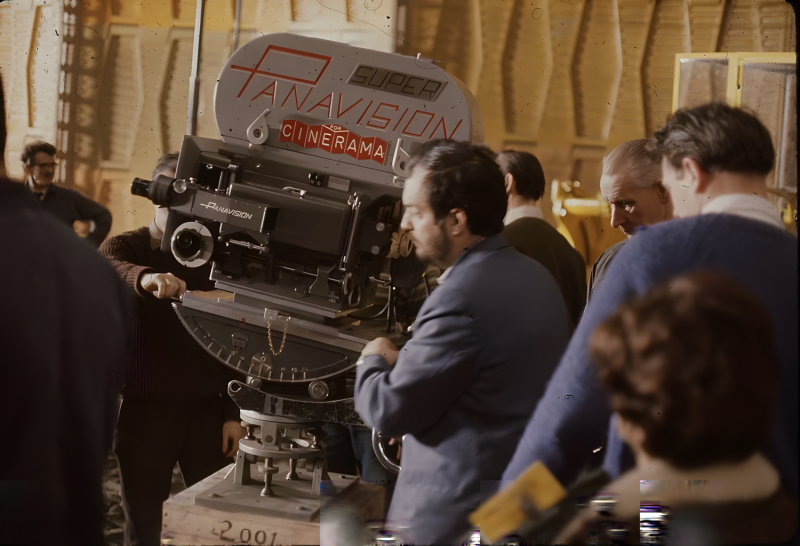
Traditionally, Stanley Kubrick—who released the masterpiece 2001: A Space Odyssey a year before the Apollo 11 mission—is cast as the "director" of this alleged hoax. Yet, it is precisely the comparison between Kubrick’s work and the actual NASA chronicles that reveals a profound paradox: had the landing been filmed for cinema, it would have looked far more aesthetic, logical, and intuitive to an Earth-bound audience.
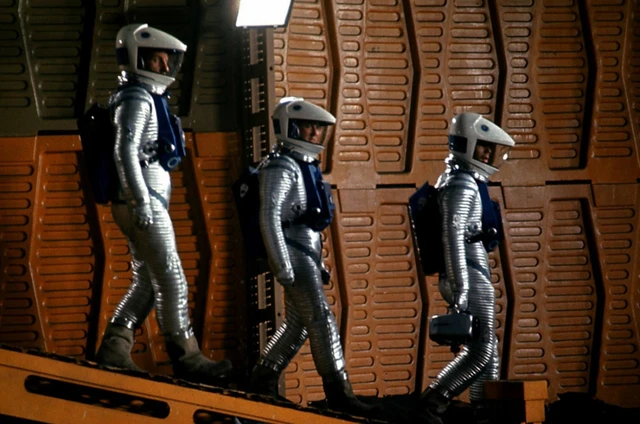
In A Space Odyssey, Kubrick employed a system of wires and slow-motion cinematography to simulate low gravity. The result was cinematically flawless: the actors moved fluidly, maintained a vertical axis, and utilized a classic heel-to-toe gait. The problem is that this model relied on terrestrial automatisms. A human nervous system, operating under full Earth gravity, subconsciously strives for symmetry and rhythm. Kubrick’s actors could not move any other way because their vestibular apparatus and proprioception—the internal sense of body position in space—were functioning in "Earth mode."
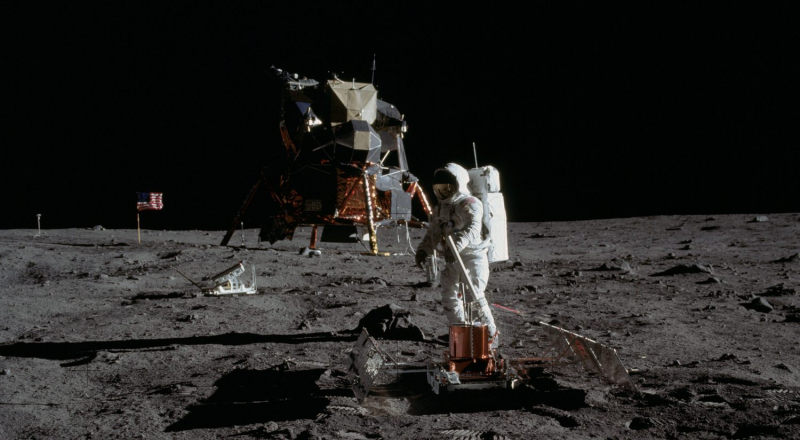
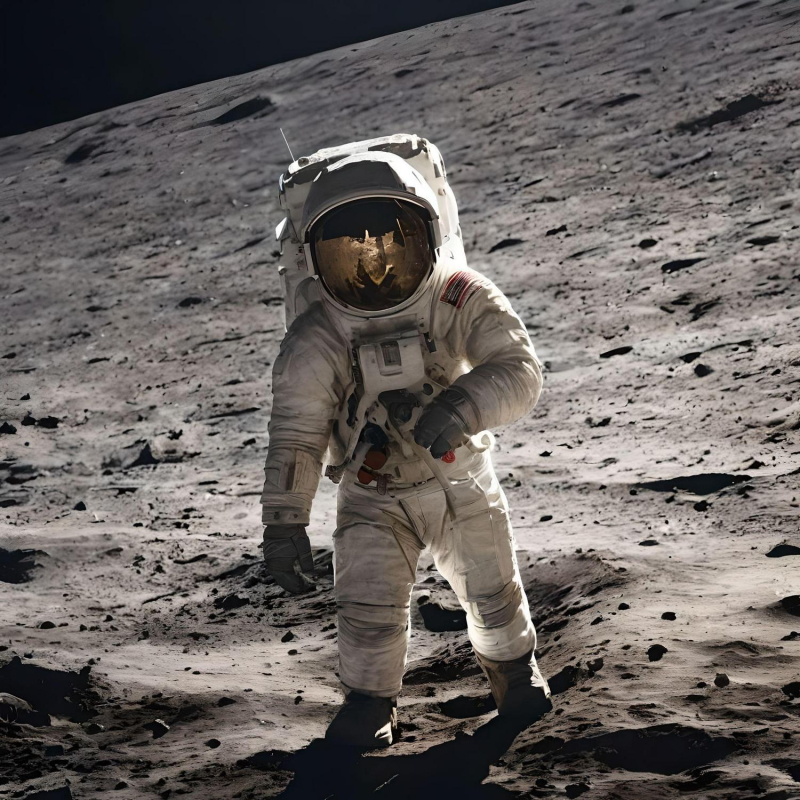
The actual astronauts on the Moon demonstrated the exact opposite. Eschewing aesthetics, they presented the world with the "lunar lope"—an asymmetric hybrid of a step and a jump. The physics of space proved counterintuitive: the combination of the massive spacesuit's inertia and the slippery nature of the regolith forced the human brain to completely dismantle its habitual movement patterns. Hollywood would have sought to satisfy audience expectations by making the heroes' strides majestic. Reality, however, was fragmented and chaotic, for it was not a script, but a living process of an organism adapting to an alien environment.
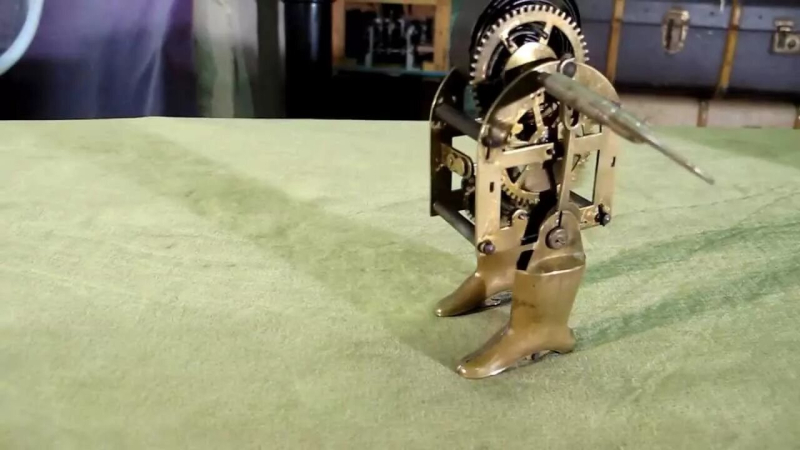
To understand why this gait could not have been an imitation, one must consider the difference between mechanical movement and biological control. Imagine a classic 18th or 19th-century automaton—a complex system of gears and levers that mimics a step with perfect precision. Such a machine is a closed system; its trajectory is rigidly defined by the geometry of its parts.
If such a mechanism were placed in lunar gravity (1/6 g) and encased in a heavy spacesuit, it would fail instantly. Because the downward force would drop sixfold while the mass and inertia remained constant, the automaton would push off the ground too forcefully with every step, lose traction, and inevitably flip over. Mechanics without a feedback loop are incapable of self-regulation.
The human body operates differently. Muscles and bones are the levers, but they are governed by a "living processor"—the brain. It does not follow a frozen template; instead, it continuously recalculates the physical parameters of the environment in real time. Modern adaptive robots, such as Boston Dynamics' Atlas, achieve this through machine learning algorithms that mimic the nervous system. It was this capacity for instantaneous calibration that allowed astronauts to navigate the Moon, even if their movements appeared strange.
The biomechanics of the lunar step were dictated by three critical factors that are virtually impossible to synchronize under Earth conditions.
The first is the paradox of mass versus weight. An astronaut in full gear (suit and life-support backpack) had a total mass of approximately 170 kilograms. On the Moon, their weight dropped to 28 kilograms, but their inertia remained unchanged. This created a perilous dynamic: the body possessed immense inertia but had a weak connection to the surface. Conventional walking became energetically inefficient, and the brain automatically switched the pilots to "hops" or a shuffling "skip-step" to conserve oxygen and strength.
The second factor was the resistance of the suit itself. The A7L model was a technological triumph, but even with its corrugated joints and constant-volume system, it created a "spring expander" effect due to the internal oxygen pressure (0.25 atmospheres). To simply bend a leg, an astronaut had to overcome constant mechanical resistance. Combined with inertia, this forced the brain to flatten the gait, abandoning the familiar terrestrial heel-to-toe roll.
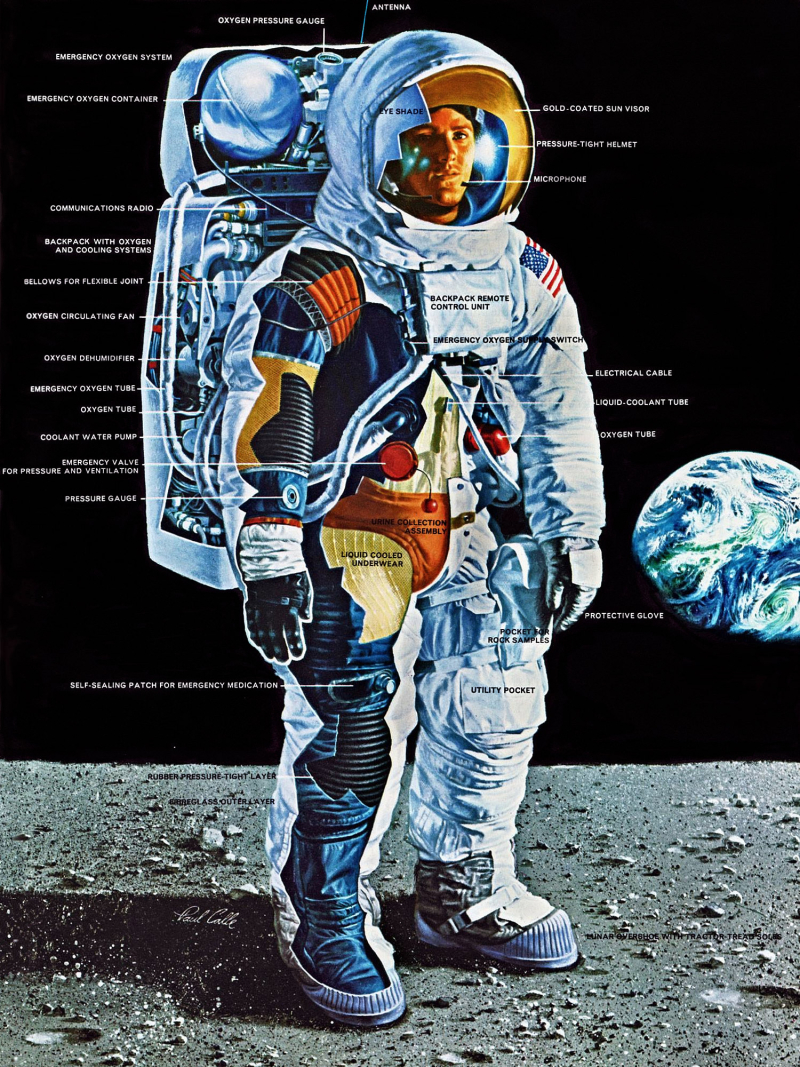
The third factor was the shift in the center of gravity. The massive PLSS (Portable Life Support System) backpack shifted the balance point backward and upward. To avoid tipping over, astronauts were forced to lean their torsos forward constantly. Analysis using OpenPose data revealed that the body's lean angle on the Moon was approximately 16.4°, whereas during normal Earth walking, it rarely exceeds 2.63°.
Added to this was the psychological factor: the fear of falling. Any hard impact with the surface could lead to helmet depressurization or damage to the backpack, which meant instant death. In response to this threat, the brain engaged a maximum-safety mode: widening the base of support (placing feet wider than shoulder-width) and increasing the double-support phase to 40% of the movement time—six times the Earthly average.
The primary evidence for the authenticity of these processes is the total absence of rhythm. In cinema, an actor's movements on wires are cyclic and predictable. However, technical reports from the Apollo 15 and 16 missions record genuine chaos. Step length and timing fluctuated constantly: from a stable 55 centimeters to sudden leaps of 76 centimeters when a foot hit a micro-crater, or contractions to 33 centimeters when lunar dust slid from under the sole, robbing the point of contact of its grip.
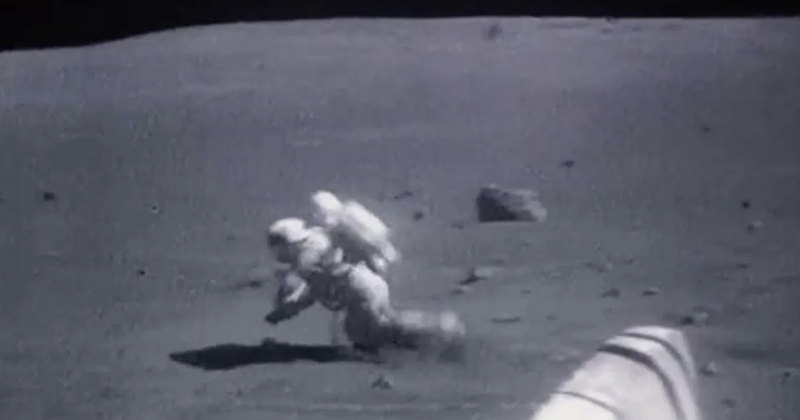
Even falls on the Moon follow a different script. Due to low gravity, the process of tipping over is stretched in time: nearly two seconds elapse between the loss of balance and the impact. During this prolonged "flight," a person instinctively flails their arms in an attempt to regain equilibrium. On Earth, with an acceleration of 9.81 m/s², such a fall would be instantaneous and vertical.
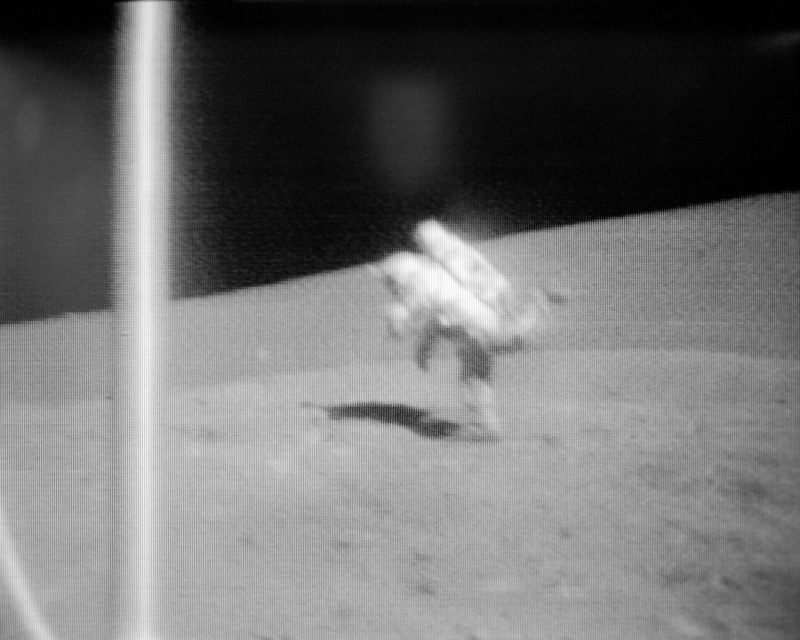
Rising after a fall also required unconventional solutions. Due to the rigidity of the suit, curling into a ball was impossible. Astronauts employed a "push-up twist" technique: a sharp push with the arms from the surface allowed them to lift their torso, after which the legs were pulled back under the center of gravity.
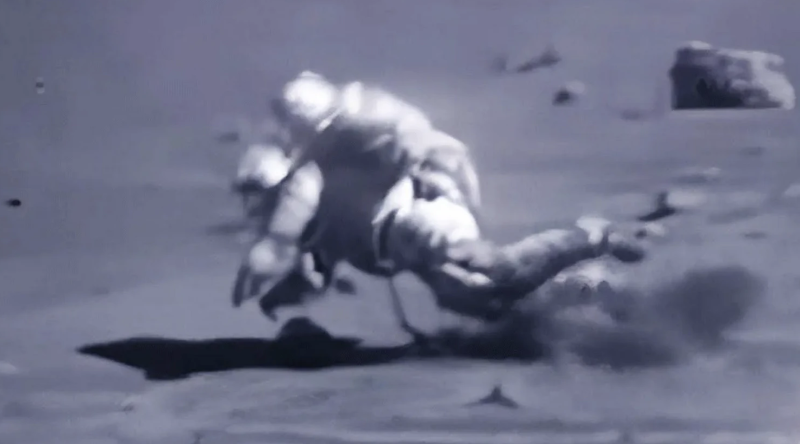
The lunar gait is a monument to biomechanical adaptation. It seems absurd precisely because it is real. A perfectionist like Kubrick, who forced actors through hundreds of takes for a single perfect shot, would never have allowed such visual chaos in his film. He would have crafted an image of majestic heroes taking monumental strides.
However, reality proved far more complex than any staging. Even NASA's best terrestrial simulators could not fully recreate the triad of regolith behavior, suit resistance, and existential stress. The Apollo chronicles captured not a rehearsed algorithm, but the split-second work of a living brain, breaking terrestrial reflexes in real time to survive the aggressive physics of an alien world.
 Next-Generation Ultra-Lightweight Lens Technology