Modern astronautics is entering an era defined by high-precision maneuvering and opportunistic discovery in deep space. The Hayabusa2 mission, already legendary for its successful return of extraterrestrial samples, continues to push the boundaries of what is possible in the exploration of the Solar System's small bodies. A recent ultra-close flyby of the asteroid Torifune—conducted some 100 million kilometers from Earth—stands as one of the most daring and technically demanding phases of the program. By leveraging cutting-edge infrared analysis, this maneuver yielded unprecedented data on the physical composition of near-Earth objects.
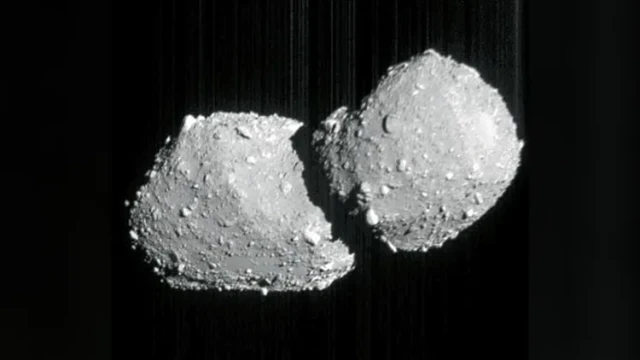
In July 2026, the Japanese spacecraft Hayabusa2 executed a high-velocity flyby of the asteroid Torifune, a celestial body approximately 450 meters in diameter. Conducted under conditions of extreme distance and staggering speeds, the operation stands as one of the most audacious navigational feats in the history of asteroid exploration.
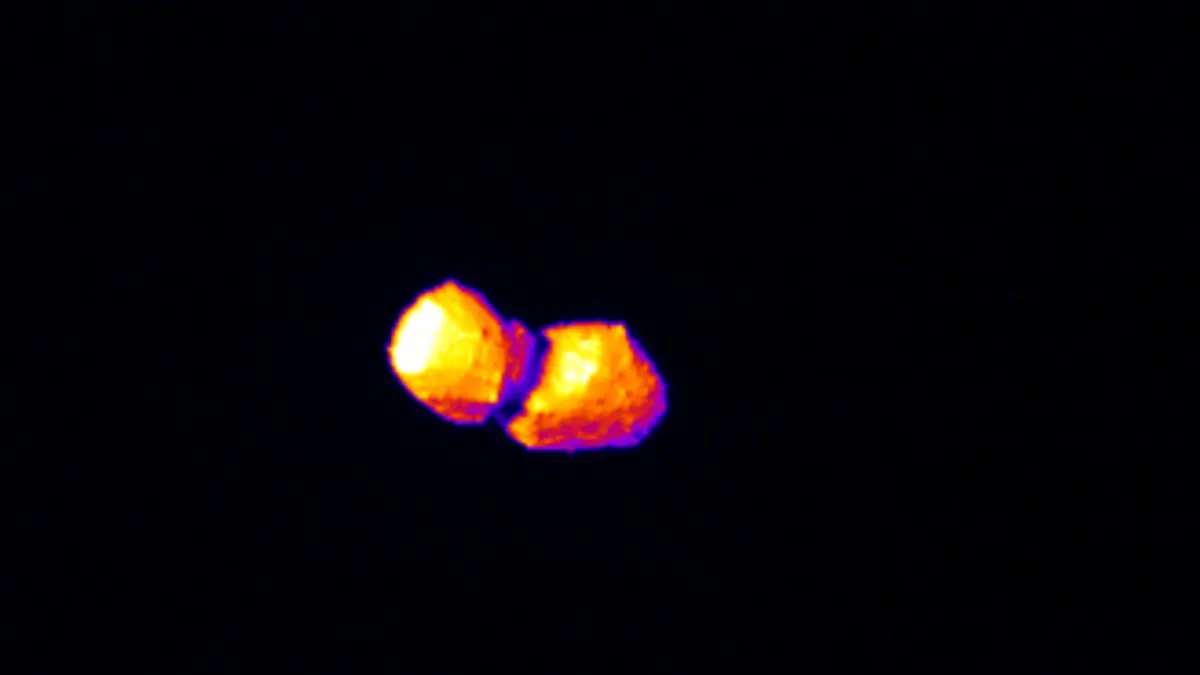
To analyze the object, the probe deployed a suite of high-precision instrumentation. The Optical Navigation Camera with Telephoto lens (ONC-T) provided detailed surface visualization, while the Thermal Infrared (TIR) camera allowed scientists to probe the object's thermal architecture. Infrared imaging is critical to astrophysics: it enables the measurement of surface temperature, roughness, and, most crucially, thermal inertia. This specific parameter allows researchers to determine whether an asteroid is a monolithic slab of rock or a "rubble pile"—a loose collection of debris held together by weak gravity. The resulting imagery confirmed a stark temperature contrast between sunlit regions and deep shadows, highlighting the unique nature of heat exchange in a vacuum.
From the perspective of Solar System dynamics, Torifune is an object of particular interest. It belongs to the "Apollo" group—a class of near-Earth asteroids whose orbits intersect that of Earth. With an orbital period of 383 days and a rapid axial rotation (completing a full turn in just five hours), Torifune is a dynamic and potentially hazardous object. Studying such bodies provides vital insights into the migration mechanisms of small celestial objects.
Notably, this encounter was not part of the original mission blueprint. The decision to perform the flyby was made through adaptive mission management, transforming the operation into a "cosmic leap into the unknown." The risks were substantial, stemming from a total lack of preliminary data regarding the asteroid's mass and gravitational field, which could have easily diverted the probe's trajectory.
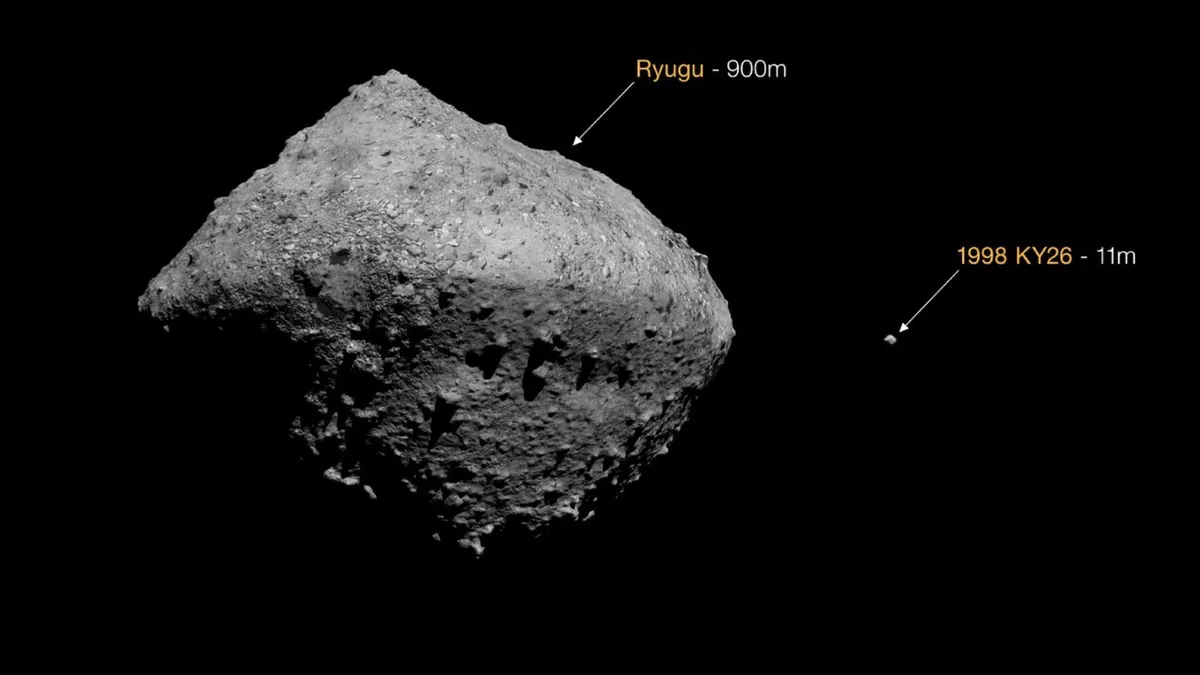
This success serves as the culmination of Hayabusa2's twelve-year odyssey. Launched in December 2014, the spacecraft was driven by an ambitious objective: not merely to photograph another world, but to return physical fragments of it to Earth. This goal was brilliantly realized in 2020, when the sample capsule from the asteroid Ryugu touched down in the Australian desert.
The subsequent analysis of the recovered material fundamentally reshaped our understanding of the origins of life. Research revealed that Ryugu contains all five nucleotides—the essential building blocks of DNA and RNA. This discovery lends indirect support to the hypothesis that the organic compounds necessary for the emergence of life were delivered to the young Earth from deep space via a bombardment of asteroids and comets. Consequently, every new maneuver by Hayabusa2, including its visit to Torifune, brings humanity one step closer to uncovering the truth of our origins.
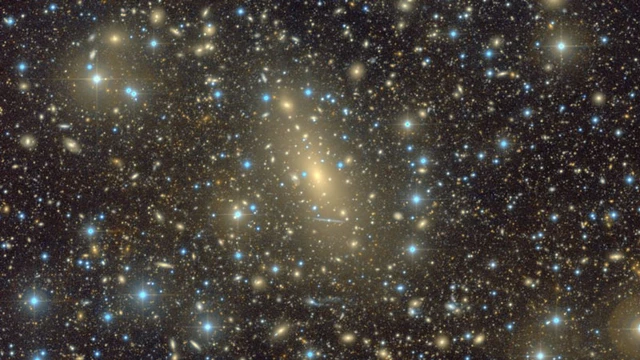 The Phenomenon of the Supermassive Galaxy IC 1101