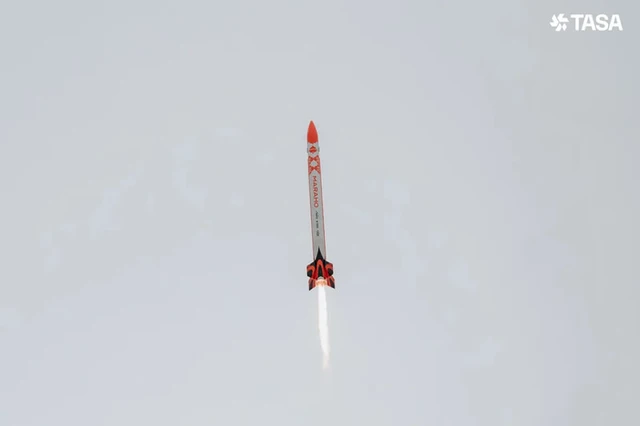
The race for affordable space access is increasingly pivoting toward the radical optimization of ground infrastructure. Traditional "hot" launches necessitate staggering investments to protect launch pads from extreme thermal loads and acoustic shock. A novel concept proposed by Chinese engineers seeks to replace the initial ignition plume with a powerful pneumatic impulse. By leveraging the unique properties of supercritical carbon dioxide, this approach could transform cumbersome, static spaceports into agile, mobile launch systems.
Contemporary aerospace engineering is currently grappling with a fundamental paradox: while the industry pushes toward reusability and increased launch cadence, fixed launch pads remain a primary bottleneck. Immense resources are spent simply ensuring that the launch installation survives the violent moment of engine ignition. The solution to this problem is being sought in the "cold launch" concept, where the rocket clears the platform before the combustion chambers ignite.
At the heart of this method is the use of carbon dioxide in a supercritical state. Thermodynamically, this is a phase boundary achieved at temperatures above 31°C and pressures exceeding 73 atmospheres. At this critical point, $\text{CO}_2$ ceases to behave as a simple gas or liquid, transforming into a supercritical fluid characterized by high density and immense expansion potential.
The mechanics of the process mirror the popping of a champagne cork, albeit on an industrial scale. A rapid drop in pressure creates a powerful pneumatic impulse that literally ejects the rocket from its launch canister or silo. The vehicle gains its initial altitude and velocity solely through the energy of the expanding gas; only once it reaches a specific point in mid-air are the primary liquid-propellant engines activated.
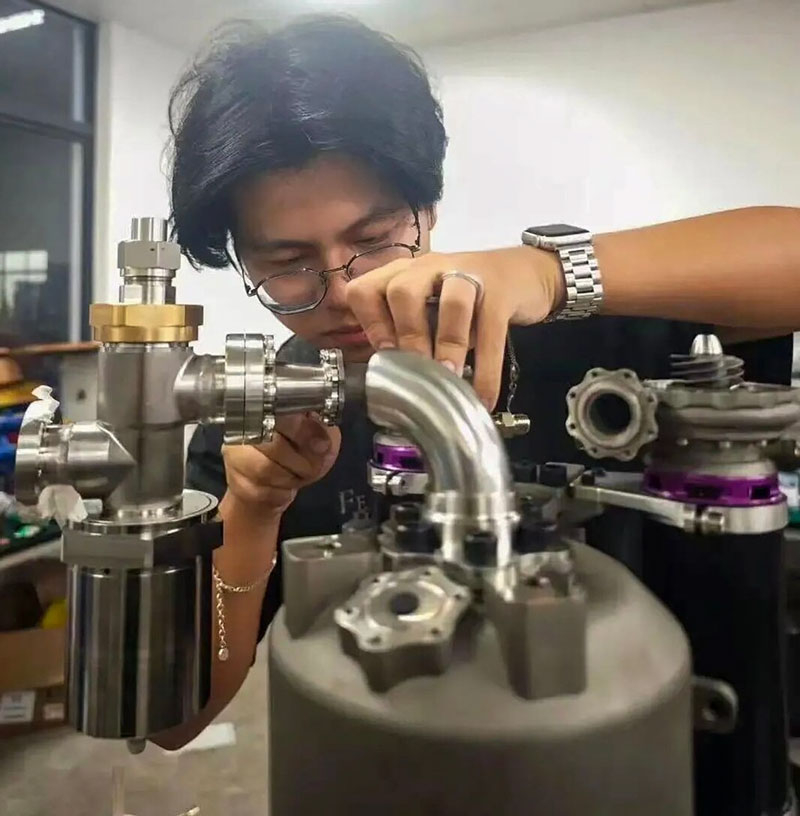
This approach fundamentally reshapes the requirements for ground support equipment. In a "hot" launch, infrastructure is subjected to superheated exhaust plumes, intense vibrations, and chemically aggressive combustion products. A "cold" launch entirely eliminates direct contact between the launch pad and the engine plume. This not only simplifies the design of launch systems and reduces maintenance costs but also paves the way for truly mobile launch platforms that can be deployed anywhere without the need for massive concrete fortifications.
It is crucial to emphasize that carbon dioxide serves not as a propellant, but as a high-performance pneumatic catapult. The heavy lifting required to deliver a payload into orbit remains the domain of traditional rocket engines.
This technology is part of a broader strategy to develop small-scale reusable launch vehicles. Central to this ecosystem is the adoption of a modern propellant combination—liquid oxygen and methane—coupled with an electric-pump cycle. The "Hantian" engine under development has already undergone its initial hot-fire tests, while the "Fission No. 1" carrier is being designed to deliver payloads of up to 450 kg.
Implementing this project demands precision engineering. Current efforts are focused on modeling the internal ballistics of supercritical $\text{CO}_2$ and analyzing the dynamic interaction between the rocket and the mobile installation. The precision of this initial impulse will ultimately determine the vehicle's stability upon exit and the safety of the subsequent mid-air engine ignition.

 Drones for Cloud Cover Management Over Solar Power Plants