13 Aug 2026
 Omnidirectional Solar Energy Harvesting
For decades, the quest for optimal solar energy harvesting has centered on sophisticated tracking systems and high-precision panel alignment. Yet, sensitivity to the angle of incidence remains a critical bottleneck for fixed-tilt installations, particularly where spatial constraints are tight. Researchers at Qatar University have proposed a paradigm shift: moving from planar surfaces to spherical geometries capable of capturing sunlight from virtually any angle. This approach prompts a fundamental reconsideration of photovoltaic architecture, allowing us to quantify the actual trade-offs involved in eliminating mechanical solar tracking.
13 Aug 2026
 The Magnetic Leap Toward Hyper-Speed
The global pursuit of ultra-high-speed transit is gradually pivoting from aviation toward terrestrial systems. Recent trials in China demonstrate that electromagnetic acceleration is capable of redefining the physical limits of transportation. A new maglev prototype has achieved speeds previously thought attainable only by jet aircraft. This technological breakthrough paves the way for a new generation of transport infrastructure, where travel time becomes secondary to the overarching efficiency of movement.
13 Aug 2026
 Defying Gravity with a Production Electric Vehicle
The boundary between automotive engineering and high-stakes spectacle often blurs when pushing machinery to its absolute limits. For years, "vertical loops" were seen as the exclusive domain of stripped-down supercars or purpose-built stunt vehicles. However, a recent demonstration in Wuhan has challenged this paradigm, effectively weaponizing the laws of physics as a potent marketing tool. The case of the Passion S EV proves that the synergy of raw power and precision electronics can defy gravity, even within a production-grade vehicle.
13 Aug 2026
 Diffraction-Based Optical Camouflage
For decades, the concept of invisibility remained the exclusive province of science fiction and theoretical speculation. Today, however, the boundary between fantasy and physics is dissolving, driven by the meteoric rise of nanophotonics. Researchers at the University of California, Los Angeles (UCLA) have unveiled a system that fundamentally upends our traditional perception of reflection. This "lying mirror" does more than simply bounce light back; it effectively rewrites the signal, operating entirely passively—without a single electron or external power source.
12 Aug 2026
 The Closed Fuel Cycle for Nuclear Fusion Energy
The quest for global energy independence through nuclear fusion is constrained not only by the complexities of plasma confinement but also by a critical scarcity of raw materials. Tritium, a fundamental component of the fuel mix, occurs naturally only in negligible quantities, transforming its sustainable production into a strategic imperative. A new initiative to establish dedicated fuel "farms" aims to translate theoretical frameworks into tangible engineering reality. Project Unity-3 is emerging as the bedrock for the transition from experimental testbeds to full-scale commercial reactors.
12 Aug 2026
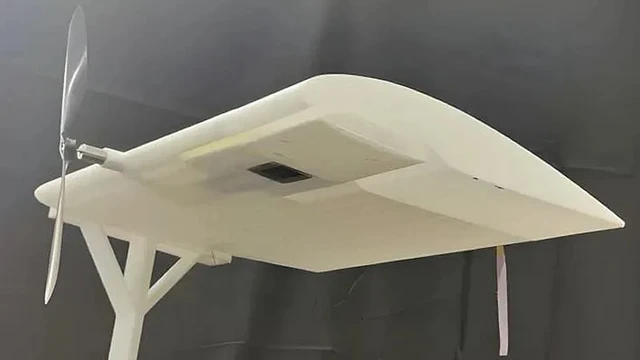 Laser-Based In-Flight Powering for Unmanned Aerial Vehicles
The challenge of limited energy density remains the fundamental bottleneck obstructing the realization of truly autonomous robotic systems. Traditional battery technology forces engineers into a precarious compromise between payload mass and operational endurance. This dichotomy is being resolved through remote power transfer—a paradigm that allows a craft to be energized in real-time during its mission. Recent breakthroughs in optoelectronics are now paving the way for platforms capable of indefinite aerial persistence, powered by high-precision laser pumping.
12 Aug 2026
 Engineering Ultra-Strong Diamond Composites
The quest for the ideal material has long been stalled by a fundamental trade-off: the tension between extreme hardness and fracture toughness. Diamond, while the absolute benchmark of hardness, remains catastrophically brittle under impact loads due to its tendency to cleave along specific crystallographic planes. However, a recent technological breakthrough in the synthesis of carbon structures is finally dismantling this barrier. By integrating nanotubes into the crystalline lattice, we are paving the way for materials that are virtually impervious to mechanical failure.
12 Aug 2026
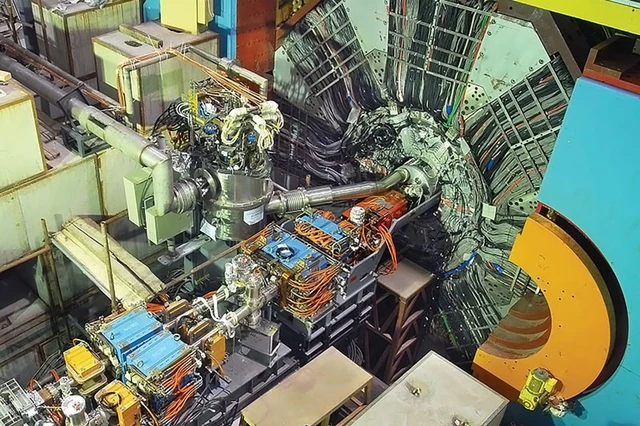 The Shift in Technological Leadership in the Development of Supermagnets
The pursuit of fundamental breakthroughs in high-energy physics is inextricably linked to our capacity to manipulate elementary particle beams with absolute precision. For decades, Western laboratories maintained a virtual monopoly over the cutting-edge superconducting technologies essential to the operation of particle colliders. Recent developments in China, however, signal a profound paradigm shift and a recalibration of the global technological equilibrium. This pivot—from the importation of critical hardware to its export—heralds a new era of scientific autonomy and technical hegemony.
11 Aug 2026
 Visual Registry of Billions of Celestial Objects
Modern astronomy has transitioned from an era of isolated observations into an age of comprehensive digital cartography. The creation of the most detailed color map of the universe was made possible through the synthesis of data from several world-leading observatories, powered by high-performance supercomputing. Spanning three-quarters of the celestial sphere, this massive dataset transforms the apparent chaos of the night sky into a structured catalog designed for the rigorous analysis of dark energy. What we have here is not merely an image, but a foundational instrument with the potential to rewrite the very laws of cosmology.
11 Aug 2026
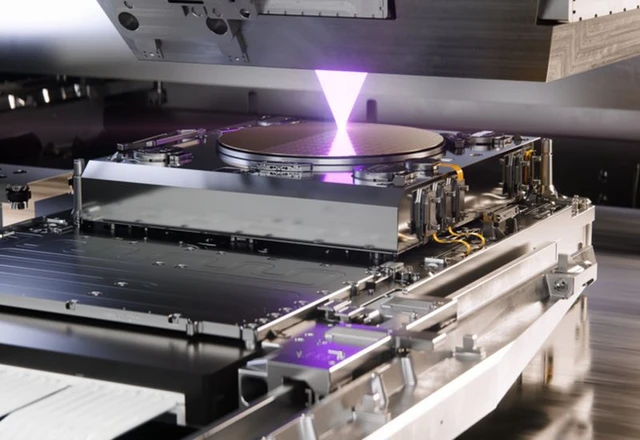 Technological Sovereignty in Extreme Ultraviolet (EUV) Technology
The modern semiconductor industry is effectively held captive by a narrow oligopoly of lithography equipment suppliers. Access to Extreme Ultraviolet (EUV) technology has become the sole viable pathway for producing chips below the 7-nanometer threshold, transforming these machines into potent instruments of geopolitical leverage. Sidelined from this market since 2019, China is now aggressively pursuing total autonomy in the production of critical components. Recent breakthroughs by domestic researchers in developing a light source mark the beginning of a long and arduous journey toward breaking this technological dependency.
11 Aug 2026
 Graphene-Based Living Optics
The pursuit of extreme miniaturization in optical systems has long been constrained by the inherent physical limitations of mechanical autofocus. Conventional systems rely on cumbersome actuators and complex lens assemblies, creating a bottleneck for the advancement of wearable electronics and medical sensors. A breakthrough from researchers at Queen Mary University of London proposes a radical pivot toward a biomimetic architecture. The development of an electric-field-controlled "living" lens paves the way for a new generation of devices where optics are fluid, flexible, and seamlessly integrated.
8 Aug 2026
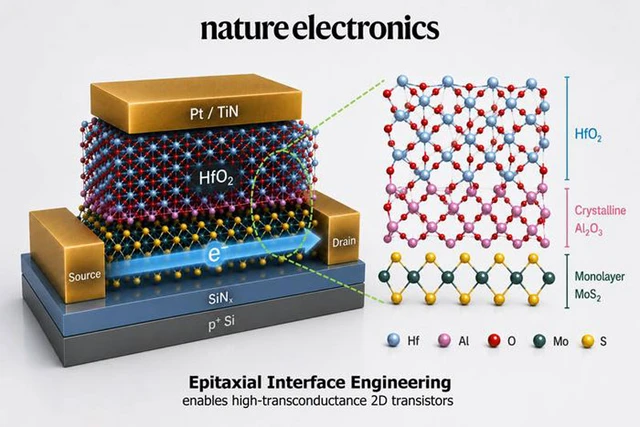 The Future of Microchips in Two-Dimensional Crystals
The modern semiconductor industry is rapidly converging upon the physical limits of silicon scaling. This quest for viable alternatives has led researchers toward two-dimensional (2D) materials, which promise a drastic reduction in both power consumption and device footprints. However, the primary bottleneck hindering commercialization has remained the inherent instability of the interfaces between semiconductors and insulators. A breakthrough proposed by TSMC engineers and Taiwanese scientists pivots the strategic focus away from the mere discovery of new materials toward the precision engineering of atomic layers.
