The global transition toward renewable energy has introduced a fundamental systemic challenge: the inherent volatility of power generation. Because these sources are tethered to fluctuating weather patterns, legacy grids have become increasingly vulnerable, necessitating a paradigm shift in how load balancing and frequency regulation are managed. China is addressing this instability by deploying energy storage systems on an unprecedented scale. The commissioning of the DongSu complex signals a strategic pivot—moving beyond mere electricity storage toward the active, systemic orchestration of the entire power grid.
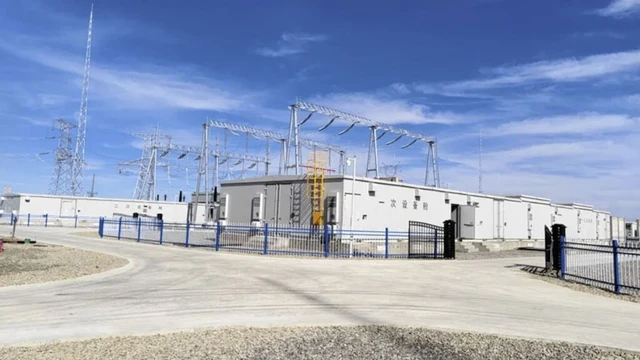
In the Inner Mongolia Autonomous Region, near Mandulatu, one of the most ambitious engineering feats of the modern era has been commissioned: the DongSu battery energy storage system (BESS). Boasting an electrical capacity of 1 GW and a total energy reserve of 4 GWh, the facility can sustain its nominal load for four hours. In essence, it is a colossal industrial "power bank" woven directly into the fabric of the power grid.
The technological backbone of the complex consists of lithium iron phosphate (LFP) batteries. This chemistry was selected not only for its economic viability but also for its superior safety profile and longevity compared to traditional nickel-manganese-cobalt (NMC) cells. With an investment of approximately $445 million and a footprint spanning 28 hectares, the facility is designed for an annual energy throughput of around 1 TWh. The system operates on a classic cycle: capturing surplus generation from renewable energy sources (RES) and discharging it back into the grid during peak demand.
However, the true value of DongSu lies not in its raw storage capacity, but in the implementation of "grid-forming" technology. In conventional systems, inverters operate in a grid-following mode, synchronizing themselves to existing grid frequency and voltage. Grid-forming inverters function differently—they actively establish the reference parameters for voltage and frequency.
This transition transforms the storage unit from a passive consumer or supplier into an active stabilizer. In the event of a sudden power imbalance or a critical failure, such systems can instantaneously compensate for voltage drops, preventing cascading regional outages. Furthermore, this technology enables "black start" capabilities—the ability to reboot the power system from scratch without external power supply—a feat previously reserved for the massive synchronous generators found in traditional thermal and hydroelectric plants.
For Inner Mongolia, a region characterized by a high density of wind and solar farms, this functionality is critical. The inherent volatility of renewable generation creates constant grid fluctuations; these are now mitigated by the inertia and controllability provided by the LFP complex.
The launch of DongSu is a key component of China’s sweeping state strategy for 2026–2030. Under this roadmap, the focus is shifting from the mere expansion of renewable capacity toward intelligent management and deep storage integration. Statistics underscore this dominant trend: by the end of 2025, the country already had 136 GW of storage capacity operational, with over 96% based on lithium-ion technologies.
Consequently, the DongSu project serves as a benchmark for how modern energy storage systems are evolving beyond simple "batteries" to become comprehensive tools for managing national energy security.
 Next-Generation Ultra-Lightweight Lens Technology