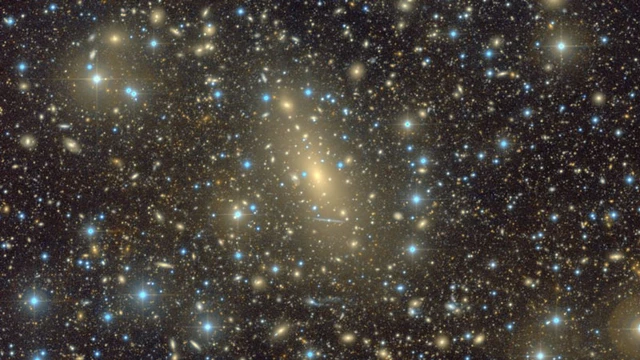
For decades, the evolution of galactic systems was viewed primarily as a product of internal star-formation mechanisms and gravitational dynamics. Yet, the influence exerted by the supermassive black holes at their cores has proven far more profound than classical models ever predicted. Emerging data suggests that active galactic nuclei possess the capacity to manipulate matter far beyond their immediate boundaries—a revelation that forces a fundamental reassessment of how the energy output of a single celestial entity can dictate the destiny of entire galactic clusters.
The interplay between supermassive black holes and the evolution of their host galaxies stands as one of the central pillars of modern astrophysics. It is well-established that Active Galactic Nuclei (AGN) function as colossal cosmic engines: by ejecting plasma jets and generating powerful stellar winds, they can either catalyze the birth of new stars or completely stifle the process by "blowing" gas out of the system. For a long time, however, the scale of this influence was believed to be confined within the boundaries of a single galaxy or its immediate vicinity.
Recent research conducted by Japanese astronomers, focusing on the quasar H1821+643, has forced the scientific community to recalibrate these assumptions. Located in the constellation Draco, approximately 3.4 billion light-years from Earth, this quasar represents an extreme case of galactic activity. At its heart lies a black hole with a mass roughly 2.6 billion times that of our Sun, transforming the surrounding space into a zone of turbulent chaos.
These insights were made possible through the Japanese-American X-ray observatory XRISM. The mission's instrumentation allowed scientists to perform high-fidelity spectral analysis of highly ionized iron lines. The behavior of these ions served as a critical diagnostic tool, enabling researchers to trace how energy flows from the quasar impact the surrounding gas across vast distances.
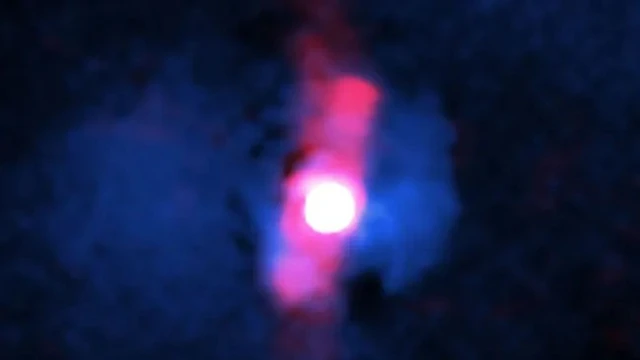
The results are revelatory. Researchers discovered that the quasar’s energy triggers intense turbulence in the hot gas at distances up to 300,000 light-years from the center. To put this scale into perspective, the zone of influence for H1821+643 is equivalent to three Milky Way disks. This implies that the black hole's impact extends far beyond its own host galaxy, affecting neighboring systems and the broader cluster environment.
The technical metrics of this process are staggering: average gas velocities within these turbulent zones reach 300 km/s, while plasma temperatures soar to 72 million degrees Celsius. In terms of aggregate power, this effect is comparable to the energy released by billions of simultaneous supernova explosions.
This scale of impact exceeds previous theoretical estimates of AGN environmental influence by two orders of magnitude. From a cosmological perspective, this suggests that supermassive black holes do not merely purge their own galaxies of matter; they act as global thermodynamic regulators for the entire cluster core. By heating and churning the intergalactic gas, they prevent it from cooling—a critical prerequisite for the collapse of gas clouds and the subsequent birth of new stars. Consequently, a single active object is capable of dictating the evolutionary pace and determining the life cycle of multiple galaxies within a radius of hundreds of thousands of light-years.
 Next-Generation Ultra-Lightweight Lens Technology