For years, the quest for efficient micro-scale locomotion has been stifled by the inherent bulk and weight of conventional actuators. Traditional electric motors and batteries become prohibitively cumbersome when scaled down to devices weighing only a few milligrams. To resolve this impasse, researchers have pivoted toward external power sources capable of delivering kinetic impulse directly. Engineers at EPFL have now proposed leveraging acoustic resonance to generate thrust, effectively transforming sound into the propellant for micro-robotics.
At the heart of this technological breakthrough lies a fundamental physical principle: Helmholtz resonance. It is a phenomenon familiar to most through simple everyday observation—the characteristic hum produced when blowing across the neck of an empty bottle. In the hands of researchers at the MicroBioRobotic Systems (MICROBS) laboratory, however, this effect has been transformed into a precision tool for motion control. By engineering hollow resonators with specific geometries—circular or bell-shaped—the scientists ensured that when exposed to sound waves at a designated frequency, the air within the cavity begins to oscillate intensely. In doing so, a simple hollow structural element is converted into a fully functional acoustic engine.
The mechanics of propulsion here rely on the concept of flow asymmetry. During acoustic oscillation, air enters the resonator as a diffuse, chaotic stream but exits through a narrow aperture as a concentrated jet. This disparity in flow density and direction generates a net momentum that propels the device forward. It is critical to distinguish this method from acoustic levitation; while levitation uses an external sound field to simply suspend a passive object in space, this system utilizes sound as an energy pump that activates an integrated resonator, forcing the craft to generate its own motive force.
Practical implementation began with the development of centimeter-scale boats. Each device was equipped with one or more resonators tuned to different frequencies within the audible spectrum. Because each "engine" responded only to its specific frequency, engineers gained the ability to control the object remotely: by modulating the speaker signal, they could command the boat to move forward, turn, or navigate around obstacles. This enabled programmable, autonomous movement without the need for any onboard electronics.
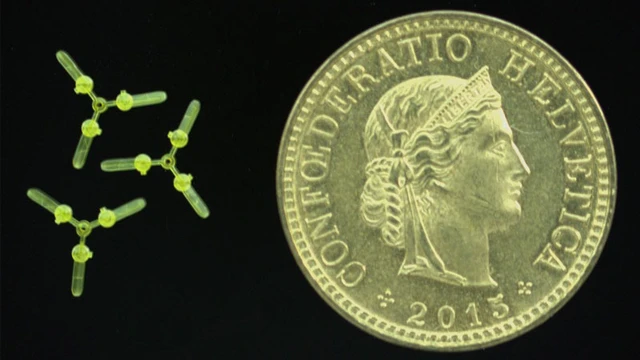
The next phase of development integrated ultrasonic frequencies and 3D nanoprinting. The team engineered flying microrobots with polymer bodies containing embedded microscopic resonators. One such device, weighing a mere 150 $\mu$g, demonstrated the ability to generate upward jet thrust. In essence, the device functioned as a miniature rocket, substituting chemical propellants with acoustic jets.
Another iteration proved even more sophisticated: resonators were used to drive tiny blades. These rotors reached speeds of 13,000 RPM, providing stable aerodynamic lift based on helicopter principles. The prospects of this technology pave the way for the creation of versatile "soft" robots. In the future, such systems could comprise a multitude of resonators, each responsible for a specific bend or rotation of the chassis, allowing for the management of complex kinematics controlled exclusively via sonic frequencies.
 Driver Attention Monitoring in Tesla Electric Vehicles