14 Aug 2026
 The Meteoric Rise of Alphabet’s Investment in SpaceX
The convergence of Big Tech and the aerospace industry has given rise to some of the most valuable assets in modern history. When Alphabet entered SpaceX’s orbit a decade ago, it was far more than a mere wager on rocketry; it was a strategic play for the future of global connectivity. Today, those early stakes have matured into a financial phenomenon, illustrating the staggering returns achievable through disciplined, strategic venture capital. This case stands as a masterclass in patience and foresight, navigating the extreme volatility and inherent risks of the space economy.
13 Aug 2026
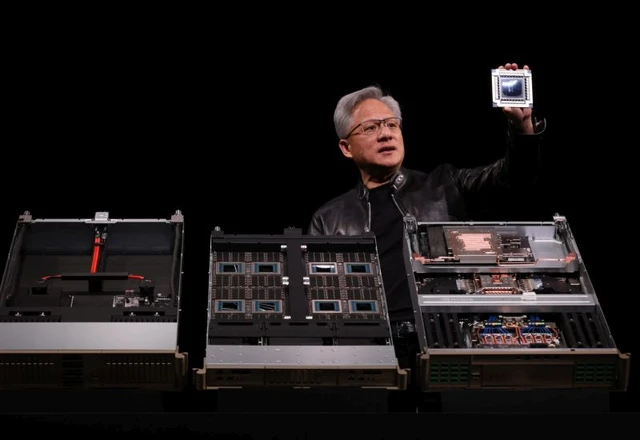 Capital Preservation Mechanisms in the Age of AI
The global transition to an AI-driven economy demands staggering investments in physical infrastructure. However, rapid hardware refresh cycles introduce significant volatility for lenders, who face the constant threat of accelerated asset devaluation. Nvidia is addressing this with a bold strategy: transforming its computing power into a secure financial instrument. By guaranteeing the residual value of its GPUs, the company is effectively pioneering a new framework for insuring technological risk.
13 Aug 2026
 The Enterprise AI Efficiency Crisis
The global AI arms race has precipitated a paradoxical economic climate: the velocity of adoption is vastly outstripping our grasp of the technology's actual value. While enterprises are pivoting toward neural network solutions en masse, the industry has hit a fundamental wall regarding performance measurement. Businesses are now scrambling to establish viable ROI metrics amidst pervasive uncertainty and latent risks. This transition is exposing systemic fractures, ranging from corporate data breaches to an acute, critical reliance on proprietary vendor ecosystems.
13 Aug 2026
 The Magnetic Leap Toward Hyper-Speed
The global pursuit of ultra-high-speed transit is gradually pivoting from aviation toward terrestrial systems. Recent trials in China demonstrate that electromagnetic acceleration is capable of redefining the physical limits of transportation. A new maglev prototype has achieved speeds previously thought attainable only by jet aircraft. This technological breakthrough paves the way for a new generation of transport infrastructure, where travel time becomes secondary to the overarching efficiency of movement.
13 Aug 2026
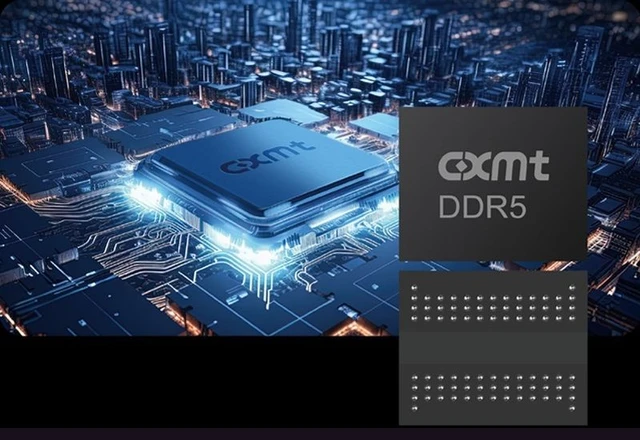 CXMT’s Triumph in the Era of Neural Networks
The global technological landscape is undergoing a fundamental shift, one where infrastructure valuation is beginning to eclipse the value of services. In China, this transition has manifested as a swift market realignment, upending the established hierarchy of the region's tech giants. Memory chip manufacturer CXMT has made a meteoric rise, surpassing long-time leader Tencent in market capitalization. This phenomenon reveals a stark new truth: in the era of artificial intelligence, raw physical capacity is now prized above software ecosystems.
13 Aug 2026
 The Future of Regional Electric Aviation
Aviation remains one of the most formidable sectors to decarbonize, constrained by stringent requirements for energy density and payload capacity. The transition to electric propulsion demands more than a simple replacement of engines; it necessitates a fundamental reimagining of short-haul aviation economics. Successful flight tests of the X1 aircraft demonstrate that operational energy costs could become negligible compared to the expense of traditional kerosene. This technological pivot paves the way for an entirely new paradigm in regional connectivity infrastructure.
13 Aug 2026
 Mechanical Vulnerabilities of the Galaxy Z Fold 8
The foldable market is gradually evolving beyond its experimental infancy, yet hardware reliability remains its most persistent vulnerability. While Samsung continues to dominate sales figures, it is grappling with fundamental challenges in shielding internal components from environmental contaminants. A recent analysis of the Galaxy Z Fold 8 exposes a critical weakness in the hinge mechanism's resilience against microparticles—a flaw that jeopardizes not only the device's longevity but also the very notion of repairability within the premium segment.
12 Aug 2026
 Japan’s Navigational Sovereignty and Orbital Computation
In an era of systemic reliance on global positioning networks, technological sovereignty has evolved into a critical pillar of national security. Japan is pursuing a distinct strategic path with the development of QZSS—a system designed not merely as a redundant alternative to GPS, but as a tailored solution optimized for the unique topographical challenges of the Japanese archipelago. The recent deployment of the Michibiki-7 satellite marks the culmination of the network's foundational phase. Tokyo is now pivoting toward total autonomy in precision positioning, effectively insulating its critical infrastructure from the volatility of external dependencies.
12 Aug 2026
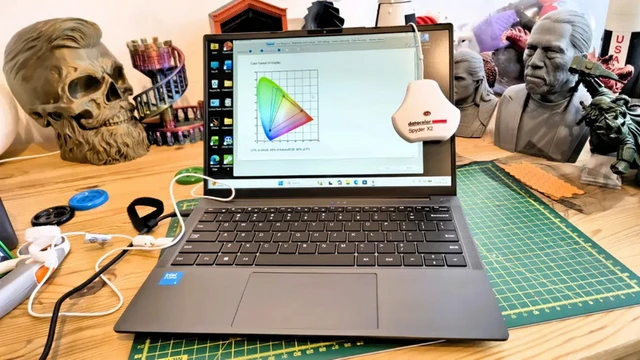 The Trust Crisis Surrounding Chuwi's Specifications
In the budget laptop market, the line between optimistic marketing and outright deception is often precariously thin. A recent controversy surrounding Chuwi serves as a stark illustration of how technical specifications can be weaponized to mislead consumers. At the heart of the issue is the systemic inflation of display parameters and even core system components. This case underscores a critical question regarding manufacturer accountability within the entry-level hardware segment.
12 Aug 2026
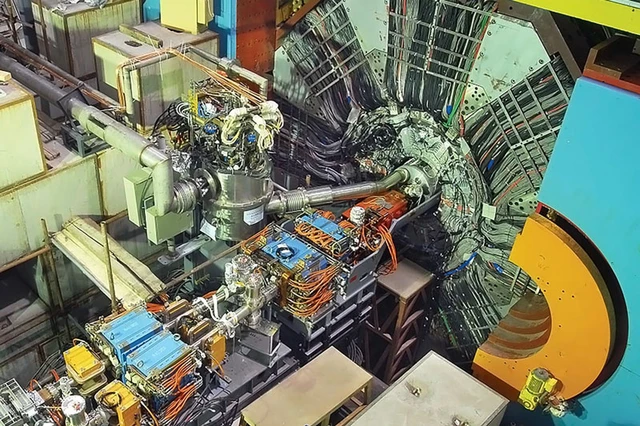 The Shift in Technological Leadership in the Development of Supermagnets
The pursuit of fundamental breakthroughs in high-energy physics is inextricably linked to our capacity to manipulate elementary particle beams with absolute precision. For decades, Western laboratories maintained a virtual monopoly over the cutting-edge superconducting technologies essential to the operation of particle colliders. Recent developments in China, however, signal a profound paradigm shift and a recalibration of the global technological equilibrium. This pivot—from the importation of critical hardware to its export—heralds a new era of scientific autonomy and technical hegemony.
12 Aug 2026
 The Pixel Tag and the Evolution of Personal Trackers
For years, the item-tracking market has been the domain of walled gardens, with Apple defining the benchmarks for precision and user experience. Google is now challenging this hegemony with the introduction of the Pixel Tag—a device engineered to unify the fragmented Android landscape under a singular positioning standard. Far from being just another peripheral, the Pixel Tag represents a strategic push toward comprehensive spatial awareness, integrated seamlessly across both hardware and software. Under the hood, it leverages technologies that redefine our fundamental approach to locating misplaced items.
11 Aug 2026
 Gigabyte B850 Aorus Elite X3D: The New Gold Standard for the Mid-Range
By mid-2026, the conventional hardware upgrade cycle had descended into a profound systemic crisis. A surge in memory pricing, coupled with a stagnation in the rollout of new platforms, forced users to pivot from full system overhauls toward incremental, targeted upgrades. In this climate, motherboard manufacturers found themselves uniquely vulnerable, stripped of their primary catalyst for sales growth. Gigabyte’s response to this shift was a strategic reimagining of its product positioning: the introduction of a specialized series tailored specifically for the high-demand Ryzen X3D processors.
