The global technological landscape is undergoing a fundamental shift, one where infrastructure valuation is beginning to eclipse the value of services. In China, this transition has manifested as a swift market realignment, upending the established hierarchy of the region's tech giants. Memory chip manufacturer CXMT has made a meteoric rise, surpassing long-time leader Tencent in market capitalization. This phenomenon reveals a stark new truth: in the era of artificial intelligence, raw physical capacity is now prized above software ecosystems.
CXMT's debut on the Shanghai Stock Exchange has been a watershed moment, instantly reshaping the landscape of China's tech sector. With its market capitalization soaring to $524 billion, the company has ascended to become the nation's most valuable listed entity. For context, Tencent—the once-untouchable titan whose reach extends into nearly every facet of China's digital existence—has slipped to $510 billion. This shift is far from accidental; it reflects a profound crisis of investor confidence in traditional IT conglomerates amidst the generative AI gold rush.
The valuation gap between these two giants illustrates the classic market mechanism of "selling shovels during a gold rush." While Tencent is forced to pour colossal sums into developing proprietary neural networks without a clear monetization roadmap, CXMT emerges as the direct beneficiary of this cycle. Any modern infrastructure designed for training Large Language Models (LLMs) demands massive volumes of high-speed memory. Consequently, CXMT provides the critical resource essential to every other market player—including its own competitors.
Investors are reacting decisively: since the start of the year, Tencent's Hong Kong-listed shares have plummeted by more than 26%. Conversely, CXMT's debut was marked by an explosive 467% surge in valuation, signaling immense expectations for hardware profitability. Even subsequent stabilization and minor corrections do not alter the overarching trend—the market is placing its bets on "silicon."
From a technical standpoint, CXMT is competing in an incredibly high-stakes league. For decades, the DRAM (Dynamic Random Access Memory) market has remained a closed club, with three global leaders controlling over 90% of total supply. Currently, CXMT holds less than a 9% share, placing it fourth in the global rankings. However, an aggressive capacity expansion strategy coupled with state backing positions the company to seriously challenge its way into this inner circle of dominant players.
Analysts believe the divide between memory providers and software developers will only widen. As AI agent workloads consume increasing amounts of internet traffic and compute resources, the demand for specialized memory is becoming virtually insatiable. In this race, CXMT is evolving from a local player into a strategic asset, underpinning the technological sovereignty and economic resilience of the entire region.
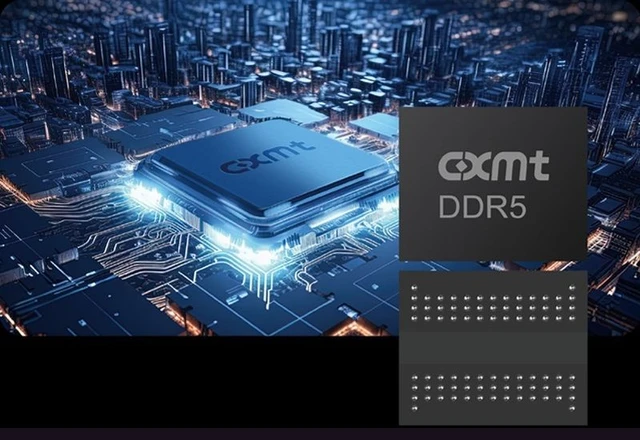
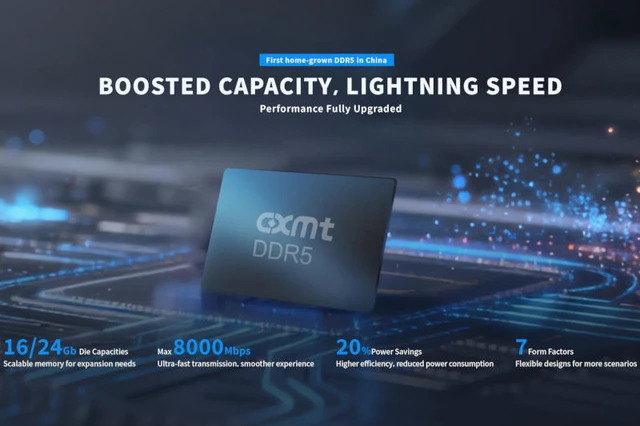 The Price of Acceleration: CXMT’s Rapid Push into Memory