The foldable market is gradually evolving beyond its experimental infancy, yet hardware reliability remains its most persistent vulnerability. While Samsung continues to dominate sales figures, it is grappling with fundamental challenges in shielding internal components from environmental contaminants. A recent analysis of the Galaxy Z Fold 8 exposes a critical weakness in the hinge mechanism's resilience against microparticles—a flaw that jeopardizes not only the device's longevity but also the very notion of repairability within the premium segment.
iFixit's teardown specialists, renowned for their forensic analysis of consumer electronics, have handed the Samsung Galaxy Z Fold 8 a dismal repairability score of just 4 out of 10. This severe verdict stems less from the overall complexity of the device and more from fundamental flaws within the hinge mechanism. In a premium, high-ticket device, a critical failure point has emerged: the folding mechanism is virtually devoid of effective protection against particulate ingress, rendering any subsequent repair or replacement both prohibitively expensive and labor-intensive.
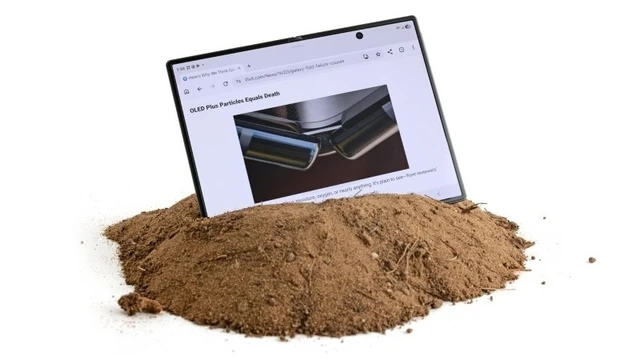
Technical analysis reveals that the device carries an IP48 certification. In the context of foldable smartphones, this represents a significant compromise; while water resistance is present, dust protection for particles smaller than 1mm is effectively non-existent. For a precision mechanism where tolerances are measured in microns, such a vulnerability is fatal. Common household dust or stray grains of sand infiltrating the assembly act as an abrasive agent, triggering the gradual wear and tear of friction surfaces.
The result of this engineering oversight is systemic physical degradation. After repeated opening and closing cycles, the hinge begins to exhibit audible crunching and grinding—clear indicators of mechanical attrition within the internal components. Ultimately, this leads to a state where the smartphone either fails to open fully or does so with noticeable resistance, transforming a premium gadget into an unstable piece of hardware.
Particularly concerning is Samsung's approach to serviceability. The manufacturer treats the hinge and the internal flexible display as a single monolithic assembly. Consequently, even minor damage to the mechanism necessitates the replacement of the entire complex. Such an operation requires a near-total teardown of the smartphone, exponentially increasing repair costs and elevating the risk of collateral damage to other components during the process.
Against this backdrop, competitors are demonstrating a far more mature approach to hardware protection. Modern solutions from Google in the Pixel Fold series, as well as Honor's Magic V flagships, already feature full IP6X-rated dust protection. This proves that the technical capability to fully isolate a folding mechanism not only exists but has become the industry benchmark. For Samsung, the Galaxy Z Fold 8 serves as a stark signal that its engineering philosophy requires a pivot; ignoring environmental contamination renders the device far too fragile for real-world operational conditions.
 The Evolution of Apple's Augmented Reality Ecosystem