15 Aug 2026
 SpaceX’s Strategic Expansion into the AI Industry
The global race for generative AI supremacy is escalating, evolving niche tools into the bedrock of corporate empires. SpaceX's $60 billion acquisition of Cursor stands as one of the most ambitious deals in the history of the modern tech landscape. This strategic move is designed to close the technological divide between Elon Musk and industry titans such as OpenAI and Anthropic. At the heart of this strategy lies a fundamental transformation of the software development lifecycle and a pivot toward an entirely new economic business model.
15 Aug 2026
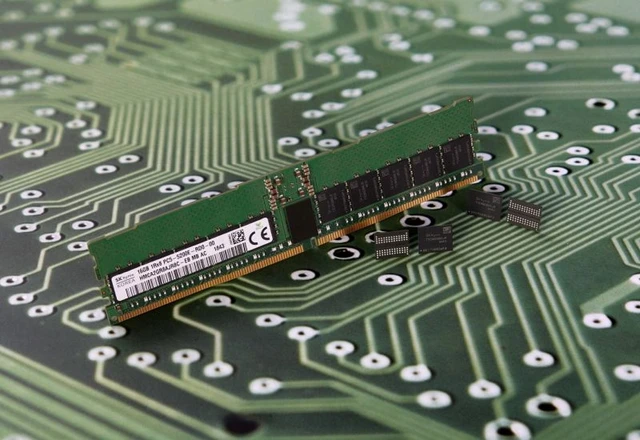 The Memory Crisis in the Age of Artificial Intelligence
The AI revolution is shifting the center of gravity from software capabilities to the physical constraints of hardware. Memory has emerged as the primary bottleneck for global digital progress, fundamentally dictating the cost and accessibility of next-generation technology. Forecasts from SK Group leadership point to a critical component shortage that will inevitably drive up the price of consumer electronics across the board. We are on the precipice of a structural shift, where access to memory is evolving into a strategic resource of global significance.
15 Aug 2026
 Googlebook’s Strategic Reboot: A Pivot to the Premium Segment
For years, ChromeOS was pigeonholed as a basic utility for classrooms and entry-level tasks, hampered by budget plastic chassis and lackluster performance. Now, Google is radically shifting its trajectory, pivoting from a "bottom-up" strategy toward an expansion driven by flagship hardware. The objective of this strategic pivot is to shed its image as a budget-tier offering and establish itself as a legitimate alternative to the MacBook and Copilot+ PCs. Central to this new vision is a rigorous approach to hardware segmentation and a decisive bet on high-performance silicon.
15 Aug 2026
 The Economics of Cross-Investment Among Tech Giants
The global technology market is undergoing a phase of unprecedented growth, propelled by the rapid expansion of artificial intelligence and cloud computing. Yet, beneath the veneer of record-breaking financial performance lies a precarious mechanism of cross-capitalization, effectively transforming the industry into a closed-loop ecosystem. The world's leading tech giants are increasingly reporting profits derived not from product sales, but from the appreciating value of their mutual equity stakes. This financial interdependence fosters an illusion of stability—one that could trigger a systemic crisis the moment market optimism begins to cool.
14 Aug 2026
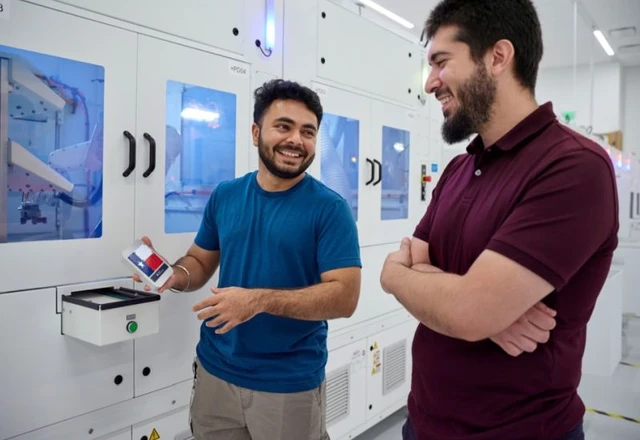 Localizing Apple Production in Texas
The global technology industry is witnessing a fundamental paradigm shift toward the regionalization of supply chains and a strategic decoupling from external markets. For Apple, this evolution represents a transition from mere component assembly to the establishment of comprehensive, high-tech ecosystems within the United States. The launch of a new facility in Texas serves as a calculated response to mounting geopolitical pressures and the surging demand for compact computing systems. This initiative heralds a new era in which manufacturing capabilities are no longer just operational assets, but critical instruments for securing technological sovereignty.
14 Aug 2026
 The Phenomenon of Hypercompensation at Tesla
The disparity between executive compensation and the earnings of rank-and-file employees has become a primary barometer of social inequality in today's global economy. While corporate governance standards generally attempt to mitigate this imbalance, the tech industry frequently produces outliers that defy conventional logic. The Tesla case illustrates a scenario where an individual's remuneration transcends mere payment for services rendered, evolving instead into a systemic financial anomaly. This forces the market to confront a fundamental question: is such a profound disconnect between a leader's personal wealth accumulation and the actual operational performance of the business sustainable—or even permissible?
14 Aug 2026
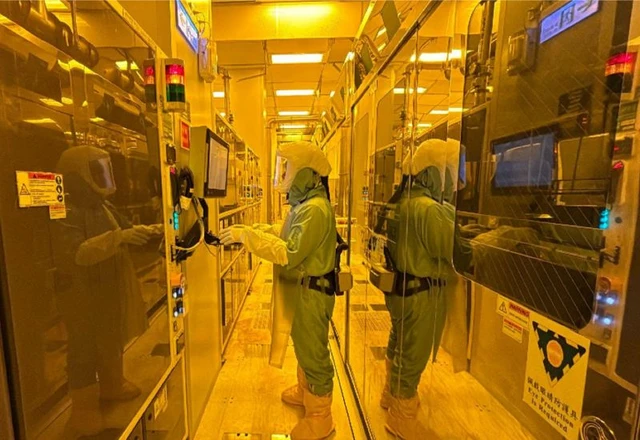 The Rise of Edge AI Infrastructure
The global AI arms race has traditionally centered on the raw computational power of GPUs, yet the true scale of this expansion lies hidden within the supporting infrastructure. While market discourse remains fixated on flagship chips, fundamental demand is pivoting toward the ancillary components that sustain their operation. The trajectory of SMIC illustrates how the second-order effects of the AI boom are evolving into primary drivers of financial growth—underscoring a profound restructuring of supply chains and an aggressive pursuit of technological sovereignty across the world's largest electronics markets.
14 Aug 2026
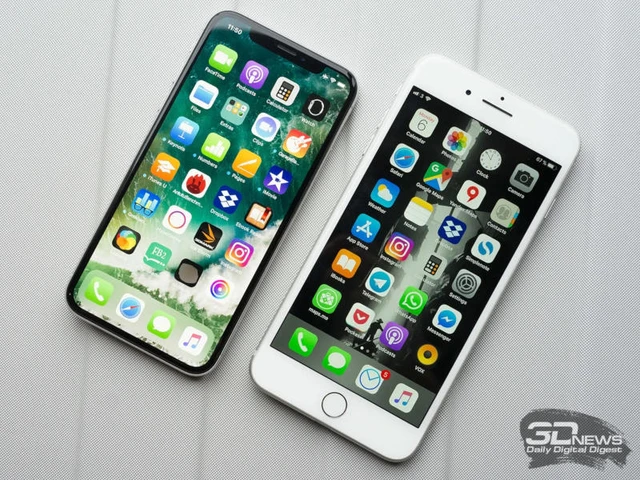 The Sunset of the Landmark iPhone X
The lifecycle of modern hardware is governed by rigid boundaries; once crossed, a cutting-edge device inevitably transforms into a digital artifact. For millions, the iPhone X represented a paradigm shift—a bold leap toward a new design language and a fundamental reimagining of how we interact with our data. Yet, time is an unrelenting force, and Apple has now officially relegated these once-iconic devices to "obsolete" status. This designation signifies more than just a cessation of software updates; it marks the definitive end of official manufacturer-level servicing and hardware support.
14 Aug 2026
 Smartphone Sensor Networks: Combatting the Forces of Nature
The precise prediction of localized meteorological events—such as hail and sudden thunderstorms—has remained one of the most formidable challenges in meteorology for decades. Traditional ground-based stations are too fragmented to capture the rapid, volatile dynamics of small-scale atmospheric structures in real time. However, the ubiquity of smartphones featuring integrated barometers paves the way for an unprecedentedly dense sensor network. This paradigm shift transforms millions of consumer devices into a singular, distributed monitoring instrument capable of radically enhancing the accuracy of short-term forecasts.
14 Aug 2026
 Memory Constraints Hamper the Accessibility of the MacBook Air
The global semiconductor market remains volatile, proving that even a behemoth like Apple is not immune to systemic supply chain disruptions. A current shortage of memory modules has triggered a palpable slowdown in shipments for one of the company's flagship laptop series. What began as a localized logistical hurdle has escalated into a strategic challenge, directly impacting product availability for the end consumer. This component crunch may well be a harbinger of more widespread delays across the brand's entire hardware ecosystem.
14 Aug 2026
 The End of the Ultra-Budget Smartphone Era
Global supply chain volatility and the semiconductor shortage are fundamentally reshaping the consumer electronics landscape. The era of ultra-budget devices is rapidly drawing to a close, superseded by a strategic pivot toward increasing the average selling price of hardware. In the United States, this trend has manifested in more radical terms, effectively eradicating the entry-level market segment. Current dynamics signal a systemic shift toward the "premiumization" of even the most fundamental connectivity needs.
14 Aug 2026
 Hidden Memory Vulnerability Uncovered in Legacy AMD Chips
For years, the demarcation line between the operating system and the underlying hardware was regarded as an impenetrable barrier against most forms of cyberattack. However, the discovery of a critical vulnerability in legacy AMD processor architectures proves that fundamental flaws in memory management can lie dormant and undetected for years. At issue is the ability to bypass systemic constraints, granting unauthorized direct access to sequestered data regions. This revelation underscores a pivotal concern regarding the long-term security viability of hardware that has long since reached its end-of-life support from the manufacturer.
