1 Jul 2026
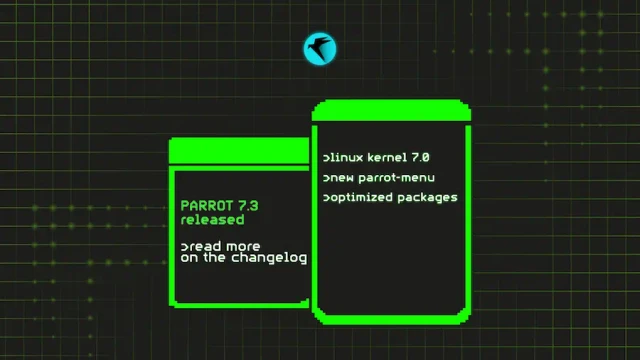 Parrot OS 7.3: A Technological Leap Forward
Today's cybersecurity landscape demands that analytical tools offer more than just raw functionality; they must achieve peak performance on contemporary hardware. Amidst the meteoric rise of neural networks and the increasing complexity of network architectures, traditional penetration testing methodologies are being fundamentally reimagined. The launch of Parrot OS 7.3 serves as a direct response to these shifts, fusing the rock-solid stability of Debian with cutting-edge optimization frameworks. This release signals a strategic pivot: moving beyond the mere aggregation of software toward a comprehensive systemic overhaul.
1 Jul 2026
 Z.ai’s Autonomous Programming Tool
The global market for AI-powered development tools is evolving at breakneck speed, shifting from basic chat interfaces toward fully autonomous agents. Amidst escalating export restrictions and a climate of technological protectionism, open-source models have become the sole guarantee of access to frontier technologies. The debut of ZCode by Z.ai marks a pivotal milestone in the establishment of independent programming ecosystems—a tool engineered to synthesize the capabilities of modern LLMs with the flexibility of local development environments.
1 Jul 2026
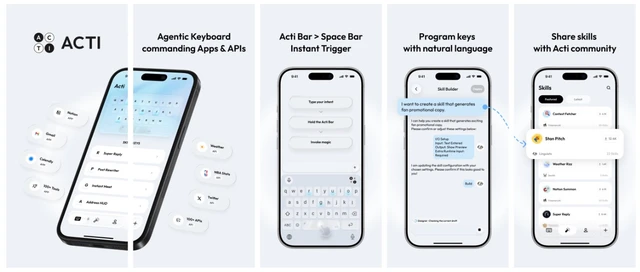 The Convergence of AI Agents and Mobile Input
The modern smartphone experience is defined by fragmented attention—a constant oscillation between dozens of apps that creates a palpable cognitive rift in how we process information. Traditional AI chatbots exacerbate this friction, requiring separate interfaces and reducing simple workflows to a tedious cycle of copying and pasting. Acti, a Singaporean startup, offers a radical departure: embedding the intelligent agent directly into the input layer. This evolution transforms the keyboard from a passive typing tool into a comprehensive command center for managing digital context.
1 Jul 2026
 Artificial Intelligence at the Forefront of Apple’s Cybersecurity
Modern cybersecurity is morphing into a high-tech arms race, with Large Language Models (LLMs) emerging as the primary instrument of engagement. Apple's latest major update signals a new chapter in this confrontation: neural networks are now capable of identifying critical vulnerabilities with greater speed and precision than human oversight. In an era where threat actors leverage AI to automate exploit discovery, response latency becomes the sole guarantee of system stability. This case underscores a fundamental paradigm shift in the methodology of code auditing and operating system patching.
30 Jun 2026
 The Water Balance of Global Cloud Systems
The modern digital economy, fueled by the meteoric rise of neural networks, is placing an unprecedented strain on natural resources, elevating water to a strategic asset for tech titans. Traditionally, cooling massive server clusters has demanded millions of gallons of freshwater—a requirement that frequently sparks friction with local ecosystems. Within this framework, achieving a "water-positive" footprint is no longer merely an environmental KPI; it has become a matter of strategic infrastructural resilience. Microsoft is demonstrating that a fundamental technological overhaul of cooling systems can outpace climate projections, enabling the company to replenish more water than it consumes.
30 Jun 2026
 The Limits of Digital Mobility Control
Modern smartphones have evolved into silent witnesses, documenting every human movement in real-time. For years, law enforcement agencies exploited this vulnerability through so-called "geofence warrants," effectively weaponizing private databases as instruments of mass surveillance. However, a recent U.S. Supreme Court ruling has recalibrated the balance between national security and the fundamental right to privacy. This precedent signals the end of an era defined by the unchecked collection of location metadata from millions of individuals.
30 Jun 2026
 Google’s Democratization of Personal Image Generation
The era of cumbersome prompt engineering is gradually receding, giving way to a new paradigm of deep contextual personalization. Google is taking a bold stride in this direction, synthesizing fragmented digital footprints into a cohesive creative instrument. The general release of Nano Banana tools across the United States marks a pivotal transition from niche AI applications to the mass democratization of intelligent assistants; consequently, the boundary between data harvesting and content generation is becoming virtually invisible.
30 Jun 2026
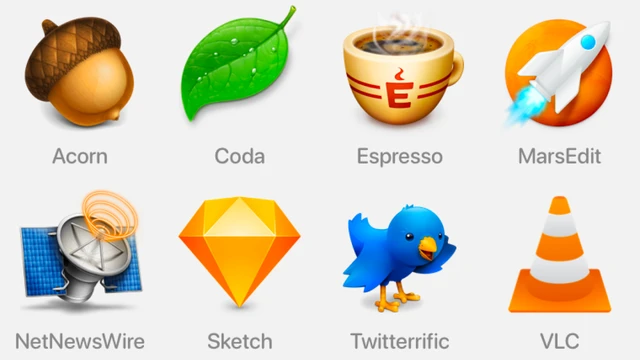 The Dictatorship of Form in macOS Interfaces
An operating system's visual language transcends mere aesthetics; it serves as a foundational pillar for navigation and accessibility. In recent years, Apple has pushed toward a total unification of its interface, flattening once-distinct application identities into standardized, uniform tiles. This trajectory has sparked a latent tension between a corporate drive toward minimalism and the practical, functional requirements of the end-user. Striking a balance between aesthetic purity and functional identity has emerged as one of the defining challenges facing the modern macOS ecosystem.
30 Jun 2026
 The End of Open Access to the Tenor Library
Modern digital communication has long since evolved into a language of visual metaphors, with GIFs emerging as the primary vehicle for emotional expression. For years, Tenor served as the definitive bridge, seamlessly integrating this content across the world's leading messaging apps and social platforms. However, Google’s decision to shutter its API severs that link, transforming what was once an open utility into a proprietary corporate asset. This move underscores a broader global trajectory: the aggressive consolidation of services within closed ecosystems.
30 Jun 2026
 The Vertical Integration of Vibe-Coding Tools
Modern software development is undergoing a fundamental pivot toward "vibe-coding," a paradigm where natural language serves as the primary interface for product creation. In this new landscape, reliance on commoditized third-party APIs has become a critical bottleneck for scaling platforms. Base44 is taking a decisive step toward technical sovereignty by introducing its own proprietary language model, Base1—a move that underscores the industry's broader drive toward the total vertical integration of data and infrastructure.
30 Jun 2026
 The Demonopolization of Mobile Ecosystems in the UK
The global struggle against the "walled gardens" of Big Tech is entering a decisive new chapter in the United Kingdom. For years, Apple and Google have maintained an iron grip on digital transactions, leveraging their dominance to extract substantial commissions from developer revenues. Now, British regulators are moving to dismantle these barriers, paving the way for third-party payment gateways and alternative hardware integration. This shift promises to fundamentally reshape the economics of mobile services and redefine the end-user payment experience.
30 Jun 2026
 Neural Networks vs. The Presumption of Innocence
The integration of artificial intelligence into the fabric of daily life has given rise to a new category of digital footprints—one that is increasingly becoming a focal point of legal disputes. Modern Large Language Models (LLMs) have evolved beyond simple search tools, transforming into a kind of "digital confessional" whose logs are now being leveraged as evidence of criminal intent. A high-profile trial in a Los Angeles federal court has underscored the inherent fragility of such a prosecutorial strategy, exposing a profound disconnect between the technical interpretation of data and the complexities of actual human behavior.
