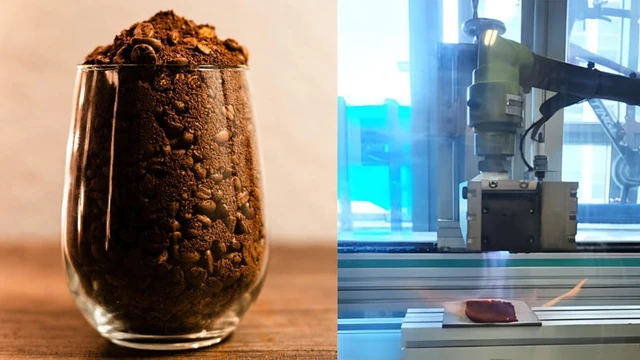
Modern society consumes millions of tons of coffee annually, generating a staggering volume of organic waste in its wake. Historically, the processing of wet biomass has been hampered by the energy-intensive requirement of pre-drying—a bottleneck that rendered the entire operation economically unviable. However, a breakthrough by South Korean researchers is now flipping this critical liability into a strategic technological advantage. By leveraging plasma pyrolysis, they can transform spent coffee grounds into a high-density fuel comparable to anthracite in a matter of seconds.
The challenge of coffee ground waste management has long since evolved from a local municipal nuisance into a global environmental imperative. Every year, the world generates over 10 million tons of these residues which, due to their high moisture and oil content, decompose while releasing potent greenhouse gases. Historically, the primary barrier to converting this waste into energy has been the necessity of pre-drying the raw material—a process that demands prohibitive amounts of electricity or thermal energy.
Researchers from the Korea Institute of Geoscience and Mineral Resources (KIGAM) have introduced a paradigm shift in the form of flame plasma pyrolysis. The core of this technology lies in the total elimination of pre-treatment: the system is capable of processing raw materials with moisture levels up to 55% in real-time. Wet coffee grounds are fed directly into the impact zone of a plasma torch at atmospheric pressure, bypassing the complex and costly cycles of drying and degreasing.
The technical execution of the process relies on liquefied petroleum gas (LPG)—a mixture of propane and butane—combined with compressed air. This creates a high-temperature plasma flame reaching 800–900 °C. Under such extreme thermal stress, the water trapped within the coffee particles evaporates almost instantaneously. This triggers a massive buildup of internal pressure, resulting in a series of micro-explosions.
This phenomenon, dubbed the "popcorn effect," serves as the primary driver of the process. Rather than hindering pyrolysis, the moisture actually facilitates the creation of a unique, highly porous material architecture. Simultaneously, deep carbonization and drying occur, yielding a final product with exceptional characteristics in just 90 seconds.
Analysis of the resulting biochar reveals a dramatic leap in quality. The mass of the raw material is reduced by 83.3%, while the calorific value surges from 21.8 MJ/kg to 29.0 MJ/kg. For context, these metrics position the biochar as a viable analog to anthracite—one of the most energy-dense varieties of hard coal.
The chemical composition of the material undergoes an equally significant transformation. The proportion of fixed carbon nearly triples, rising from an initial 15.6% to 46.2%. Particularly noteworthy is the increase in the material's specific surface area—jumping from a negligible 1.5 to 115.4 m²/g—which opens the door for the substance to be used not only as fuel but as a high-efficiency adsorbent. Furthermore, the technology ensures the near-complete removal of sulfur compounds, which is critical for reducing sulfur oxide emissions during subsequent combustion, while minimizing the formation of tarry by-products.
Comparative analysis shows that the plasma method outperforms existing alternatives by orders of magnitude. While traditional hydrothermal carbonization requires anywhere from one to six hours, and torrefaction takes tens of minutes, the Korean installation completes the task in ninety seconds.
The potential of this technology extends far beyond the coffee industry. The principles of plasma pyrolysis can be scaled to process any wet organic waste, from agricultural biomass and food waste to sewage sludge. Due to the compactness of the equipment, processing modules could be deployed directly at the point of waste generation, enabling a decentralized system of energy recovery.
Despite this evident success, the path to full-scale industrial implementation will require further hardware optimization and the refinement of production chains. Nevertheless, the transition from energy-heavy drying to instantaneous plasma synthesis marks a new chapter in the circular economy—one where waste ceases to be a burden and becomes a high-value energy resource.
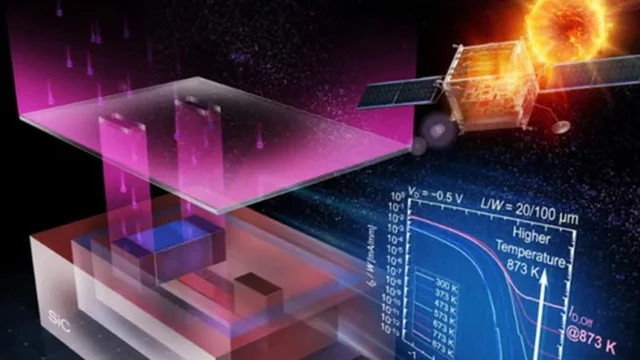 Semiconductors for 600°C Operation