The global semiconductor landscape is shifting decisively toward AI-centric computing. While Arm and RISC-V have aggressively expanded their footprint via specialized matrix instructions, the x86 giants have historically evolved in isolation. This has changed: AMD and Intel have now entered an unprecedented alliance to standardize neural network acceleration directly within the processor cores. The emergence of the AI Compute Extensions (ACE) specification signals a strategic pivot, engineered to safeguard the relevance of x86 in an age of neural network hegemony.
The computing industry has entered a phase of intense competition centered on the efficiency of tensor operations. In response to the rise of competing architectures, AMD and Intel have established the x86 Ecosystem Advisory Group. The fruit of this collaboration is the development of AI Compute Extensions (ACE)—a unified instruction set designed to integrate artificial intelligence acceleration directly into the compute cores of future processors.
At the heart of ACE lies the optimization of matrix multiplication, the fundamental operation powering modern neural networks. The specification places particular emphasis on the handling of quantized weights—a method of reducing data precision that drastically curtails memory and power requirements without significantly compromising inference quality.
This move is a strategic countermove to the successes of Arm, which has already deployed Scalable Matrix Extensions (SME2) built upon SVE2 vector extensions. The practical efficacy of this approach has already been demonstrated in the consumer segment: Apple integrated SME2 into its M4-series chips, and Qualcomm utilized similar mechanisms in the Snapdragon X2. Consequently, the x86 industry is attempting to close a technological divide that has made Arm increasingly attractive for mobile and energy-efficient AI solutions.
The technical implementation of ACE v1.15 envisions deep integration with existing vector extensions. The new blocks will be tightly coupled with Advanced Vector Extensions (AVX), specifically the current AVX10 standard, utilizing shared registers for data transfer. Furthermore, the specification draws on the experience of Advanced Matrix Extensions (AMX), which until now had remained the exclusive domain of Intel Xeon server solutions. To ensure compatibility, processors supporting ACE-v1 will be required to support a specific subset of AVX10.2 instructions.
One of the defining characteristics of ACE v1 is its data versatility. The specification introduces 11 distinct data formats and outlines the mechanisms for their conversion. This is pivotal, as different AI models require varying levels of computational precision to achieve the optimal balance between speed and accuracy.
It is worth noting that the market is already familiar with the concept of integrated Neural Processing Units (NPUs), which began appearing in mass x86 silicon in 2023. However, despite their efficiency, NPUs offer limited flexibility and occupy substantial die area. This tension peaked in 2024 when Microsoft introduced a stringent performance floor of 40 TOPS (INT8) for Copilot+ PC certification. Although these requirements were later relaxed to allow the use of GPUs, the emergence of ACE could trigger a new shift in standards: if the CPU can efficiently handle AI workloads, the reliance on dedicated NPUs may diminish.
Despite its strategic importance, the widespread deployment of ACE-compatible processors is unlikely to occur before 2028. Immediate iterations, such as AMD's Zen 6 or Intel's Nova Lake, show no tangible evidence of integrating this standard. Nevertheless, AMD's mention of a "Matrix Engine" for future Zen 7 chips provides strong reason to believe that this is where ACE will find its full realization, ultimately transforming x86 from a classical compute engine into a comprehensive AI accelerator.
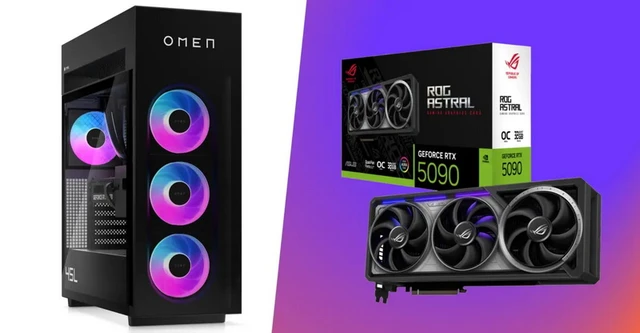 The Economic Paradox of the GeForce RTX 5090