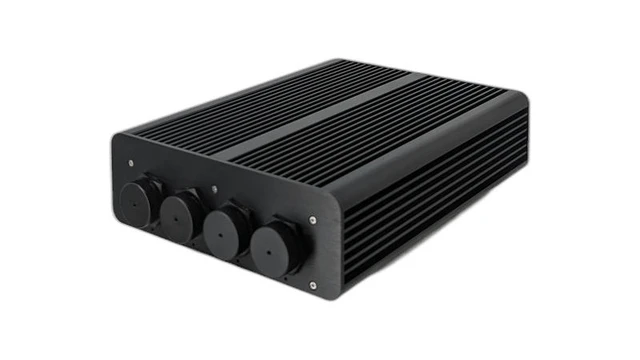
Modern computing systems have traditionally been tethered to sterile environments and rigorous thermal controls. Yet, the demands of industrial applications and field operations necessitate a fundamentally different approach to hardware resilience and protection. Silent PC has unveiled a radical solution, fusing the raw processing power of AMD Ryzen 9000 chips with a fully hermetically sealed chassis. This machine is engineered to blur the line between high-performance desktops and specialized industrial-grade equipment.
Designing a computer capable of operating where conventional electronics fail within minutes requires a fundamental rethink of cooling principles. In a new solution from Silent PC, engineers have completely abandoned active airflow. The absence of fans is not merely a matter of acoustic comfort, but a critical necessity for ensuring a hermetic seal. In the harsh conditions of an industrial plant or the open deck of a ship, any air intake vent would become a liability—a point of entry for moisture and dust.
The chassis is IP65-rated, guaranteeing total dust-tightness and protection against water jets. To solve the problem of overheating within a sealed enclosure, the chassis itself has been engineered as a massive heat sink. Thermal energy from the internal components is transferred directly to the external walls, which dissipate it into the surrounding environment. In the pursuit of absolute reliability, conventional interfaces were traded off: the front panel lacks USB ports and audio jacks, eliminating the risk of decompression or leaks through worn or damaged connectors.
Under the hood, the system leverages the latest generation of AMD Ryzen 9000 processors based on the Zen 5 microarchitecture. The base configuration features a Ryzen 5 9600X paired with an ASRock X600-ITX Thin Mini-ITX motherboard. To maintain a compact footprint and maximize energy efficiency, the build utilizes Crucial DDR5-5600 SO-DIMM memory modules and a high-speed NVMe SSD. For those requiring additional computational headroom, an upgrade path to the Ryzen 7 9700X is available.
However, deploying powerful desktop processors in a fanless design inevitably imposes certain constraints. The laws of thermodynamics dictate the terms: under sustained peak loads, the system will inevitably encounter thermal throttling. This means the processor will downclock to prevent overheating, making it impossible to achieve the raw performance levels found in systems equipped with traditional AIO liquid cooling or massive tower heatsinks.
The absence of a dedicated GPU further underscores the highly specialized nature of this device. This is not a gaming station or a render farm, but a ruggedized tool for data acquisition, automation control, or serving as a terminal in aggressive environments. Pricing starts at $3,350—a figure that may seem excessive for the consumer market, but is entirely justified within the Rugged PC segment, where the cost of failure and equipment downtime in the field is immeasurably higher.
 The Economic Paradox of the GeForce RTX 5090