For decades, the consumer electronics industry has been locked in a state of perpetual patent warfare over the right to implement fundamental technological standards. Video codecs—the invisible backbone of every modern display—have emerged as one of the most contentious flashpoints in these disputes. Conflicts over the licensing terms of data compression technologies frequently escalate into global legal battles capable of paralyzing the sales of entire product lines. The resolution of the dispute between Nokia and Acer marks yet another milestone in the industry's pursuit of a common denominator under the FRAND (Fair, Reasonable, and Non-Discriminatory) framework.
The invisible yet indispensable algorithms of data compression form the bedrock of today's digital world. Standards such as H.264 and H.265 (HEVC) have become the industry foundation for everything from streaming services and video conferencing to high-resolution recording on smartphones and laptops. However, the ownership of the patents behind these technologies effectively turns holders into "digital landlords," inevitably sparking conflict with hardware manufacturers striving to minimize licensing overhead.
The confrontation between Nokia and Acer stands as one of the most poignant examples of this struggle. Beginning in 2025, the Finnish telecommunications giant entered into a protracted legal battle with several major players, including Acer, Asus, and Hisense. At the heart of the dispute was the alleged failure to comply with intellectual property licensing terms—IP that is fundamental to the operation of video outputs and multimedia capabilities in modern devices.
Nokia’s legal strategy proved to be both aggressive and potent. In early 2026, German courts—renowned for their rigorous stance on patent protection—imposed bans on the sale of certain Acer and Asus products within Germany. Simultaneously, a British appellate court ruled in Nokia's favor, confirming that the company had fulfilled its obligations to provide licenses under FRAND terms (Fair, Reasonable, and Non-Discriminatory). This principle is the cornerstone of all standardized technologies: while a patent holder cannot demand exorbitant fees, a manufacturer cannot utilize the technology for free.
Following Hisense's lead in seeking a compromise, Acer also opted for an out-of-court settlement. The parties entered into a licensing agreement that legalizes the use of Nokia's video codecs in Acer devices. Notably, the deal did not resolve every detail; certain financial and technical terms are slated to be determined later through arbitral proceedings. This is standard practice for global corporations, allowing them to end the active phase of a conflict while leaving the granular calculation of payments to independent experts.
This compromise carries global ramifications. The agreement triggers the termination or suspension of all ongoing litigation. This extends beyond cases in the Unified Patent Court and the UK to include proceedings in the United States, Brazil, and India. Consequently, Acer mitigates the risk of large-scale trade restrictions in key markets, while Nokia solidifies its status as a dominant holder of multimedia intellectual property, cementing its position within the global ecosystem of video standards.
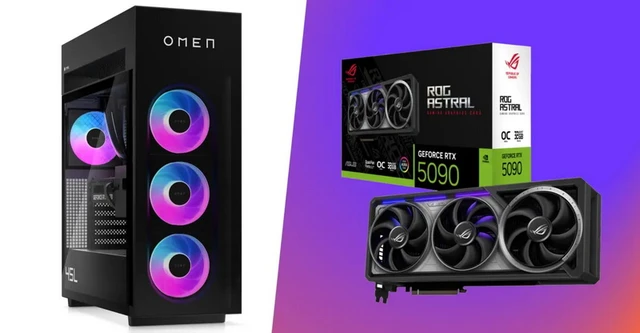 The Economic Paradox of the GeForce RTX 5090