The global technology sector has become precariously dependent on a handful of rare earth elements, which are increasingly being weaponized as instruments of geopolitical leverage. China, which commands the vast majority of global indium production, is systematically tightening export controls over this critical resource. This shift threatens more than just consumer electronics manufacturers; it strikes at the very heart of the infrastructure powering artificial intelligence. The current climate signals a fundamental pivot away from open trade toward a strategy of resource-based containment.
Indium seldom captures the headlines, often eclipsed by the fame of lithium or cobalt, yet this metal serves as the "invisible" bedrock of the modern digital era. Its applications span a vast technological spectrum: from the transparent conductive layers in smartphone touchscreens and displays to specialized solders in microelectronics. However, indium's most critical role emerges in the production of indium phosphide—a material indispensable for the high-speed optical chips that power connectivity within next-generation data centers, the very environments where the world's most powerful AI models are deployed.
China’s dominance in this sector is absolute, accounting for nearly 70% of global production. Crucially, indium is not mined as a primary resource; it is a byproduct of zinc processing. This creates a profound structural vulnerability for the rest of the world: one cannot simply open a new mine to rapidly offset a deficit, as indium output is inextricably linked to the scale of the zinc industry.
Beijing has already begun repositioning this resource as a strategic weapon. In February 2025, indium phosphide was officially added to the list of goods subject to export controls. The industry's reaction was instantaneous. Executives from Coherent, a pivotal player in the photonics and chip markets, were forced to travel to Beijing as part of a high-level delegation in a bid to negotiate supply terms and ensure the survival of their production lines.
Yet, the warning signs extend beyond official lists. In practice, Chinese customs have begun employing a tactic of "soft containment." While metallic indium remains formally unrestricted for export, the procurement process has become increasingly opaque and bogged down by bureaucracy. European firms have encountered unprecedented demands to disclose detailed information regarding end-users and their precise locations. Meanwhile, in North America, there are reports of unjustifiable delays in application approvals: processes that once took a single day are now stretching into indefinite timelines.
These maneuvers appear to be classic preparation for the implementation of full export quotas or a total ban. The selective nature of these inspections allows Beijing to maintain a degree of flexibility while simultaneously demonstrating to the West its ability to sever the "oxygen" supply to high-tech manufacturing at a moment's notice.
Recognizing the magnitude of the risk, the United States has reclassified indium as a critical material. Washington's counter-strategy has shifted toward the creation of strategic reserves. The U.S. Department of Defense's Defense Logistics Agency has already initiated the process of stockpiling up to 403 tons of the metal over the next three years. This signals a fundamental transition in the global economy—a shift from the "just-in-time" model to a "just-in-case" paradigm, where national security is now directly contingent upon the presence of several hundred tons of a rare metal in government warehouses.
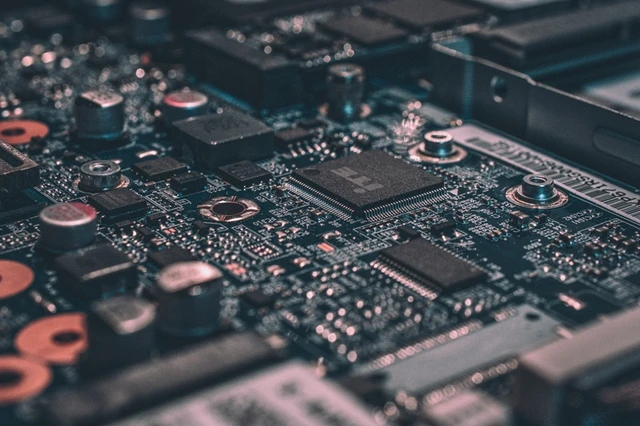
 Semiconductors for 600°C Operation