The global semiconductor market is currently gripped by a striking paradox: record-breaking corporate profits are coexisting with a severe shortage of components for end-users. The meteoric rise of artificial intelligence has fundamentally shifted production priorities, leaving traditional electronics manufacturers increasingly vulnerable. Geopolitical pressures and the pursuit of technological sovereignty are erecting barriers in sectors where market logic would otherwise dictate maximum openness. Consequently, even titans like Apple have become hostages to the friction between economic imperatives and the mandates of national security.
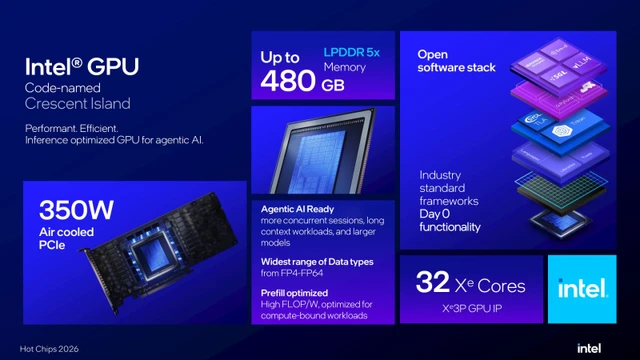
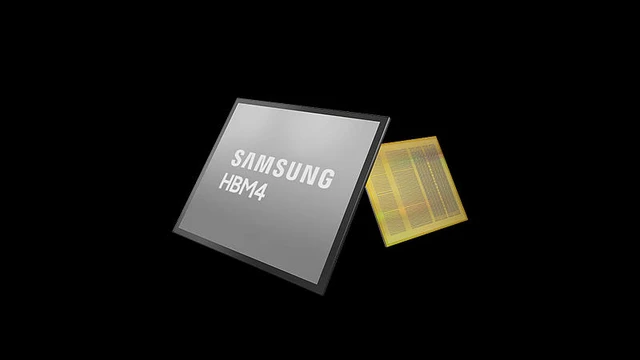
The current memory chip shortage is more than a mere byproduct of logistical failures; it is the result of a fundamental shift in demand dynamics. The industry now finds itself caught between the soaring ambitions of AI and the inherent inertia of production cycles. Market titans—Korea's Samsung and SK hynix, and the US-based Micron—have been forced to pivot their capacities. A vast portion of resources is now diverted toward High Bandwidth Memory (HBM), which is critical for training neural networks, inevitably cannibalizing the supply for standard laptops, smartphones, and consoles.
This situation is exacerbated by the immense inertia of the semiconductor industry. Constructing a new fabrication plant (fab) takes years and requires multi-billion dollar investments. While the US government has allocated tens of billions to bolster domestic production, these measures are long-term plays. Subsidies for Micron will facilitate new capacity, but the first plant won't open until mid-next year, and the second is not expected to reach full operational capacity until 2030. For a consumer market operating on 12-to-24-month cycles, such timelines are practically irrelevant.
Manufacturer caution is also rooted in historical trauma. The memory market is notorious for its brutal boom-and-bust cycles. As recently as 2023, the industry suffered a deep recession: companies hemorrhaged billions, slashed production, and cut staff—Micron, for instance, was forced to lay off 15% of its workforce. Now, with Micron’s gross margins soaring to 80% and SK hynix’s market cap crossing the trillion-dollar threshold, management is avoiding aggressive expansion, fearing an oversupply that could once again crash prices.
Against this backdrop, Chinese players are ascending rapidly: CXMT in the DRAM space and YMTC in NAND flash. These companies are operating aggressively, expanding their global footprint and scaling capacity. YMTC aims to double its production volumes by 2027, while CXMT is seeing phenomenal revenue growth as it seeks multi-billion dollar investments via a Shanghai IPO. Theoretically, integrating Chinese chips into global supply chains could alleviate the shortage almost instantly.
However, this is where geopolitics intervenes. Stringent US national security regulations block collaboration with Chinese manufacturers to protect technological secrets and support strategic allies. A conflict of interest has emerged: while government agencies insist on isolating the Chinese tech sector, the business world is beginning to suffocate.
Major consumer electronics brands are now openly urging authorities to ease these restrictions. Apple, which attempted to onboard YMTC as a supplier in 2022 only to be blocked by legislators, is now forced to explore every possible avenue for supply chain optimization. Tim Cook has explicitly called for a revision of the political course, recognizing that memory shortages directly erode margins and slow down product refresh cycles. Simultaneously, PC manufacturers like HP have begun cautiously sourcing CXMT chips for Asian markets, effectively bifurcating their supply chains into "Western" and "Eastern" streams.
Ultimately, the consumer remains the weakest link in this chain. While politicians vie for technological hegemony and corporations hedge against market volatility, the cost of memory continues to climb—inevitably driving up the price of all consumer electronics.
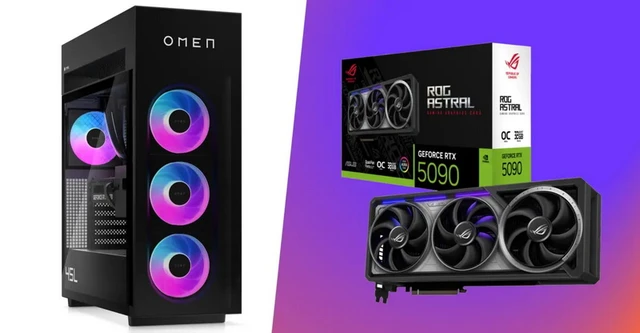 The Economic Paradox of the GeForce RTX 5090