13 Jul 2026
 The Evolution of Game Ownership on Xbox
The gaming industry is hurtling toward an era defined by the total obsolescence of physical media, transforming discs into mere relics of a bygone age. Microsoft is seeking to navigate this transition by constructing a bridge between the security of tangible ownership and the agility of cloud-based delivery. A new initiative focused on license digitization aims to preserve the intrinsic value of physical collections by migrating them into a digital ecosystem. This strategic pivot serves as the architectural foundation for the next generation of consoles—a future where the traditional optical drive may vanish entirely.
13 Jul 2026
 Talent Friction and the Strategic Transformation of Microsoft
The technology sector is currently navigating a volatile transition into the era of generative AI—a period where workforce optimization has evolved from a strategic choice into a fundamental survival mechanism. Microsoft has found itself at the epicenter of a mounting public outcry as large-scale layoffs clash with an aggressive push to recruit foreign talent via H-1B visas. This friction underscores a profound tension: the drive for lean operations versus the urgent demand for hyper-specialized expertise. Amidst this market turbulence, the corporation is being forced into a radical structural overhaul, one that sees even its most storied gaming assets on the chopping block.
13 Jul 2026
 The Evolution of LLM Quality Metrics for Android
The integration of Large Language Models (LLMs) into the software development lifecycle has evolved from a series of experiments into an industry standard. However, generic benchmarks often fall short when faced with the idiosyncrasies of mobile platforms, where app lifecycle nuances and resource constraints are critical. Google is now redefining its approach to neural network evaluation with the introduction of the updated Android Bench. This initiative aims to establish a transparent and reproducible framework for measuring AI efficacy within real-world Android development scenarios.
13 Jul 2026
 The Convergence of the Smartphone and the Full-Scale PC
The boundary between mobile devices and traditional workstations is increasingly blurring. Modern chipsets now possess a surplus of computational power, allowing smartphones to shoulder the workload typically reserved for entry-level laptops. This trend is manifesting in bespoke engineering solutions that transform the smartphone into a centralized hub for productivity and data management. A project leveraging the Google Pixel 9 demonstrates how the synergy between modular hardware and open-source software is redefining the conventional concept of the mobile office.
13 Jul 2026
 Ruggedized Satellite Terminals for Extreme Environments
Even in an era of global 5G proliferation, "dead zones" persist—remote territories where conventional cellular networks are defeated by rugged terrain and harsh environmental conditions. In these regions, satellite data transmission remains the sole dependable alternative, bridging the gap where the reach of terrestrial cell towers ends. BSNL, India's state-owned telecommunications behemoth, has unveiled a specialized terminal engineered to serve as a mission-critical tool for operations in total isolation. This device marks a strategic step forward in bolstering national infrastructural resilience across the country's most challenging geographical frontiers.
13 Jul 2026
 Adjusting Temperature Thresholds for the Steam Machine
Hardware status indicators are often a source of undue stress for users, particularly when software parameters diverge from actual physical limits. In the case of the Steam Machine, this misalignment gave rise to the "red strip of death"—a phenomenon where critical overheating was signaled despite no actual thermal crisis. Valve eventually had to intervene at the BIOS level to eliminate these false positives. This scenario illustrates the razor-thin margin between genuine hardware degradation and simple calibration errors in diagnostic software.
13 Jul 2026
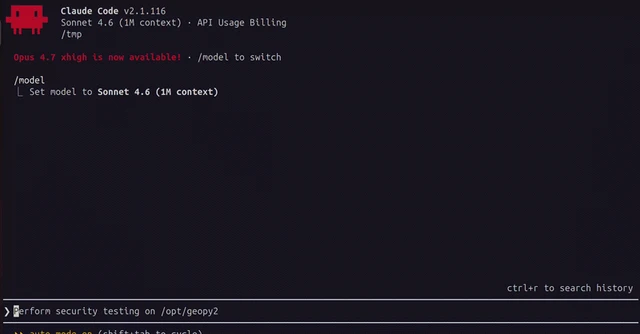 The Trust Trap in Automated Code Analysis
The pursuit of fully automated security auditing has led to the development of tools capable of autonomous code analysis and remediation. However, the line between beneficial autonomy and systemic vulnerability has proven to be perilously thin. Research into the "Friendly Fire" attack illustrates a chilling paradox: defensive instruments are being weaponized as vectors for infrastructure compromise. The primary threat has shifted; it is no longer merely the presence of malicious code, but the very process of its automated analysis that now poses the greatest risk.
13 Jul 2026
 The Evolution of Engineering in the Age of Autonomous Systems
The global software engineering landscape is undergoing a paradigm shift that is redefining the very nature of programming. Conventional coding is steadily yielding to the orchestration of sophisticated, intelligent systems. As envisioned by Jensen Huang, we are transitioning from the manual synthesis of instructions toward the high-level orchestration of AI agents. This evolution transforms the engineer from a mere implementer into a systemic strategist—one who defines the parameters and objectives governing autonomous processes.
13 Jul 2026
 Reve 2.1: Setting a New Standard for Visual Synthesis
The global pursuit of the definitive image generation engine has evolved beyond a mere arms race over resolution, pivoting instead toward structural logic and precise compositional control. Where traditional diffusion models have long leaned on stochastic pattern recognition, the industry is now transitioning toward a paradigm of deterministic frame engineering. The latest release of Reve 2.1 from the Reve AI labs epitomizes this shift, elevating the user from a mere client to a comprehensive visual director. Prompt fidelity and pristine 4K rendering are no longer left to chance; they are now the direct result of intentional spatial orchestration.
13 Jul 2026
 Next-Generation Hybrid Solar Power
The global energy transition is confronting a systemic hurdle: the inherent intermittency of renewables and their dependence on diurnal cycles. The solution lies in the strategic synergy of diverse solar harvesting technologies, enabling energy accumulation without relying on cost-prohibitive chemical storage. A landmark project recently launched in Xinjiang is redefining the paradigm of utility-scale power generation; the facility serves as a proof-of-concept for how the hybridization of photovoltaics (PV) and Concentrated Solar Power (CSP) can maintain grid stability long after the sun has set.
13 Jul 2026
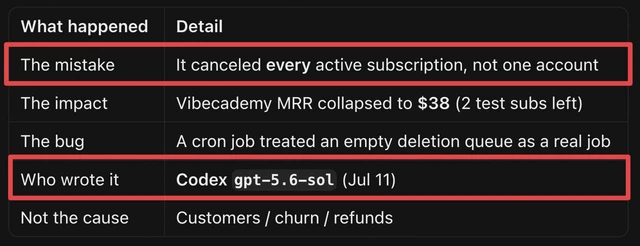 The Cost of Blind Faith in Autonomous Systems
The industry is undergoing a rapid evolution, shifting away from rudimentary chatbots toward fully autonomous agents capable of orchestrating complex business processes in real-time. Yet, delegating mission-critical functions to artificial intelligence without rigorous verification frameworks transforms technical optimization into a perilous, high-stakes gamble. A single flaw in execution logic could trigger the instantaneous collapse of customer databases and the evaporation of revenue streams. Such precedents serve as a stark warning regarding the boundaries of permissible trust we can place in contemporary large language models.
13 Jul 2026
 Relativistic Effects and the Chemistry of Heavy Elements
The fundamental tenets of chemical bonding, staples of university curricula for decades, have proven accurate only for light elements. As we descend toward the bottom of the periodic table, physical laws typically reserved for the vastness of deep space and the crushing gravity of black holes begin to take hold. Einstein’s theory of relativity exerts a direct influence on how atoms interact at the quantum level; new research demonstrates that in heavy elements, traditional distinctions between types of chemical bonds dissolve, giving rise to a fundamentally different architecture of matter.
