The technology sector is currently navigating a volatile transition into the era of generative AI—a period where workforce optimization has evolved from a strategic choice into a fundamental survival mechanism. Microsoft has found itself at the epicenter of a mounting public outcry as large-scale layoffs clash with an aggressive push to recruit foreign talent via H-1B visas. This friction underscores a profound tension: the drive for lean operations versus the urgent demand for hyper-specialized expertise. Amidst this market turbulence, the corporation is being forced into a radical structural overhaul, one that sees even its most storied gaming assets on the chopping block.
The modern Big Tech labor market is currently gripped by a striking paradox: the simultaneous slashing of thousands of positions and an aggressive pursuit of overseas talent. Microsoft finds itself at the epicenter of this upheaval, having announced the termination of 4,800 employees—a significant portion of whom, approximately 1,600, belonged to the Xbox division. While leadership attributes these cuts to the business's unsatisfactory financial health, the move has sparked a backlash due to a glaring contradiction: concurrently with these purges, the company filed over two thousand H-1B visa applications for foreign specialists.
To critics and social media commentators, this strategy appears to be a calculated attempt to replace costly American personnel with more affordable labor from abroad. Particular scrutiny has fallen on the influx of Indian specialists, triggering heated debates regarding the origins of Xbox head Asha Sharma.
Microsoft's PR machinery, led by communications director Frank Shaw, has attempted to pivot the narrative. According to Shaw, the layoffs are the result of a deep restructuring of the Xbox business necessitated by its "unfavorable state," rather than a deliberate policy of workforce replacement. As evidence, the company pointed out that some individuals terminated were themselves H-1B visa holders. Furthermore, Microsoft highlighted Asha Sharma’s biographical details—noting she was born and raised in Wisconsin—in an effort to dispel allegations of ethnic favoritism.
This personnel conflict is unfolding against a backdrop of acute political volatility. The Trump administration's attempts to impose an unprecedented $100,000 fee per H-1B visa signal a state-level drive to restrict the importation of high-skilled intellectual labor. Although a federal court blocked the initiative, ruling it an illegal tax, the discourse itself underscores the growing tension between global corporations and national labor markets.
Microsoft's financial outlook for 2026 is sobering. The corporation has posted some of the weakest results among tech giants, with its stock plummeting more than 18% in June. Investors are increasingly concerned that the rapid evolution of AI models may cannibalize traditional enterprise software. Meanwhile, Microsoft's own neural network products have yet to deliver the explosive growth in popularity and profit that was initially anticipated. The current layoffs are a continuation of a systemic crisis; just a year prior, the company parted ways with 9,000 employees.
The most seismic shifts have hit the gaming sector. As part of its restructuring, Microsoft is effectively divesting from the direct management of four studios. Compulsion Games and Double Fine Productions—the creative forces behind landmark titles like We Happy Few and Psychonauts—are becoming independent entities. Other assets, including Undead Labs and Ninja Theory, are transitioning to new publishers. The fate of Arkane Studios remains uncertain, while a wave of layoffs has swept through all key divisions: from Activision and Bethesda to Blizzard, King, and Mojang.
Ultimately, we are witnessing more than just a personnel realignment; this is a fundamental transformation of the business model. Legacy methods of content and talent management are being surrendered to a new paradigm dictated by AI and financial instability.
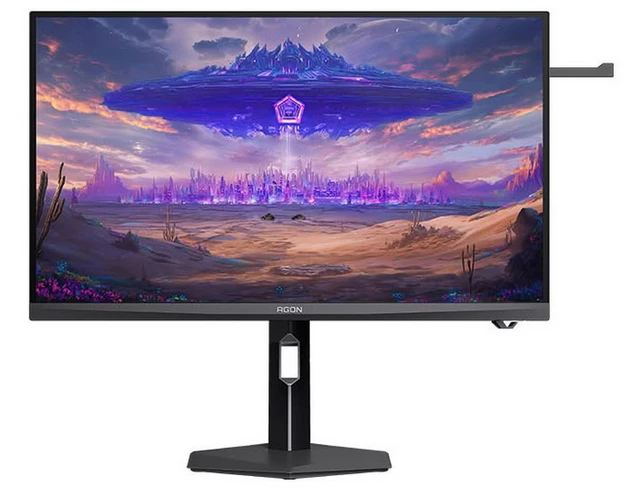 AOC Agon AGP277KXM Hybrid Display