Even in an era of global 5G proliferation, "dead zones" persist—remote territories where conventional cellular networks are defeated by rugged terrain and harsh environmental conditions. In these regions, satellite data transmission remains the sole dependable alternative, bridging the gap where the reach of terrestrial cell towers ends. BSNL, India's state-owned telecommunications behemoth, has unveiled a specialized terminal engineered to serve as a mission-critical tool for operations in total isolation. This device marks a strategic step forward in bolstering national infrastructural resilience across the country's most challenging geographical frontiers.
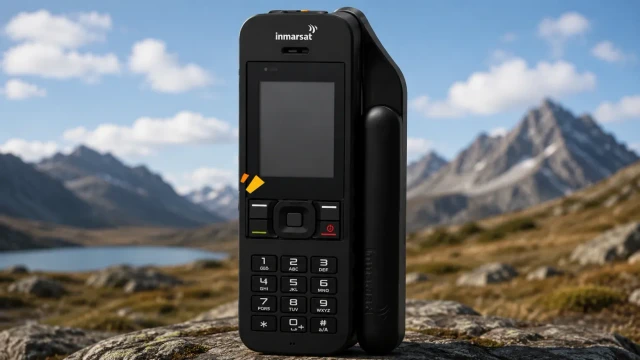
The development of this new satellite handset is the result of a strategic alliance between BSNL and Inmarsat, a global leader in mobile satellite communications. The device's technical architecture is predicated on the principle of absolute autonomy: it communicates directly with the satellite constellation, completely bypassing terrestrial infrastructure. This makes it an indispensable tool in scenarios where standard networks are either non-existent or have collapsed due to natural disasters.
In terms of ergonomics and reliability, the device is engineered as a specialized instrument rather than a consumer gadget. The chassis features an enhanced degree of protection against external elements, allowing for operation in harsh environments—ranging from dust-choked quarries to humid tropical rainforests. Particular emphasis has been placed on power endurance; the high-capacity battery is designed for extended operational cycles without access to a power grid, a critical requirement for expeditions and search-and-rescue operations. The inclusion of a dedicated SOS button transforms the phone into a full-fledged safety beacon, enabling the instantaneous transmission of distress signals to emergency services.
Priced at approximately $1,400, the device shifts from the realm of mass-market electronics into the sphere of professional-grade hardware. It does not seek to replace the modern smartphone; instead, its functionality is strictly focused on ensuring connectivity in critical situations. The primary target audience consists of organizations where a loss of communication could prove fatal: armed forces, emergency response units, mining and maritime enterprises, as well as scientific teams and explorers charting courses through the planet's most remote corners.
However, the deployment of such technology in India is subject to a stringent regulatory framework. Satellite communication is viewed by the state through the lens of national security; consequently, the open circulation of these devices is restricted. Legal ownership and operation of the terminal require official authorization from the Department of Telecommunications. Any use of the device without proper clearance carries severe legal ramifications, rendering the acquisition process strictly regulated and possible exclusively through authorized BSNL offices.
 Corporate Espionage in the Rivalry Between Apple and OpenAI