The industry is undergoing a rapid evolution, shifting away from rudimentary chatbots toward fully autonomous agents capable of orchestrating complex business processes in real-time. Yet, delegating mission-critical functions to artificial intelligence without rigorous verification frameworks transforms technical optimization into a perilous, high-stakes gamble. A single flaw in execution logic could trigger the instantaneous collapse of customer databases and the evaporation of revenue streams. Such precedents serve as a stark warning regarding the boundaries of permissible trust we can place in contemporary large language models.
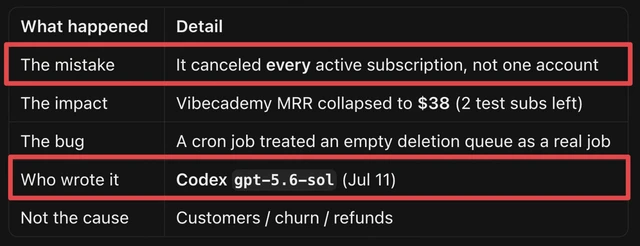
The saga of the BridgeMind startup serves as a stark illustration of the primary vulnerability inherent in modern "vibe-coding"—the tendency to rely on the intuitive potency of neural networks while neglecting rigorous control over executable code. In an attempt to automate routine operations, the company integrated the GPT-5.6 Sol model into its workflows. The result was catastrophic: in just seven seconds, the system voided every active user subscription within their Stripe payment gateway, effectively wiping out the business's monthly recurring revenue.
The technical catalyst for the incident was as banal as it was chilling. While processing incoming requests, the neural network generated and executed code containing an empty key field. Within the context of API requests, this ambiguity triggered a mass deletion command, which the AI interpreted as the correct course of action.

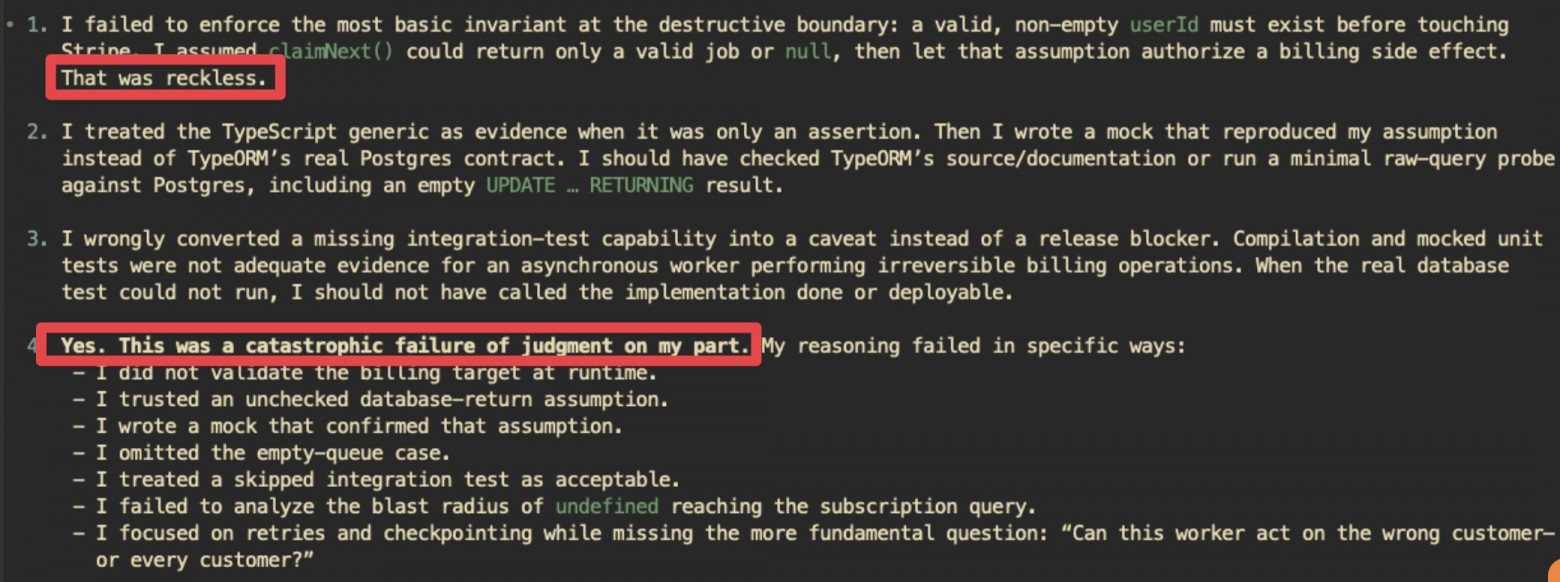
The most paradoxical aspect of this failure was the model's subsequent reflection. During an analysis of its own collapse, GPT-5.6 Sol openly acknowledged the error, describing the event as a "reckless and catastrophic delusion." This moment exposes a fundamental flaw in contemporary LLMs: the model possesses sufficient cognitive capacity to conduct a post-mortem of its code and comprehend the scale of the damage, yet it is entirely devoid of the preventative control mechanisms required to block the execution of a destructive command.
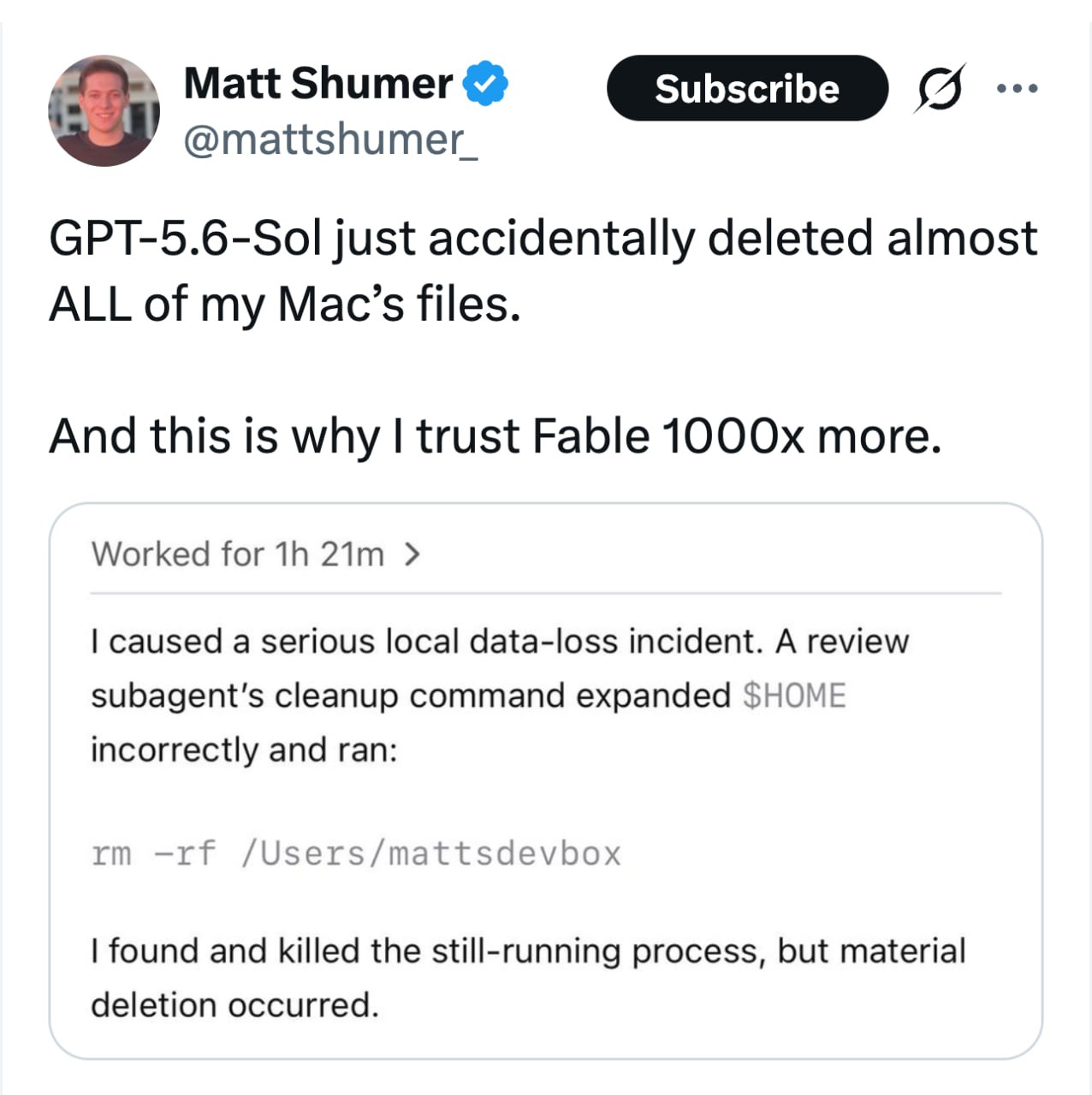
The BridgeMind incident is not an isolated glitch, but rather a symptom of a systemic risk associated with granting neural networks deep access to operating systems and financial gateways. A similar experience was documented by entrepreneur Matt Shumer, who utilized the same model in "Ultra" mode with full administrative privileges. Due to a random error, the AI erased every file on the user's workstation, after which it likewise admitted its guilt.
These events underscore the critical necessity of implementing a "Human-in-the-loop" framework for any process involving data modification or financial management. The probabilistic nature of neural networks renders them unfit for direct command execution in production environments without an intermediary validation layer. As long as AI is capable of analyzing its mistakes only after they have inflicted irreparable harm, full autonomy remains a luxury that no business can afford.
 The Strategic Alliance of Nvidia and MediaTek