The global pursuit of the definitive image generation engine has evolved beyond a mere arms race over resolution, pivoting instead toward structural logic and precise compositional control. Where traditional diffusion models have long leaned on stochastic pattern recognition, the industry is now transitioning toward a paradigm of deterministic frame engineering. The latest release of Reve 2.1 from the Reve AI labs epitomizes this shift, elevating the user from a mere client to a comprehensive visual director. Prompt fidelity and pristine 4K rendering are no longer left to chance; they are now the direct result of intentional spatial orchestration.
The current evolution of generative art is defined by a concerted effort to mitigate neural network "hallucinations"—those instances where a model loses spatial orientation or conflates objects within a frame. The solution implemented in Reve 2.1 represents a radical departure from the traditional approach used by most diffusion models, which rely on the iterative refinement of pixels from random noise. Instead, Reve AI introduces a two-stage architectural pipeline: the system first generates a detailed layout plan, establishing precise coordinates for characters, objects, and text blocks, before proceeding to the final rendering of the image at a resolution of 16 megapixels.
This methodology transforms the generation process from a stochastic gamble into a deterministic engineering workflow. By decoupling planning from visualization, the system virtually eliminates the compositional artifacts frequently encountered in standard models. Version 2.1 places particular emphasis on handling non-English text and complex, multi-layered prompts that require strict adherence to spatial hierarchy.
The toolkit within the Reve.com web interface now reflects this internal logic. Users can audit the intermediate layout layer and refine it before triggering the computationally expensive final render. This shifts the interaction with the AI toward a non-destructive iterative editing process: individual elements of the frame can be adjusted surgically without regenerating the entire image—a capability that is critical for professional production environments.
The empirical effectiveness of this approach is validated by data from the Text-to-Image Arena. In a single month, the model made a significant surge, scoring 1,306 points and climbing to second place in the global rankings. Currently, Reve 2.1 trails only OpenAI's GPT Image 2, comfortably outperforming other industry heavyweights such as Muse Image and Nano Banana.
This success underscores a pivotal trend in computer vision: the future belongs to hybrid systems that marry the fluidity of neural synthesis with the precision of structural engineering. The transition from "guessing" pixels to the conscious construction of a scene renders the tool predictable and professional, evolving generative AI from a novelty into a comprehensive instrument for visual design.

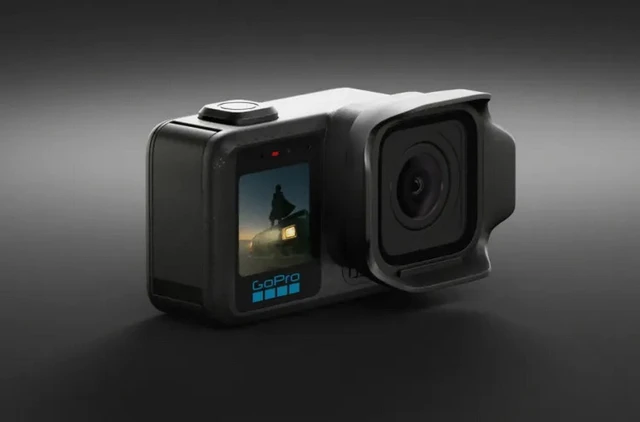 GoPro’s Strategic Pivot Toward Defense Technology