13 Aug 2026
 The Enterprise AI Efficiency Crisis
The global AI arms race has precipitated a paradoxical economic climate: the velocity of adoption is vastly outstripping our grasp of the technology's actual value. While enterprises are pivoting toward neural network solutions en masse, the industry has hit a fundamental wall regarding performance measurement. Businesses are now scrambling to establish viable ROI metrics amidst pervasive uncertainty and latent risks. This transition is exposing systemic fractures, ranging from corporate data breaches to an acute, critical reliance on proprietary vendor ecosystems.
13 Aug 2026
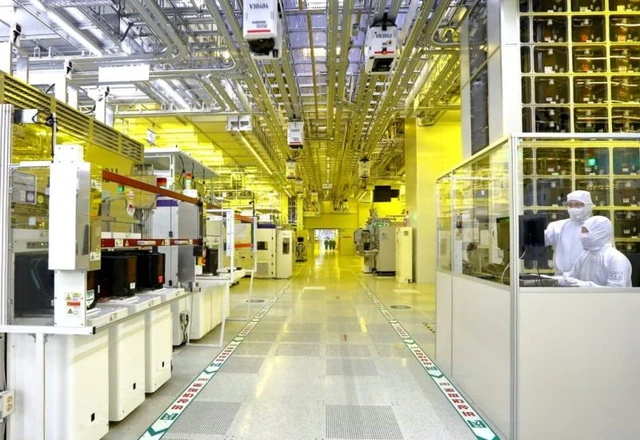 Intelligent Automation in Semiconductor Manufacturing
The global pursuit of smaller nanometer nodes has shifted from a battle of material science to a challenge of algorithmic optimization. Today, semiconductor yield and efficiency are no longer solely dependent on lithographic precision; they hinge on the capacity of artificial intelligence to orchestrate hyper-complex manufacturing workflows. South Korean titans Samsung and SK hynix are doubling down on deep AI integration to bypass the physical constraints of scaling and eliminate the volatility of human error. This paradigm shift promises to drastically accelerate R&D cycles, evolving fabrication plants into fully autonomous ecosystems.
13 Aug 2026
 Digital Vision for Thousands
The integration of artificial intelligence into daily life is evolving beyond mere convenience; it is becoming a fundamental pillar of environmental accessibility. Today's wearables have the potential to serve as seamless intermediaries between individuals and their surroundings, effectively bridging the gap created by visual impairments. Meta’s initiative to provide smart glasses to thousands of users in Ireland signals a pivotal shift in the evolution of assistive technology—a large-scale experiment in transforming a consumer-grade gadget into an essential instrument for social integration.
13 Aug 2026
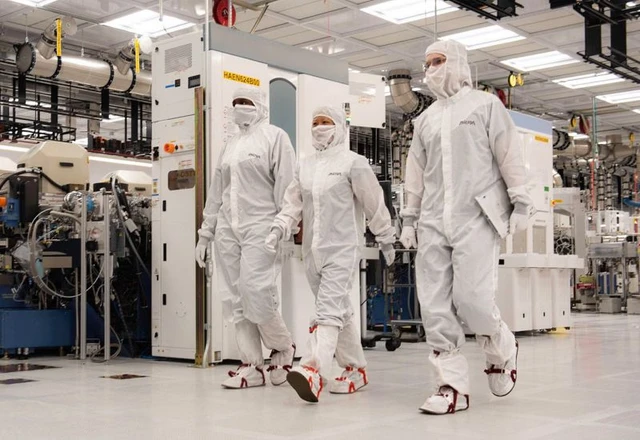 The Triumph of China’s Semiconductor Industry
The global microelectronics market is witnessing a tectonic realignment, driven by the meteoric rise of generative artificial intelligence. In this climate, Chinese chip fabs are transcending their roles as regional players to emerge as formidable global competitors. Recent financial disclosures from SMIC and Hua Hong reveal an unprecedented surge in profitability—a result of the synergy between the current technological boom and a strategic drive toward digital sovereignty. This trajectory signals a new era in the global distribution of semiconductor manufacturing capacity.
13 Aug 2026
 Diffraction-Based Optical Camouflage
For decades, the concept of invisibility remained the exclusive province of science fiction and theoretical speculation. Today, however, the boundary between fantasy and physics is dissolving, driven by the meteoric rise of nanophotonics. Researchers at the University of California, Los Angeles (UCLA) have unveiled a system that fundamentally upends our traditional perception of reflection. This "lying mirror" does more than simply bounce light back; it effectively rewrites the signal, operating entirely passively—without a single electron or external power source.
12 Aug 2026
 Digital Authenticity Seals for iPhone Photos
The era in which visual evidence served as an irrefutable testament to reality is rapidly drawing to a close. The ascent of generative AI has blurred the line between a captured moment and a sophisticated simulation, precipitating a global crisis of confidence in digital content. In response, the industry is shifting its paradigm—moving away from the reactive attempt to detect fakes and toward a proactive strategy centered on provenance. Apple is taking a decisive step in this direction by integrating hardware-level image verification mechanisms directly into the iOS ecosystem.
12 Aug 2026
 Talent Migration at the Epicenter of the AI Arms Race
The AI arms race is evolving from a phase of raw exploration into one of rigid corporate institutionalization. OpenAI, now synonymous with the modern neural network revolution, is navigating a turbulent transformation as it eyes a potential public offering. In such transitional periods, internal friction and the drive for autonomy often act as catalysts for the exodus of key leadership. The departure of Brad Lightcap is more than a mere change in personnel; it is a bellwether of an industry reaching maturity—a sign that its pioneers are beginning to seek new horizons beyond the very empires they helped build.
12 Aug 2026
 The Efficiency Trap in the AI Industry
The promise that generative AI would liberate humanity from drudgery and usher in a shorter workweek is rapidly evolving into one of the defining myths of the modern tech era. While the world awaits the automation of leisure, the architects of these systems have instead become captives of their own creation. Within the world's premier AI labs, a crisis of burnout is unfolding—a climate where the relentless pursuit of the next technological breakthrough is used to justify grueling, unsustainable workloads. This tension exposes a profound disconnect between the polished corporate narratives projected to the public and the stark reality of the labor conditions endured by the engineers behind the curtain.
12 Aug 2026
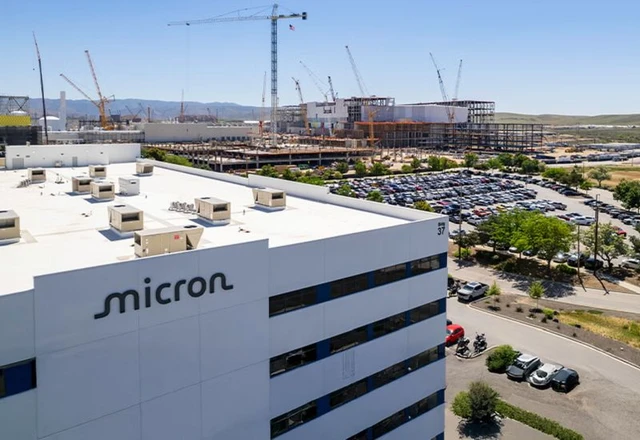 The Global Semiconductor Memory Shortage
The AI revolution is colliding with an unforeseen physical bottleneck. While market attention remains fixated on GPU compute capacity, the true constraint has shifted toward the availability of high-speed memory. According to recent data from Micron, component shortages are projected to intensify through 2027, creating a critical vulnerability within global data center infrastructure. In this climate, memory is evolving from a mere commodity into a strategic asset with immense pricing leverage.
12 Aug 2026
 Foxconn’s Strategic Pivot Toward AI Infrastructure
The global electronics landscape is undergoing a tectonic shift: the era of smartphone dominance is giving way to the age of generative AI. For decades, Foxconn was viewed as the invisible titan underpinning Apple's success, but today, the company is fundamentally redefining its identity. By positioning itself as a critical pillar within Nvidia’s server solutions ecosystem, the Taiwanese conglomerate is demonstrating formidable financial momentum. This strategic pivot marks a transition from the mere assembly of consumer electronics to the construction of the foundational infrastructure for the future of computing.
12 Aug 2026
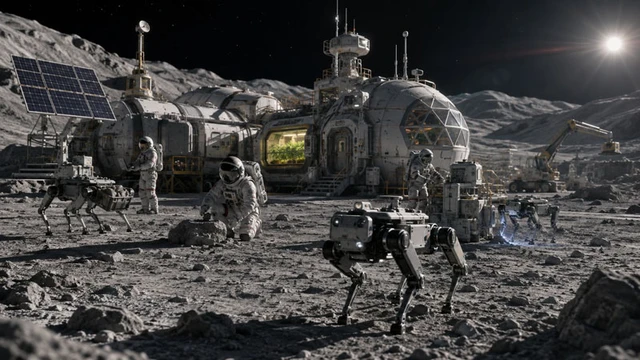 The Robotic Vanguard of China’s Lunar Settlements
Conquering the Moon demands a fundamental paradigm shift in how we conceive human-machine interaction within extreme environments. Rugged topography, pervasive radiation, and the crushing weight of psychological isolation render traditional operational methods obsolete. To address this, Chinese researchers are proposing the integration of quadruped robots—not merely as utilitarian tools, but as active agents within the lunar ecosystem. This strategy envisions a sophisticated symbiosis where autonomous systems absorb the highest risks and the most grueling routines, ultimately safeguarding the survival and viability of the human crew.
12 Aug 2026
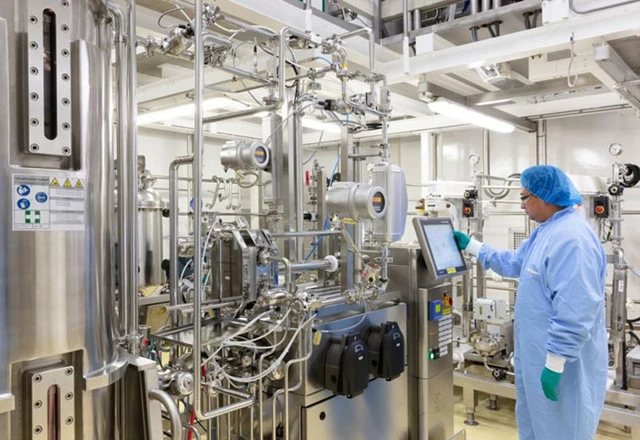 The Industrial Foundations of the Neural Network Boom
The AI revolution is typically viewed through the lens of algorithms and high-performance GPUs. Yet, behind this digital veneer lies a massive physical infrastructure with staggering resource requirements. From the chemical purity of industrial gases to precision thermal management, this hidden layer of the industry is emerging as a primary driver of the global market. This shift signals a pivotal transition: moving beyond speculative growth toward an era of large-scale industrial deployment.
