The era of generative AI has elevated VRAM to the most coveted resource in modern computing. While the official specifications of flagship hardware are constrained by vendor marketing strategies, China's grey market is offering radical alternatives. The emergence of modified accelerators featuring memory capacities triple the industry standard directly challenges Nvidia's rigid product segmentation. This is more than a mere technical experiment; it is a pragmatic response to an industry-wide demand for accessible tools capable of handling large-scale neural networks.
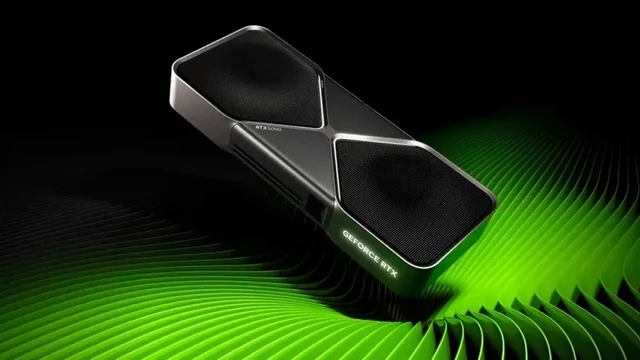
While the Nvidia GeForce RTX 5090 currently defines the pinnacle of consumer graphics, its capabilities remain insufficient for the most demanding professional workloads. Addressing this deficit, Shenzhen Suqiao Intelligent Technology has unveiled a flagship variant equipped with a staggering 96 GB of video memory. Appearing on the Alibaba marketplace with a price tag of approximately $3,888, this solution stands in provocative contrast to official US pricing, offering significantly more resources for considerably less money.
The Chinese market has long served as a proving ground for such experiments. Enthusiasts and local OEM manufacturers have previously modified the GeForce RTX 3090 and 4090, pushing memory capacities up to 48 GB. While these projects were once driven by technical curiosity, the current AI boom has transformed them into an economic imperative. For the deployment and fine-tuning of Large Language Models (LLMs), VRAM capacity is the critical bottleneck; the ability to expand memory beyond factory limits grants access to computational power that previously required prohibitively expensive server-grade hardware.
The technical feasibility of such a device stems from the shared architectural roots of Nvidia's product line. The GB202 GPU, which powers the RTX 5090, is also utilized in the professional GeForce RTX Pro 6000 Blackwell, which officially boasts 96 GB of GDDR7 memory. The primary differences lie in the number of active Streaming Multiprocessors (SMs) and, more crucially, the PCB implementation. To achieve this record-breaking memory capacity, Chinese engineers likely employed a custom PCB, allowing memory chips to be populated on both sides of the board.
However, a closer examination of the specifications provided by Suqiao reveals significant discrepancies. The product description mentions the use of GDDR6X memory clocked at 14 Gbps. This presents a technical contradiction: Micron produced GDDR6X chips with a maximum capacity of 2 GB. Even with the densest possible chip layout on both sides of the board, the number of contact pads (limited to 32) restricts the maximum possible GDDR6X capacity to 48 GB. Furthermore, a speed of 14 Gbps is uncharacteristic for the GDDR6X standard, which typically operates between 19 and 24 Gbps, suggesting the hardware may actually be utilizing standard GDDR6.
The realization of such hardware is impossible without deep software intervention. For the GPU to recognize the modified memory capacity, customized firmware and sophisticated driver-level hacks are required. Industry rumors suggest that corresponding BIOS leaks for the RTX 5090 series surfaced online several months ago, providing the necessary foundation for these modifications.
From an economic perspective, these devices create a massive rift in market positioning. While the official price of an RTX Pro 6000 can soar to $18,000, Suqiao's modified version is offered at a price point several times lower than even the custom solutions available in the US market. Should the viability of the 96 GB version be confirmed in practice, it will become a lifeline for AI researchers, allowing them to bypass artificial vendor restrictions and achieve server-grade performance at a consumer-grade price.
 Anthropic’s Strategic Expansion into the Public Market