The PC market is undergoing a profound structural transformation, rendering traditional demand patterns obsolete. While CPU sales are plummeting, discrete GPUs have evolved into an almost non-negotiable component of any modern build. This paradox underscores a global industry pivot toward specialized computing and server-grade performance. Amidst macroeconomic volatility and component shortages, the industry is now searching for a new point of equilibrium.
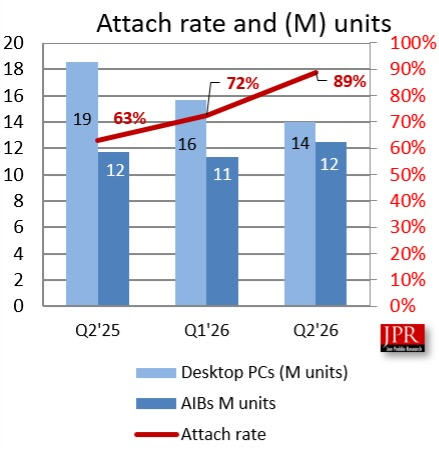
The contemporary desktop PC market is exhibiting a troubling trajectory within the CPU segment. According to data from Jon Peddie Research, CPU sales volume for the second quarter of this year totaled 14 million units. This represents not only a 10% sequential decline but a precipitous 33% drop compared to the same period last year. Such a sharp contraction signals a fundamental shift in manufacturer priorities: core resources and engineering capacity are being pivoted toward the server segment, which is experiencing colossal demand fueled by the AI boom. Compounding this decline are high memory prices and general macroeconomic turbulence, both of which are stifling consumer activity.
Amidst the CPU stagnation, a striking phenomenon has emerged: discrete graphics are becoming the dominant element of the system build. The share of desktop PCs equipped with a dedicated GPU surged to 89% in the second quarter—an impressive leap from 72% in Q1 and 63% a year prior. In effect, the gap between the number of systems sold and GPUs shipped has virtually evaporated: while 14 million processors were sold, 12.5 million graphics accelerators followed. A year ago, the landscape was markedly different; with comparable GPU volumes, the market absorbed 19 million new CPUs.
Long-term forecasts for the 2025–2030 period remain conservative. The Compound Annual Growth Rate (CAGR) for discrete GPU sales is expected to be -2.5%, eventually capping the total installed base at 193 million units. Meanwhile, the penetration rate of graphics solutions in the desktop segment could reach 130% over the next five years, indicating highly intensive hardware refresh and replacement cycles. Notably, the second quarter of this year defied seasonal trends; instead of the expected slump, GPU sales grew by 10%.
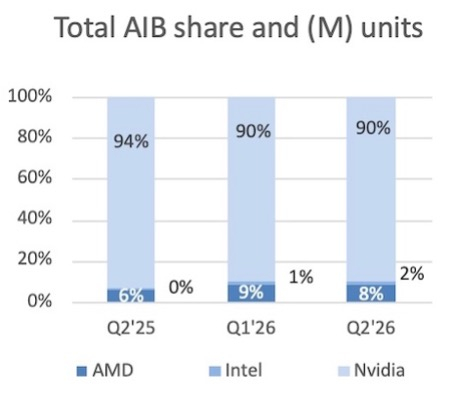
Within the discrete GPU segment itself, a gradual realignment of power is underway. The uncontested leader, Nvidia, has seen its dominance slip slightly, with its market share dipping from 94% to 90%. Simultaneously, AMD has managed to strengthen its position, increasing its share from 6% to 8%, while Intel—long sidelined—has finally established a market presence at 2%. Despite these marginal fluctuations, the trend points toward a gradual erosion of the monopoly.
However, the optimism prevalent among market participants at the start of 2025 has collided with a harsh reality. Geopolitical upheavals, chronic memory shortages, and tariff volatility have created significant headwinds for growth. The brief resurgence in the second quarter is likely driven by psychological factors: consumers are rushing to acquire hardware at current prices, fearing further increases. Ultimately, revenue growth in the segment was driven less by volume increases and more by a rise in the Average Selling Price (ASP) of products.
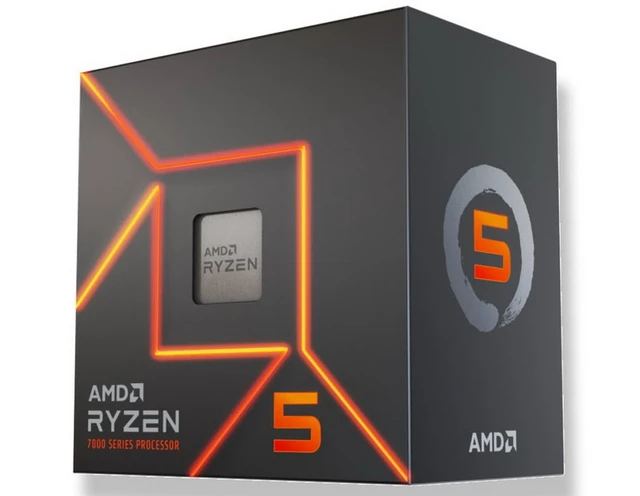 AMD’s Strategic Approach to the Budget Segment