The race for AI supremacy is no longer merely a contest of algorithms and raw compute. It has evolved into a massive infrastructural war, where physical resources have become the primary bottleneck. In the United States, the pursuit of absolute dominance is driving a systemic dismantling of environmental safeguards and a dilution of regulatory oversight. The scramble to be crowned the "AI capital of the world" is setting a perilous precedent—one where computational capacity is prioritized over public health and environmental security.
The United States' ambition to establish itself as the global epicenter of artificial intelligence development has manifested as a radical overhaul of federal regulatory frameworks. The current administration's trajectory posits that environmental restrictions are superfluous hurdles that merely impede the deployment of critical infrastructure. Consequently, the Environmental Protection Agency (EPA), traditionally the guarantor of ecological safety, has seen its funding slashed, its workforce streamlined, and its long-standing safeguards against industrial pollution systematically dismantled.
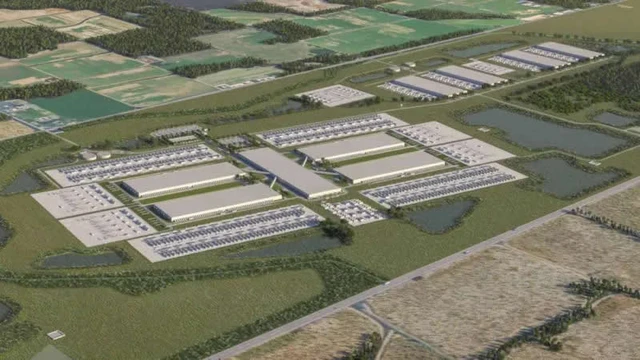
The cornerstone of this strategy is the "AI Action Plan," which effectively legitimizes the dilution of requirements within fundamental legislative acts, such as the Clean Air Act, the Clean Water Act, and the Superfund program. In practice, this means the construction of massive data centers can now circumvent rigorous environmental scrutiny. Furthermore, current policy incentivizes the proliferation of gas-fired power plants, including the installation of turbines directly on-site at data centers. This allows tech giants to ensure a seamless power supply for their clusters while ignoring the long-term atmospheric consequences.
The crux of the problem lies in the staggering energy demands of contemporary neural networks, which often exceed the capacity of renewable energy sources. Under this regime of deregulation, the industry is regressing toward carbon-intensive energy sources. Moreover, the ecological damage extends far beyond the physical footprint of a single data center; pollution ripples through the entire energy and industrial supply chain, impacting regions that may not even host a single server.
Of particular concern is the semiconductor manufacturing lifecycle. The production of cutting-edge AI chips relies on so-called "forever chemicals" (PFAS). These substances virtually never degrade in nature, accumulating in soil, water, and the human body, leading to chronic health complications. The scientific community, including researchers from Caltech and UC Riverside, warns of catastrophic scales: by 2028, air pollution driven by the expansion of AI infrastructure could result in 1,300 premature deaths and impose a healthcare burden exceeding $20 billion.
In response to these critiques, EPA representatives argue that current actions are not a weakening of oversight, but rather a "correct interpretation" of the law intended to rectify the administrative imbalances of previous years. However, the chasm between rhetoric regarding public health and the reality of diminished oversight over toxic emissions is becoming increasingly apparent. The conflict between the pursuit of digital dominance and the fundamental right to a safe environment is evolving into one of the primary ethical and political dilemmas of the modern technological era.
 The Era of Layoffs in the Global Tech Industry