19 Aug 2026
 The AI Dividend for the Citizens of Taiwan
The global surge in generative AI has evolved beyond a mere software revolution, transforming into a potent economic catalyst for hardware-producing nations. Taiwan, the linchpin of the global semiconductor supply chain, is experiencing unprecedented GDP growth—a windfall the government now intends to redistribute via direct payments to its citizens. The concept of "AI dividends" represents the first large-scale experiment in redistributing the windfall profits of technological advancement to the general populace. This move signals a fundamental shift toward a new social contract for the age of pervasive automation.
19 Aug 2026
 Wearable Intelligence in the Blackview BV300
The world is accelerating toward an era where artificial intelligence is seamlessly woven into the fabric of daily life. Wearables are evolving beyond simple health-tracking accessories, transforming into genuine cognitive extensions of the human mind. The new Blackview BV300 smart glasses embody this shift, delivering access to cutting-edge language models within an exceptionally streamlined form factor. It is a strategic effort to render high-tech AI assistance both accessible and unobtrusive for the everyday user.
19 Aug 2026
 Xiaomi's AI Investment Horizon
The global AI arms race is forcing tech giants to fundamentally recalibrate their financial priorities. While the market demands instantaneous results, some players are opting for a more rigorous, foundational approach. Xiaomi is currently a case study in strategic patience, channeling massive resources into development without the pressure of immediate monetization. This strategy transforms AI from a mere product into the foundational layer upon which the company's entire future ecosystem will be built.
19 Aug 2026
 Body Composition Analysis via Smartphone Camera
The convergence of mobile technology and preventive medicine is entering a new era. For years, managing metabolic health and monitoring insulin resistance were tethered to costly clinical hardware and frequent visits to specialized medical facilities. Google is challenging this status quo by introducing deep-learning algorithms for sophisticated visual data analysis. Through its PhotoScan technology, the company aims to translate the precision of clinical scanning directly into the interface of a standard smartphone.
19 Aug 2026
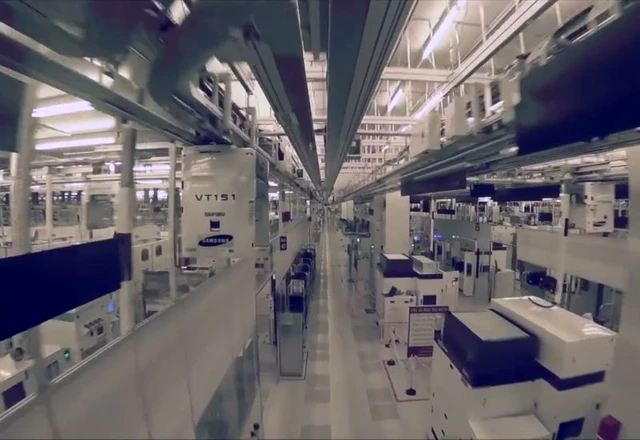 Samsung’s Strategic Expansion in the Contract Chip Market
The global semiconductor market is undergoing a profound transformation, where capacity constraints have emerged as the primary lever of strategic influence. For years, Samsung Electronics has operated in the shadow of the dominant TSMC, striving to close the technological divide in lithography. However, current market dynamics are enabling the South Korean giant to rewrite the rules of engagement and aggressively monetize surging demand. The upward revision of foundry pricing signals a strategic pivot toward capturing the high-growth segments of AI and high-performance computing.
19 Aug 2026
 SK hynix Profit Distribution Strategy
The era of artificial intelligence has evolved beyond a mere technological arms race, transforming into a large-scale redistribution of capital. While some nations explore the concept of "AI social dividends," corporations are facing mounting pressure from investors demanding a fair share of these windfall profits. South Korean powerhouse SK hynix has responded to this shift by initiating one of the most ambitious shareholder return programs in its corporate history. This move signals a strategic pivot from sporadic incentives toward a systemic approach to shareholder value management.
19 Aug 2026
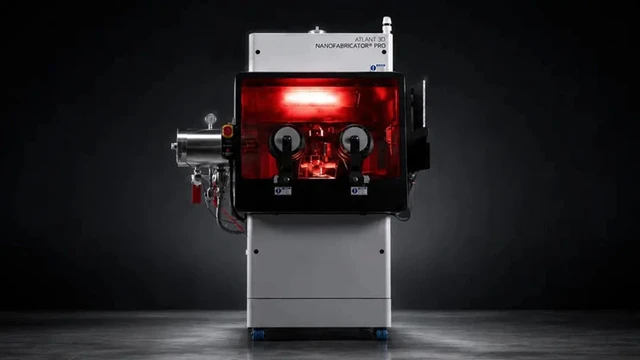 Automated Atomic-Scale Materials Synthesis
The quest for novel materials has long been the primary bottleneck of technological advancement—a domain where theoretical predictions were frequently stifled by the sluggish pace of physical synthesis. While modern artificial intelligence can now architect structures with extraordinary properties, translating these digital blueprints into physical reality once demanded months of painstaking, manual labor. The emergence of specialized atomic printing platforms is shifting this paradigm, condensing the transition from hypothesis to tangible prototype into a matter of hours. The materials development cycle is now entering an era of total automation, positioning AI not merely as a tool, but as a fully autonomous chemical engineer.
19 Aug 2026
 Amazon's Autonomous Logistics Expansion
Last-mile automation has emerged as a critical frontier for modern e-commerce, where delivery velocity is the primary driver of competitive advantage. Amazon is now making a decisive move, transitioning from experimental flight trials to the deployment of a comprehensive infrastructural network. The scaling of Prime Air across hundreds of U.S. cities signals a pivotal shift: the evolution of a technological proof-of-concept into a scalable industrial standard. At the heart of this strategy is the ambition to slash delivery windows to under an hour, fundamentally reshaping consumer behavior and expectations.
18 Aug 2026
 Unitree: Setting a New Standard for Motion Dynamics
Modern robotics is pivoting from the cautious pace of simulations toward the aggressive dynamics of real-world application. Seeking to cement its position as a technological vanguard, Unitree has unveiled the "Superman" prototype—a machine designed to push the physical boundaries of autonomous systems. This leap coincides with the company's strategic expansion into public markets, effectively leveraging technical breakthroughs as a potent financial catalyst. The central question is no longer whether a robot can jump, but how rapidly these capabilities can be scaled for industrial deployment.
18 Aug 2026
 The Era of Local AI
The modern market is saturated with "smart" gadgets that, upon closer inspection, are little more than expensive interfaces for accessing remote cloud models. The true technological inflection point, however, lies in the migration of computation directly to the end device. Edge AI solves the fundamental challenges of latency, power efficiency, and data privacy. In this shift, local neural networks are ceasing to be mere diminished copies of their cloud-based counterparts, evolving instead into independent engines of autonomy.
18 Aug 2026
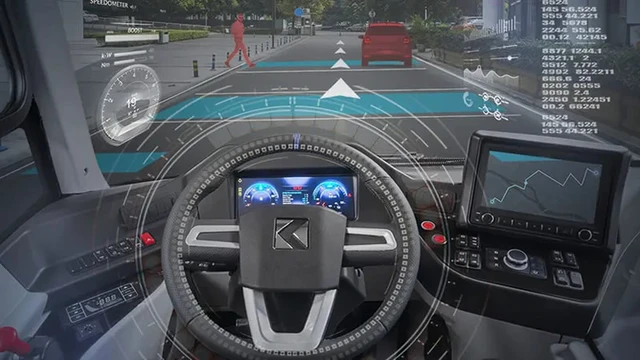 Autonomous Electric Mobility in the Netherlands
The transition toward fully autonomous transportation has evolved beyond the confines of closed testing grounds and research laboratories, venturing into the complexities of real-world public spaces. Contemporary mobility is increasingly driven by a convergence of electrification and artificial intelligence, aiming to eliminate human error and streamline urban logistics. In the Netherlands, this trajectory has found a new application through the integration of autonomous systems into the infrastructure of one of Europe's premier theme parks. This initiative serves as a critical bellwether for the readiness of both regulatory frameworks and the underlying technology to deploy autonomous systems at scale within high-density pedestrian environments.
18 Aug 2026
 Anthropic’s Economic Triumph: Charting the Course Toward an IPO
The AI arms race has shifted decisively from a battle of technical benchmarks to a war of massive capital. Anthropic, which originally positioned itself as the ethical counterweight to OpenAI, is evolving into a financial powerhouse characterized by unprecedented growth trajectories. Current revenue streams and valuation metrics signal the emergence of a new center of gravity within the global tech economy, with the groundwork for an initial public offering (IPO) serving as the culmination of this meteoric rise.
