The AI arms race has shifted from the arena of technical benchmarks to one of stark financial pragmatism. Today, the disparity in monetization capabilities between the US and China has become a telling indicator of their divergent industrial strategies. While American leaders report phenomenal revenues, Chinese players are doubling down on long-term market capture and infrastructural dominance. This imbalance exposes a fundamental conflict between the velocity of technological progress and the efficiency of commercial execution.
In the current generative AI landscape, the cost of model development is scaling exponentially, shifting monetization from a secondary concern to an existential imperative. Analysts at Rhodium Group have identified a troubling trend for the Eastern sector: the combined Annual Recurring Revenue (ARR) of seven leading Chinese firms barely reaches $10.7 billion. By contrast, two American giants—OpenAI and Anthropic—generated revenues exceeding $100 billion over the same period. This reveals a nearly tenfold gap in monetization efficiency, with China relying on a broad cohort of players while the US is dominated by just two key entities.
The ARR methodology employed here is based on the extrapolation of monthly subscription and API revenues from March to August of this year. This metric provides a clear view of actual cash flow dynamics, stripped of one-time investments.
A distinct hierarchy has emerged within the Chinese market. ByteDance is the undisputed leader, with its ARR hitting $4 billion by July, followed by Alibaba at $2.4 billion as of August. Other participants, such as Z.ai, Moonshot AI, and MiniMax, show more modest, albeit growing, results. Meanwhile, the US figures appear almost surreal: Anthropic reported an annualized revenue of $65 billion in July, and OpenAI approached the $40 billion mark by August. At the other end of the spectrum are DeepSeek and Kuaishou Technology, whose ARR figures plateaued at $500 million.
Despite the evident financial divide, investor appetite for Chinese startups remains robust. This is driven by valuations that are significantly lower than their American counterparts, creating substantial upside potential. For instance, Moonshot is valued at approximately $50 billion and is already preparing for a Hong Kong IPO, while DeepSeek—despite not being public—is market-valued at $74 billion. In comparison, the IPO expectations for OpenAI and Anthropic are measured in trillions—$1.2 trillion and $2 trillion, respectively.
The ratio of valuation to ARR is particularly telling. For Chinese companies, this multiple is significantly higher: DeepSeek reaches 163, and Moonshot stands at 50. Conversely, OpenAI’s multiple is 34, and Anthropic’s is just 21. Such aggressive valuations relative to current revenue indicate that investors are betting on future market dominance, consciously accepting the risk of a prolonged path to profitability.
Nevertheless, revenue growth dynamics in China are impressive. Z.ai increased its earnings by 400% in the first half of the year, reaching $142 million, while MiniMax grew by 283%, earning $116.6 million. However, this growth occurs against a backdrop of colossal expenditures on compute resources and infrastructure. According to Macquarie Group, companies like Z.ai and MiniMax could remain loss-making until 2030.
The challenge of low monetization in China is partly a strategic choice: many developers release their models with open weights. While this accelerates technological adoption and ecosystem growth, it complicates direct monetization. To overcome this barrier, Chinese firms are beginning to implement new business models. Alibaba and Moonshot, for example, are experimenting with revenue-sharing agreements where the model developer can receive up to 30% of the revenue from clients integrating the AI into their own products. This transforms the model provider from a mere service vendor into a full-fledged profit partner.

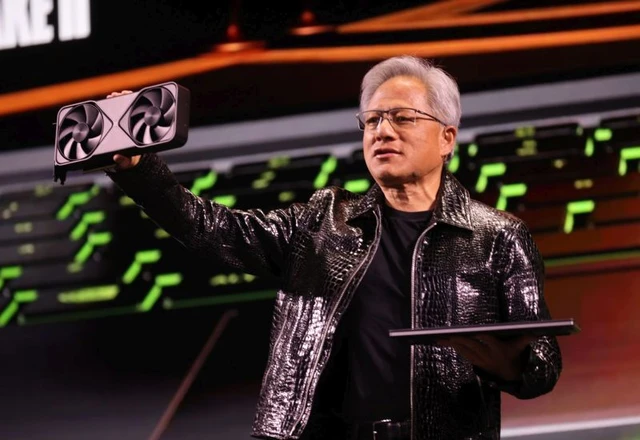 Forecasting Exponential Growth in Nvidia Shipments