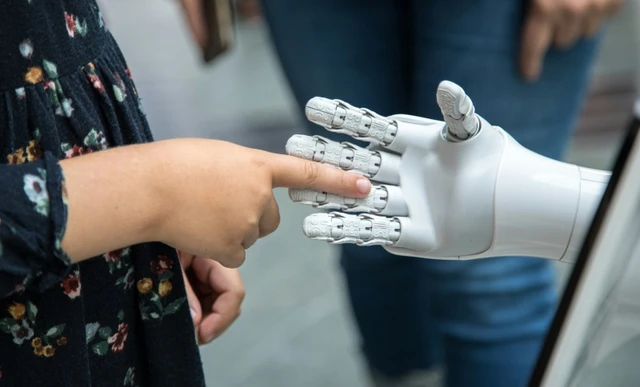
Artificial intelligence is transcending the confines of chat windows and virtual interfaces, seeking a tangible, physical manifestation. The industry is currently pivoting toward the concept of "Physical AI"—a paradigm where the cognitive prowess of large-scale models converges with real-world mechanics. OpenAI, the vanguard of generative AI, is embarking on a strategic expansion into robotics. This shift evolves the company from a pure-play software developer into an architect of fully autonomous systems.
The era of software-only AI is reaching its twilight. OpenAI, the company that effectively defined the landscape of modern generative AI, has launched an aggressive pivot into the robotics market. The hiring trends speak for themselves: over the last six months, the number of vacancies in this sector has more than doubled. The company is no longer content with merely building the "brains" for chatbots; it is now recruiting actuator designers, embedded systems specialists, and machine learning experts capable of animating metal and plastic.
The company's financial commitments underscore the strategic weight of this shift. Base salaries for key talent are reaching $500,000 per year, signaling a cutthroat war for expertise. The highest premiums are being paid to machine learning engineers specializing in distributed data systems. This is a logical necessity: training a robot requires an infrastructure of an entirely different order of magnitude than training a language model.
The primary bottleneck in modern robotics remains the data problem. While Large Language Models (LLMs) could "consume" the entirety of the available internet, physical interaction with the world requires specific examples of sensorimotor experience. For a robot, knowing the textual definition of a "glass" is insufficient; it must understand the mechanics of grasping, friction, and inertia. This is precisely why OpenAI is establishing its own data collection centers to generate unique datasets on human-machine interaction within real-world environments.
Orchestrating this transition is Aditya Ramesh—the visionary behind DALL-E and Sora. Ramesh’s move from image and video generation into robotics feels like a natural evolution. In essence, robotics is the next stage of spatial intelligence: moving from the creation of a static frame to the manipulation of an object in three-dimensional space.
The company's ambitions extend far beyond niche automation. The goal is the creation of general-purpose robots capable of performing a vast array of tasks—a prerequisite for achieving Artificial General Intelligence (AGI). Sam Altman has been open about his intention to develop a fully realized humanoid, though he acknowledges that different form factors may be deployed depending on the specific application.
This trajectory puts OpenAI on an inevitable collision course with giants like Tesla and Figure AI. Interestingly, OpenAI is already linked to Figure through investments from its venture fund, creating an intricate web of strategic alliances and competition within Silicon Valley.
The path to success has not been linear. As early as 2020, OpenAI shuttered a project to build a robotic arm capable of solving a Rubik's Cube—an early experiment that proved to be ahead of its time. However, now that AI models have become powerful enough to govern complex physical processes, the company is returning to the fray.
The initial proving grounds for these systems will likely be data centers, where robots of various form factors will handle infrastructure maintenance. But the ultimate objective is far more ambitious: a personal robot for every individual, capable of managing any domestic or intellectual task. This transition transforms OpenAI from a subscription-based service into a company building the physical infrastructure of the future.
 Forecasting Exponential Growth in Nvidia Shipments