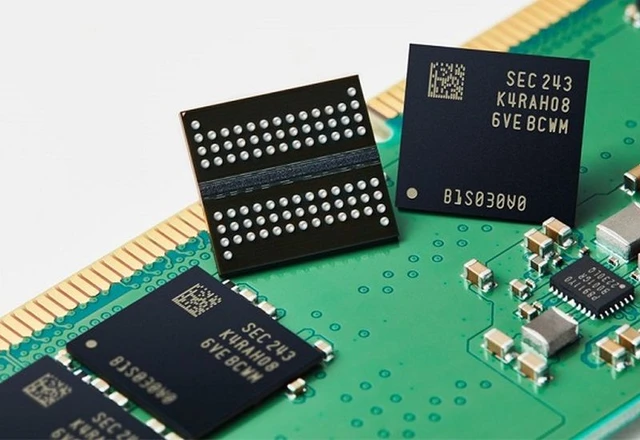
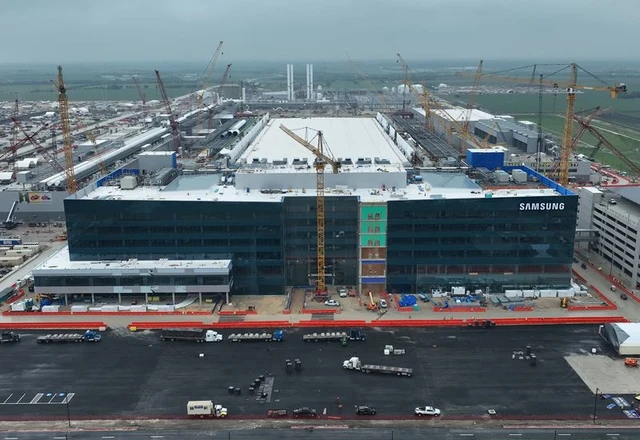
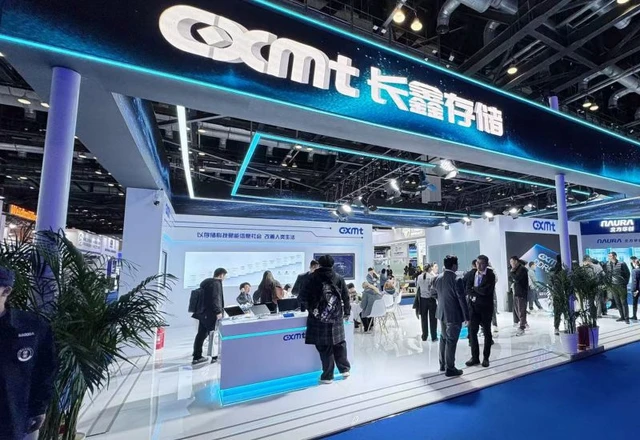
The global semiconductor memory market is undergoing a profound transformation, driven by the explosive growth of artificial intelligence. As industry giants pivot their priorities toward High Bandwidth Memory (HBM), a critical shortage of traditional NAND flash storage has emerged. Against this backdrop, Chinese tech players are re-evaluating their niche specializations in a strategic push toward complete technological autonomy. CXMT’s foray into flash memory production signals a shift toward a strategy of versatility, mirroring the diversified approach of the world's leading semiconductor firms.
For a long time, the Chinese semiconductor market operated under a tacit equilibrium: CXMT focused on DRAM, while YMTC dominated the NAND segment. Their interests converged only in High Bandwidth Memory (HBM)—the ultra-fast memory that serves as the backbone for modern AI accelerators. However, current market dynamics are forcing a shift in strategy. CXMT intends to step beyond its established domain and venture into YMTC's territory, aiming to emulate the trajectory of Samsung and Micron, both of whom integrate both memory types within a single production ecosystem.
CXMT's strategic vector is now centered on establishing a comprehensive research center in Beijing. This facility is envisioned as the cradle for flash memory production technologies, allowing the company to not only intensify domestic competition but also vie for a share of the global NAND market. The latter is currently grappling with a protracted supply crisis. According to forecasts from TrendForce, NAND shipments are unlikely to stabilize before the second half of 2027.
This shortage is the result of a global resource imbalance. Leading global vendors, including South Korea's SK hynix, are pivoting their capacities toward DRAM—and specifically HBM—to satisfy the insatiable demand from data centers training neural networks. Consequently, the NAND segment has been underinvested, naturally leading to price hikes and diminished supply.
In Beijing, CXMT plans to deploy more than just a research center; it intends to launch a pilot production line. This will enable the company to test its tech stack under real-world conditions and rapidly implement innovations. Insiders report that CXMT is already engaged in preliminary negotiations with potential customers, including promising startups in need of a reliable flash memory supplier. While the timeline for transitioning from experimentation to full-scale mass production remains vague, the very act of expansion underscores the seriousness of their ambitions.
Simultaneously, a reciprocal trend is emerging from YMTC. The company also refuses to be confined to a single niche and is showing active interest in the LPDDR segment—the energy-efficient DRAM critical for mobile devices. Reports suggest that YMTC has already begun distributing chip samples to potential clients.
We are witnessing a convergence of China's two largest memory players. The race to master HBM and their mutual encroachment into the DRAM and NAND segments are transforming them from specialized entities into full-fledged technological conglomerates. This pursuit of versatility is a direct response to global challenges and a drive to create a highly resilient memory production ecosystem, insulated from external shocks and shortages.
 Forecasting Exponential Growth in Nvidia Shipments