The pursuit of AI supremacy has long been synonymous with the construction of monolithic "gigafactories" and staggering capital expenditures. Yet, the stark realities of infrastructure deployment—ranging from power shortages to societal pushback—are compelling industry leaders to pivot their paradigm. OpenAI and Anthropic are shifting away from a strategy of brute-force scaling in favor of agile, distributed compute capacities. This pivot signals a fundamental industry transition: the move from the era of model training to the era of mass deployment.
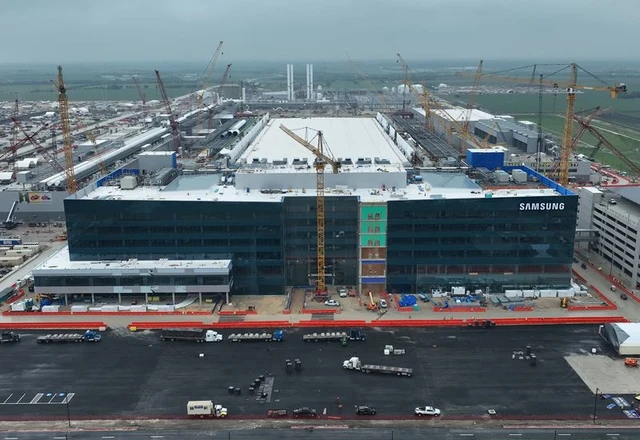
For a long time, the ambitions of AI's titans manifested in monolithic undertakings like Stargate—a staggering $500 billion blueprint for data center construction. The premise was straightforward: greater computational power equated to faster, higher-quality neural network training. In practice, however, the deployment of such behemoths proved too sluggish to keep pace with the breakneck evolution of algorithms. In response to this disconnect, OpenAI and Anthropic have begun recalibrating their priorities, pivoting toward more modest but agile deals.
The strategic focus has now shifted toward facilities in the 20–30 MW range. These projects are realized significantly faster, and securing capital for them has become more streamlined and efficient. Gigawatt-scale is no longer the sole benchmark of attractiveness; the priority has shifted to the speed of scaling.
The geographical footprint of this expansion is also broadening: Anthropic is aggressively exploring opportunities in the UK and Scandinavia, and OpenAI is following suit, eyeing northern regions and the US domestic market. Diverse computational workloads demand tailored infrastructure; a flexible approach allows for resource optimization based on the specific task, whether it be deep learning or day-to-day model operations.
The challenges of constructing hyperscale centers extend beyond technical constraints. Societal and environmental headwinds are becoming increasingly acute. In the US, a wave of local protests is rising as residents grapple with the incessant hum of cooling systems, surging electricity tariffs, and the degradation of water supplies. Smaller data centers, by contrast, exert less pressure on the environment and local infrastructure, allowing developers to bypass many administrative and social hurdles.
However, this shift in data center architecture is driven by a more fundamental technological transformation within the industry. While the early boom of generative AI prioritized the training of massive Large Language Models (LLMs), the center of gravity is now shifting toward inference—the process of utilizing a trained model to generate real-time responses to user queries. Inference does not require the same colossal concentrated power as training and can be efficiently distributed across a network of smaller centers.
Quantitative forecasts validate this trajectory. According to data from JLL, by 2027, the share of capacity dedicated to inference will surpass that of training. While inference accounted for approximately 14% of all data center capacity compared to 9% for training in 2025, this gap is expected to nearly triple by 2030, reaching 37% versus 13%.
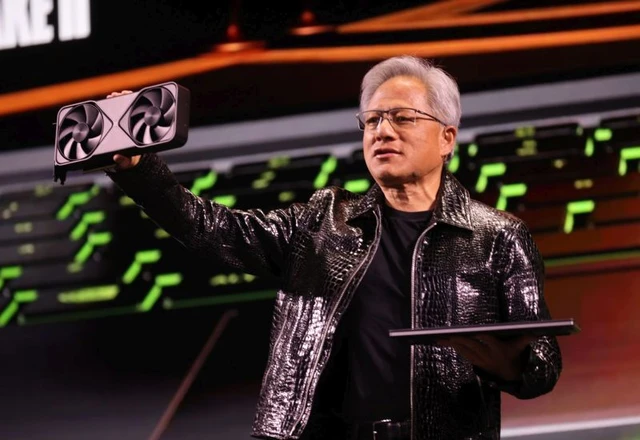
This trend is already reflected in the strategies of key hardware vendors and infrastructure operators. Nvidia centered its February initiatives for data center support specifically on small-scale projects. Crusoe has adopted a similar path: after delivering a massive facility for OpenAI in Texas, the company pivoted toward the "neocloud" segment, developing more compact sites. This strategy has proven highly successful financially—the company attracted $3.9 billion in investment, reaching a total valuation of $30.9 billion.
Ultimately, the AI industry is entering a phase of maturity. The euphoria surrounding the construction of digital megalopolises is giving way to pragmatic calculation, where efficiency, deployment speed, and social acceptance carry more weight than nominal power metrics.
 Forecasting Exponential Growth in Nvidia Shipments