18 Aug 2026
 Digital Cannibalism: The Erosion of Rare Print Publications
The scramble for high-fidelity training data for Large Language Models (LLMs) has reached a critical juncture. While digital scraping has become the industry standard, an insatiable appetite for unique knowledge is driving tech giants toward physical archives. A recent investigation has uncovered a disturbing trend: rare printed editions are being sacrificed on the altar of neural network weights. This process effectively converts cultural heritage into proprietary data, leaving nothing behind but shredded remnants of paper.
18 Aug 2026
 Visual Intelligence in the New AirPods
The boundary between audiovisual perception and the digital interface is becoming increasingly blurred. Apple is striving to engineer wearables capable of not just auditory input, but visual awareness of their surroundings. Recent discoveries within the macOS Tahoe 26.7 codebase point toward the imminent arrival of AirPods featuring integrated cameras—a move that transforms a ubiquitous accessory into a sophisticated instrument for real-time environmental analysis.
18 Aug 2026
 Diversifying Google Pixel Manufacturing
Global electronics supply chains are undergoing a fundamental transformation. Escalating geopolitical tensions between the U.S. and China are compelling tech giants to diversify their manufacturing footprints to mitigate risk and bypass trade restrictions. Google is accelerating the migration of its Pixel ecosystem away from Chinese manufacturing hubs, aiming to decouple its operations from a single geographic region. This strategic pivot is a direct response to the mounting pressure of import tariffs and a broader drive toward hardware autonomy.
17 Aug 2026
 The Financial Shadow of AI Infrastructure
The global AI arms race has long since evolved beyond the confines of standard financial reporting. While the market scrutinizes officially declared capital expenditures, the true scale of investment remains obscured within the depths of off-balance sheet liabilities. We are witnessing commitments totaling trillions of dollars pledged by tech giants over the coming decades—a strategy that transforms the trajectory of AI development into a high-stakes financial gamble.
17 Aug 2026
 The End of the Era of Affordable RAM
The global semiconductor market is undergoing a tectonic shift, one where the consumer segment is being relegated to the periphery of manufacturer priorities. The meteoric rise of generative AI has pivoted production capacities toward the scaling of colossal data centers, effectively sidelining the average user. This pivot has triggered an unprecedented surge in memory prices, transforming routine hardware components into luxury goods. The industry is now grappling with a systemic crisis of accessibility—one that threatens to persist for years.
16 Aug 2026
 The Inner Workings of the PS5 Pro's Enhanced Upscaling Engine
The modern gaming industry has fundamentally shifted from simple frame rendering toward intelligent synthesis. At the heart of this evolution lies the pursuit of an optimal equilibrium between raw computational power and visual fidelity. Sony has introduced the updated Enhanced PSSR algorithm, radically redefining the approach to graphics upscaling on the PS5 Pro. This technology marks a pivotal transition from direct color prediction toward more adaptive filtering methods, optimizing neural network performance at the hardware level.
16 Aug 2026
 The Digital Curtain in the Age of Artificial Intelligence
The contemporary technological landscape is undergoing a rapid metamorphosis, shifting from an era of global collaboration to a theater of intense geopolitical rivalry. Washington's drive to maintain absolute hegemony in high technology is fueling the rise of closed ecosystems and the forced polarization of global markets. At the heart of this struggle lies more than just software; it is a battle over the physical bedrock of progress: semiconductors and rare earth minerals. The world is effectively fracturing into two competing blocs, where the choice of strategic partners has become a matter of existential survival.
16 Aug 2026
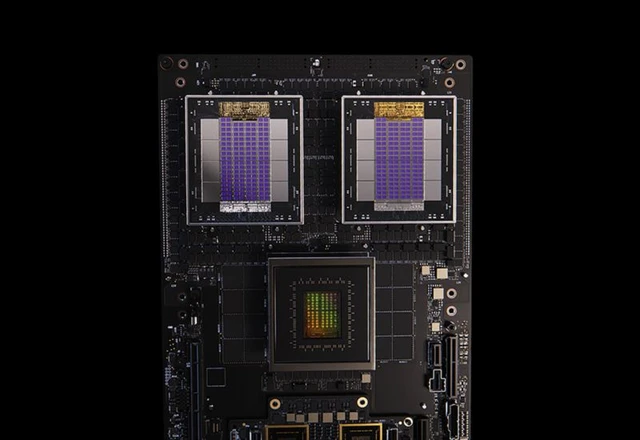 Nvidia’s Strategic Trajectory: The A16 Process and Feynman Architecture
The global AI arms race has fundamentally shifted; the battleground is no longer defined by algorithmic elegance, but by the physical constraints of silicon. Today, the efficacy of neural networks is dictated less by the purity of the code and more by the hardware's capacity to move massive datasets with near-zero latency. Setting the pace for the entire industry, Nvidia is aggressively accelerating the rollout of its next-generation "Feynman" accelerators. This transition demands an unprecedented scaling of production capacity from TSMC, alongside the implementation of radically new chip packaging architectures.
16 Aug 2026
 The True Potential of Anthropomorphic Systems
The world is currently gripped by a surge of fascination with humanoid robots, whose public debuts are increasingly defined by spectacular, high-profile demonstrations. Yet, beneath the glitz of these tech showcases lies a profound disconnect between the marketing hype and actual utility. Despite scaling shipment volumes, the industry is grappling with fundamental bottlenecks that render the mass deployment of humanoids premature. Understanding this disparity reveals the true trajectory of robotics: the evolution from a prestige product into a high-efficiency industrial tool.
16 Aug 2026
 The Evolution of the Apple Home Ecosystem
For years, Apple maintained a tentative presence in the smart home market, characterized by hardware refresh cycles that often stagnated for years. The primary bottleneck was Siri; the assistant simply failed to keep pace with the escalating demands of a user base hungry for true intelligence. With the arrival of Apple Intelligence, however, the company is shifting to an aggressive offensive, tightly integrating its hardware with the latest breakthroughs in neural networks. This strategic pivot transforms ordinary speakers and hubs into comprehensive command centers for the intelligent environment.
15 Aug 2026
 SpaceX’s Strategic Expansion into the AI Industry
The global race for generative AI supremacy is escalating, evolving niche tools into the bedrock of corporate empires. SpaceX's $60 billion acquisition of Cursor stands as one of the most ambitious deals in the history of the modern tech landscape. This strategic move is designed to close the technological divide between Elon Musk and industry titans such as OpenAI and Anthropic. At the heart of this strategy lies a fundamental transformation of the software development lifecycle and a pivot toward an entirely new economic business model.
15 Aug 2026
 Anthropic's Economic Leap
The AI arms race has decisively shifted its center of gravity, moving beyond the realm of technical benchmarks into the arena of massive capital and aggressive scaling. Anthropic, long positioned as the "safe" alternative to OpenAI, is now demonstrating financial growth trajectories that are fundamentally altering the market's power dynamics. Recent revenue data underscores the startup's rapid metamorphosis into a global industrial powerhouse—a surge that is laying the groundwork for one of the most anticipated IPOs of the year.
